Cambridge 9706, Paper 1 & 2. 1,558 questions, 2020 to 2026.
Topic
Year
Pages reproduced from the original Cambridge question papers and mark schemes. Tables,
ruled accounts and answer templates are cropped images, not retyped — shown on a white card so
they stay readable in dark mode. Paper 2 questions with parts in more than one topic are filed whole
under every topic they touch; parts outside the chosen topics are dimmed. Click any image to enlarge
it. Mark schemes are hidden until you choose to reveal them.
About Accounting concepts
Accounting concepts such as going concern, consistency, prudence, materiality, realisation, money measurement and the business entity concept, and how they are applied.
20 past paper questions on this topic since 2020, across 8 exam sessions.
How often it comes up
Year
Paper 1
Paper 2
Total
Chart
2026
0
1
1
2025
2
2
4
2024
4
3
7
2023
3
0
3
2021
2
2
4
2020
0
1
1
Every 2025–2026 question on Accounting concepts
The whole topic on one page, with answers and mark schemes. Printing this page prints just this list.
Paper 1 · Multiple choice (2)
Question 3Oct/Nov 20259706/121 mark
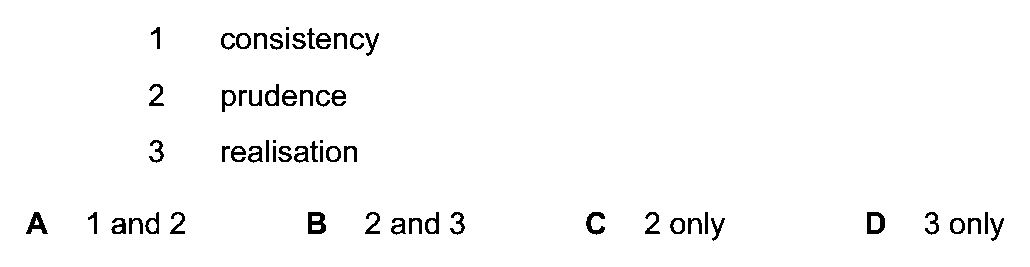
A trader sells goods for $6600 to a customer on 31 March 2025, the last day of his financial year. He does not produce an invoice until three days later. He is advised that the sales of $6600 should be entered in the financial statements for the year ended 31 March 2025. Which accounting concepts are being applied?
Show answer
DCorrect answer
Question 3Oct/Nov 20259706/131 mark
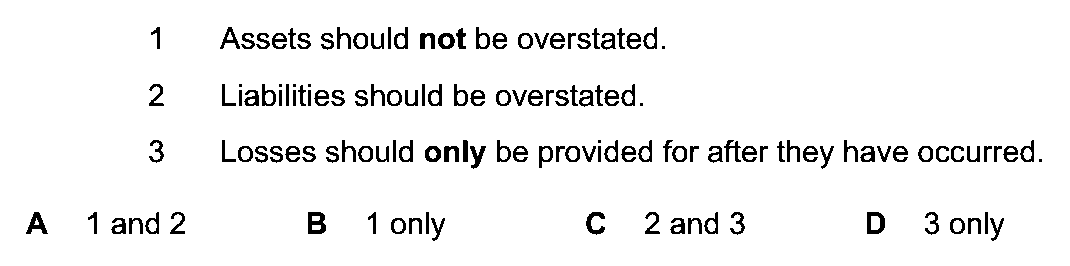
Which statements about the prudence concept are correct?
Show answer
BCorrect answer
Paper 2 · Structured questions (3)
Question 1Feb/Mar 20269706/2230 marks
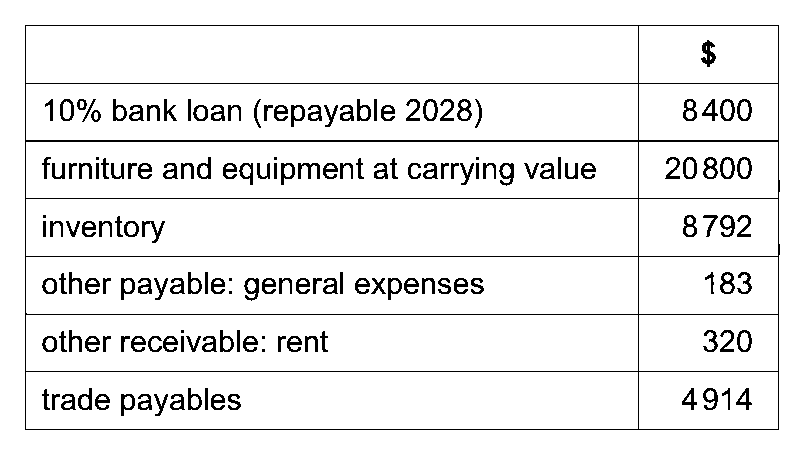
Houssam owns a retail business. He does not maintain full accounting records. All sales are made on a cash basis. Purchases of goods for resale are made in cash and on credit. At 1 January 2025, the business’s assets and liabilities included the following:
The following information is available for the year ended 31 December 2025. 1 The summary of receipts and payments shown on bank statements is as follows:
3 Payments to trade payables were made after deducting cash discounts of $390. 4 Cash takings were banked after making the following payments:
6 At 31 December 2025:
furniture and equipment was valued at $19 500
rent of $510 was owing
general expenses of $770 were prepaid
the balance of trade payables was $5520
inventory was valued at $11 434.
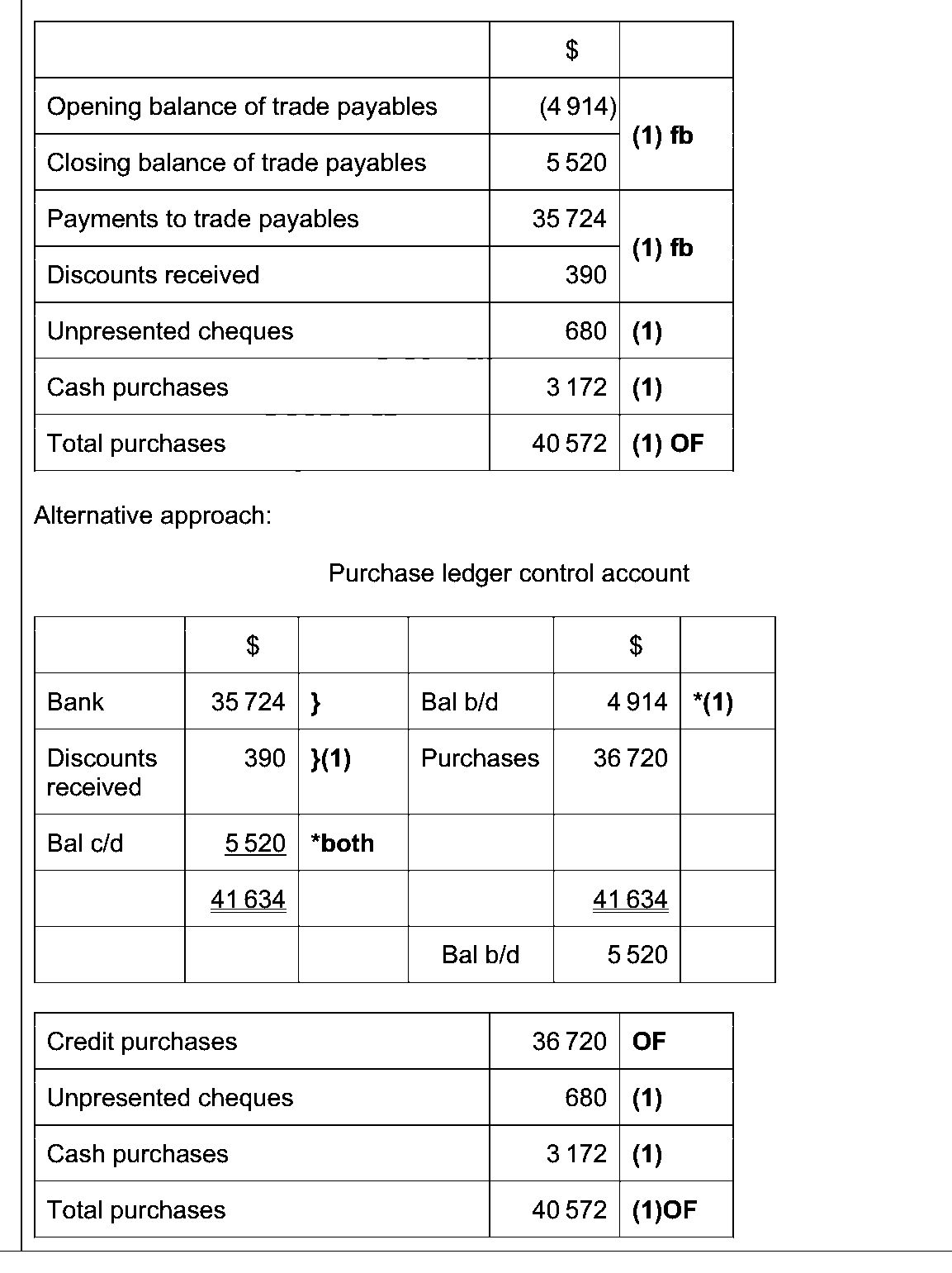
(a) Calculate the total purchases of goods for resale for the year ended 31 December 2025. [5 marks]
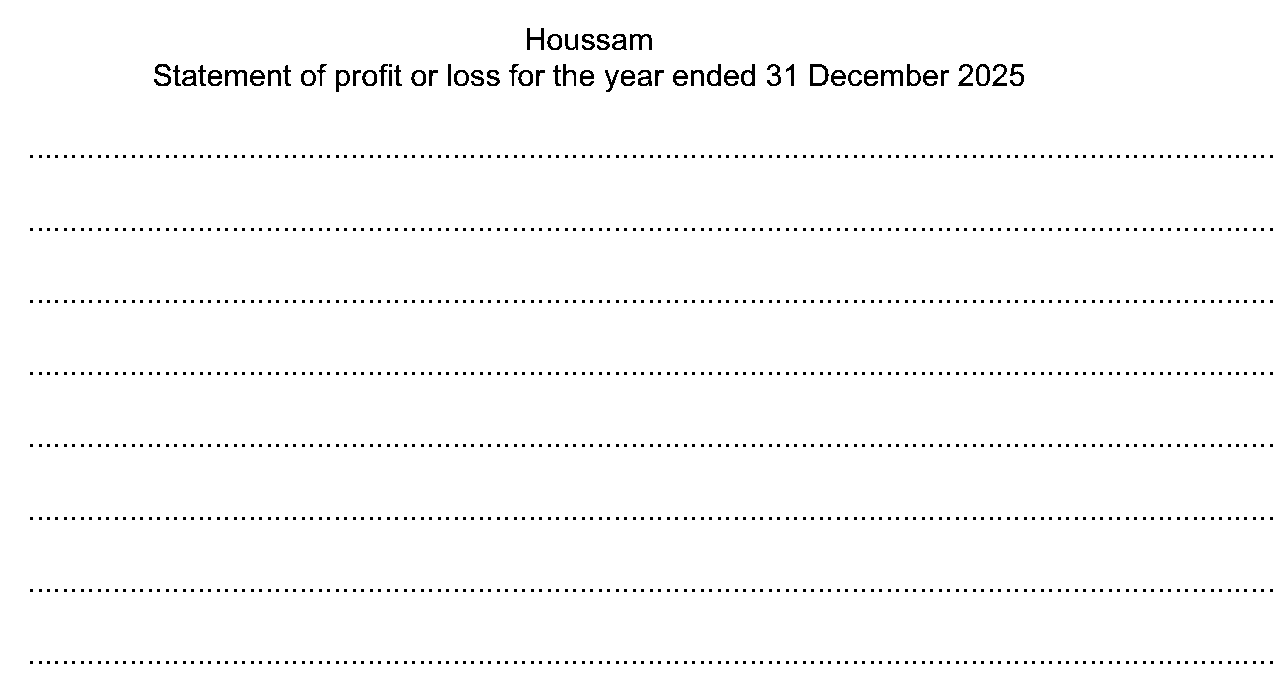
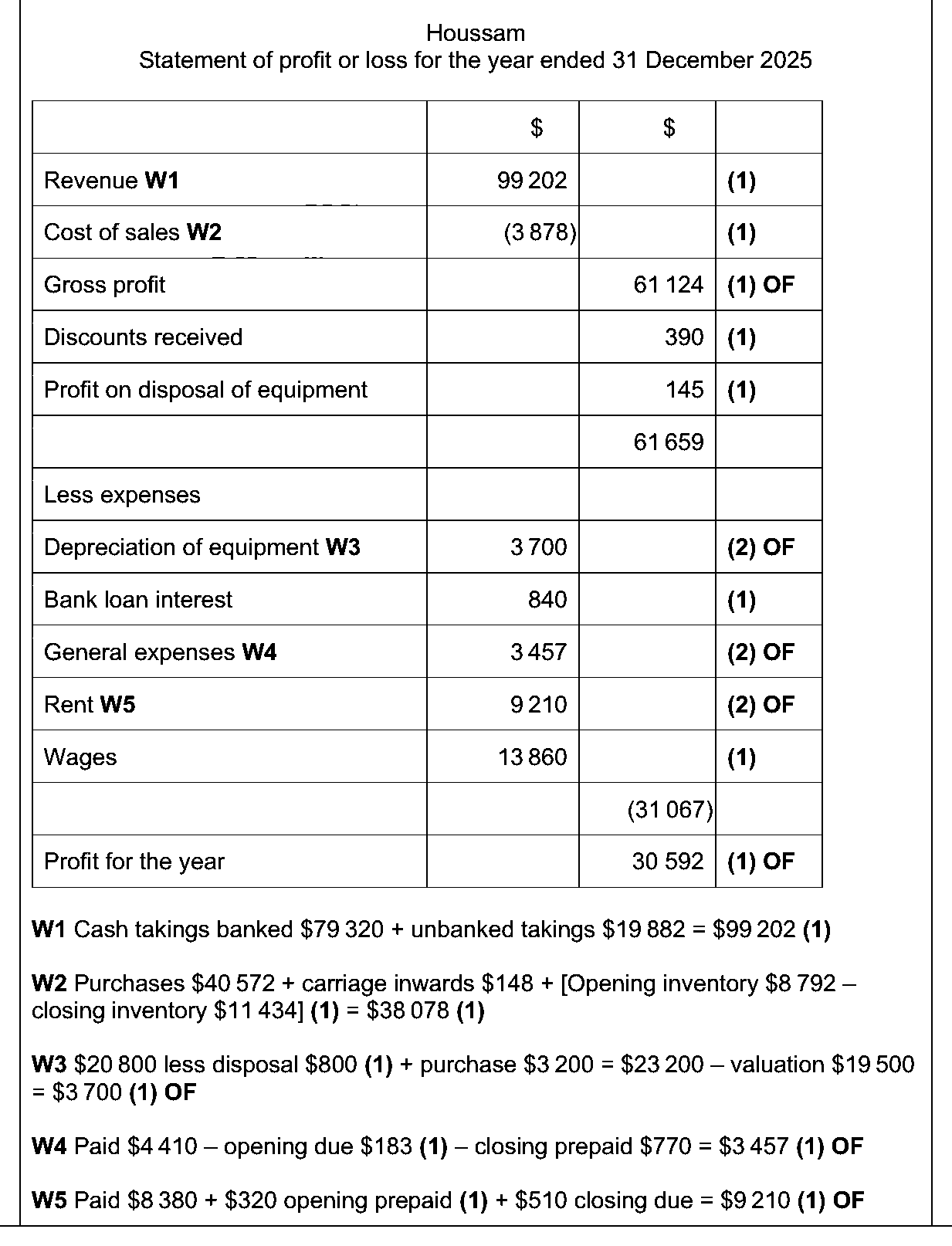
(b) Prepare the statement of profit or loss for the year ended 31 December 2025. Use the space provided to show your workings. [14 marks]
Workings: revenue cost of sales depreciation general expenses rent
(c) Explain, with reference to the relevant accounting concept, how drawings are treated in the financial statements of a business. [2 marks]
(d) State two reasons why Houssam may have chosen not to maintain full accounting records. [2 marks]
(e) Advise Houssam whether or not he should use a computerised accounting system. Justify your answer by considering the advantages and disadvantages of computerised accounting systems. [7 marks]
Houssam has now decided that he will need to maintain more detailed accounting records. He is considering using a computerised accounting system.
accounting records. The cost involved in employing/training someone OR purchasing software/computer (1) Does not have the skills (to maintain full accounting records) (1) Does not have the time (to maintain full accounting records) (1) Does not require the additional information a full accounting system would provide (1) Max 2 Accept other valid responses
Question 3Oct/Nov 20259706/2215 marks
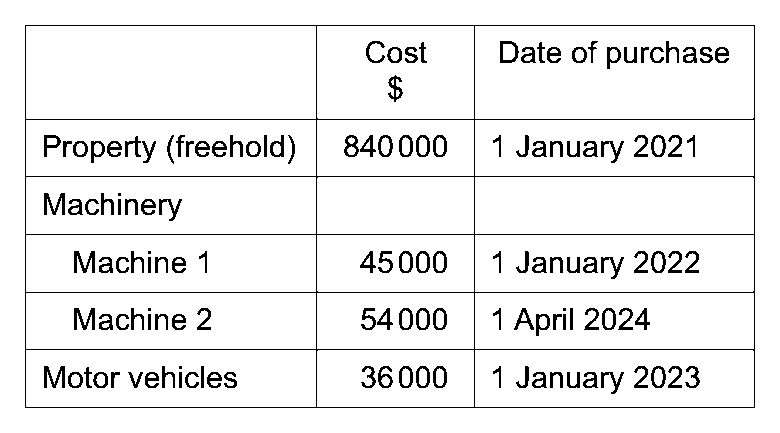
J Limited’s non-current assets are as follows:
The company’s financial year ends on 31 December. Depreciation policy is as follows:
(a)(i) Calculate the balance of the provision for depreciation accounts at 31 December 2024 for each of the following categories of non-current assets. Machinery [2 marks]
(a)(ii) Calculate the balance of the provision for depreciation accounts at 31 December 2024 for each of the following categories of non-current assets. Motor vehicles [2 marks]
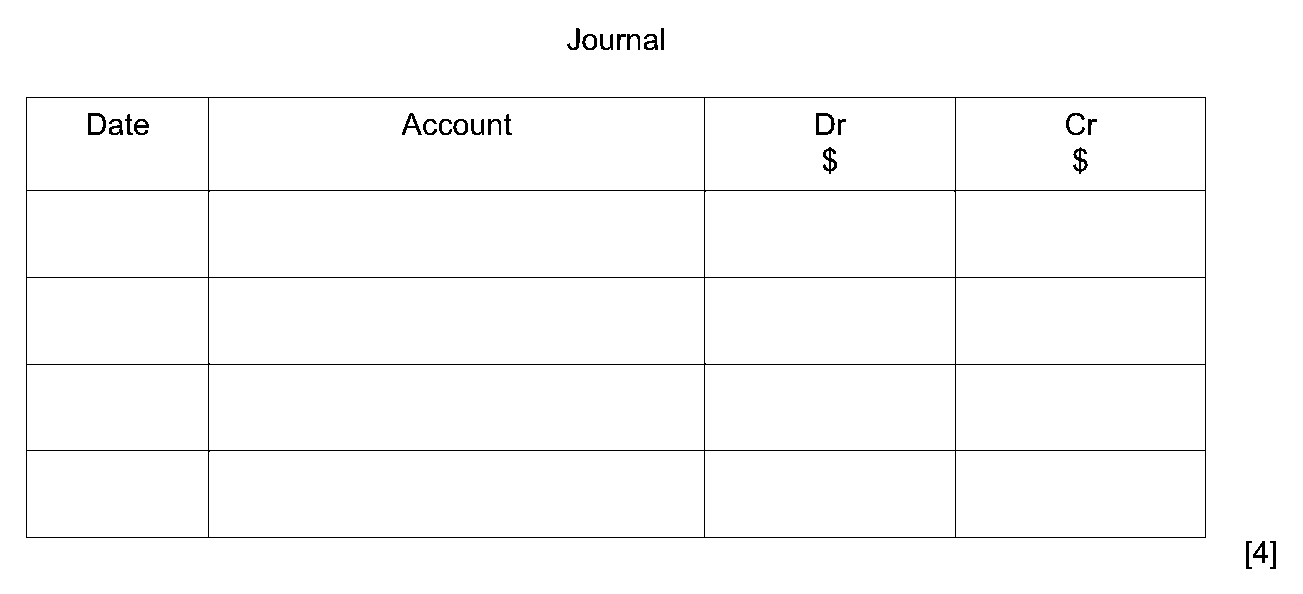
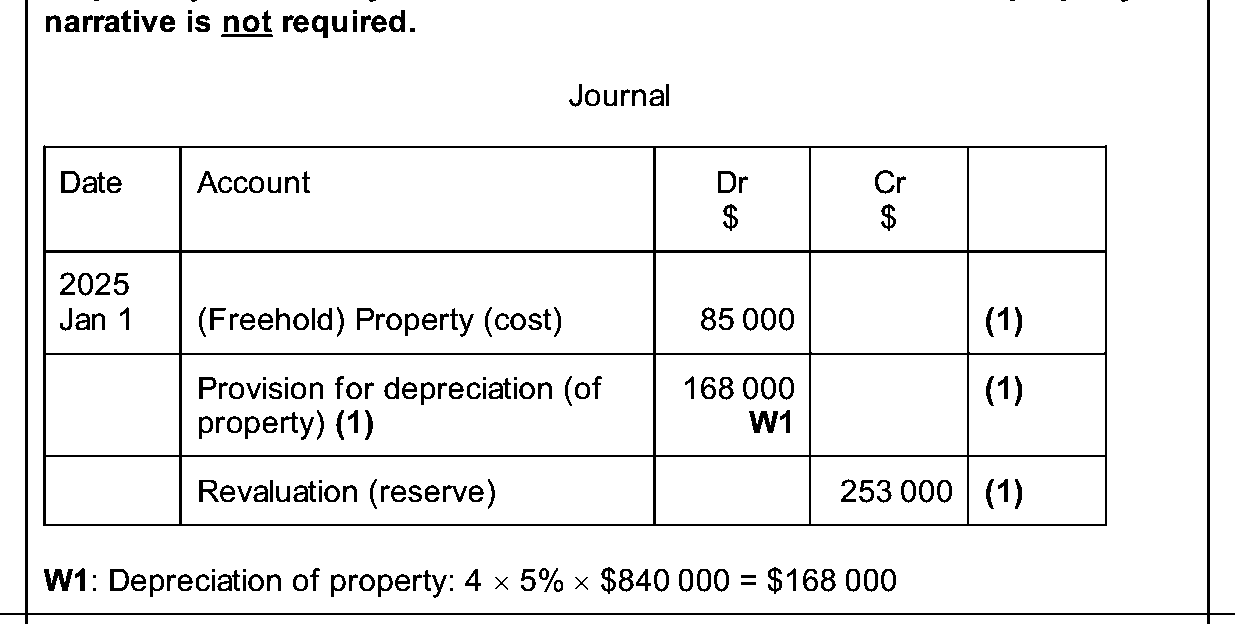
(b) Prepare a journal entry to record the revaluation of the freehold property. A narrative is not required. [4 marks]
On 1 January 2025, it was decided to revalue the freehold property to $925 000.
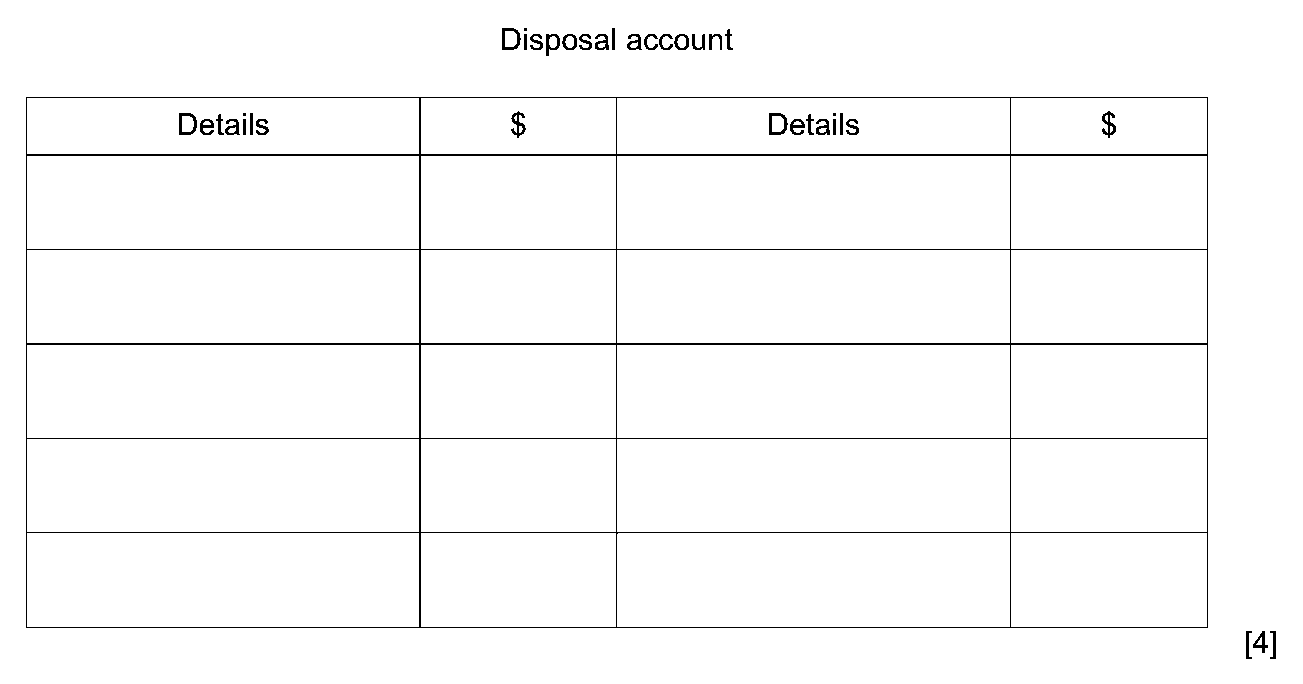
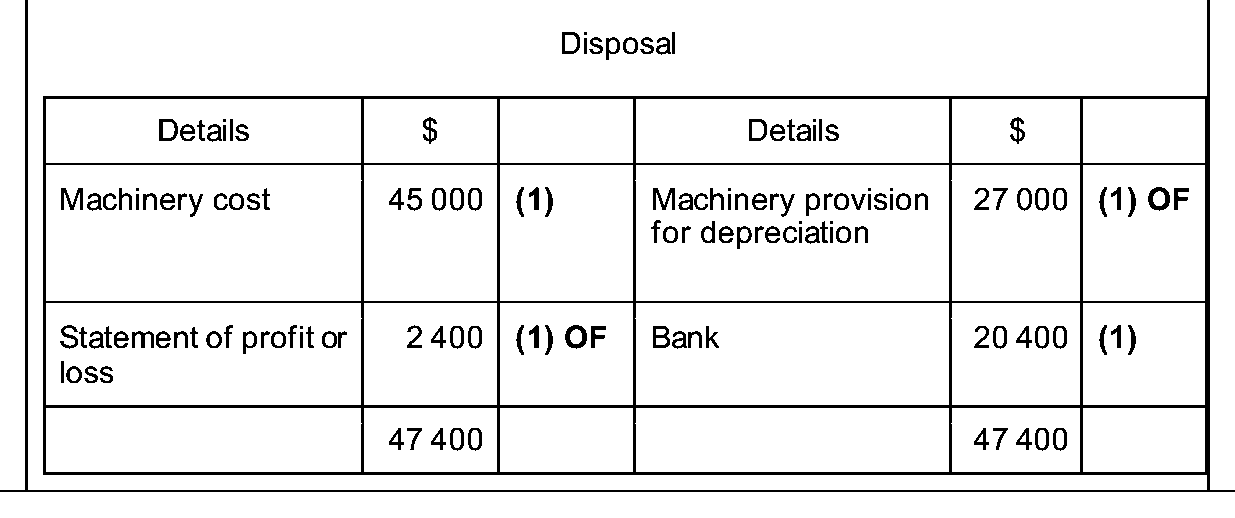
(c) Prepare the disposal account. [4 marks]
On 1 January 2025, Machine 1 was disposed of for $20 400 received by cheque.
(d) Explain, with reference to one accounting concept, why the suggestion should not be implemented. Concept: ................................................................................................................................... Explanation: .............................................................................................................................. [3 marks]
A director had suggested that in future it would be easier if the straight-line method of depreciation was used for all non-current assets. However, the company’s accountant disagrees and says this suggestion should not be implemented.
Show mark scheme
(b)
(c)
(d)
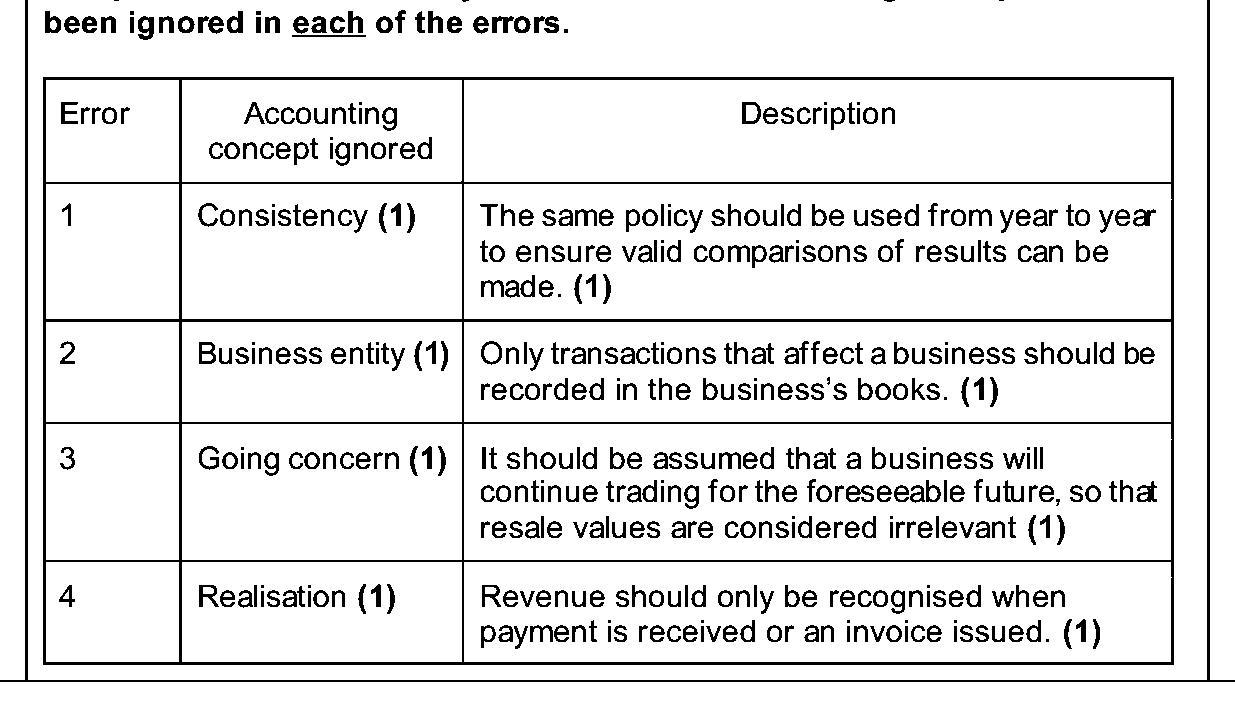
not be implemented. Consistency concept (1): requires the same policy/methods/principle/techniques to be used from year to year (1) to ensure that results are capable of valid comparison (1). Accept other valid responses.
Question 2Oct/Nov 20259706/2315 marks
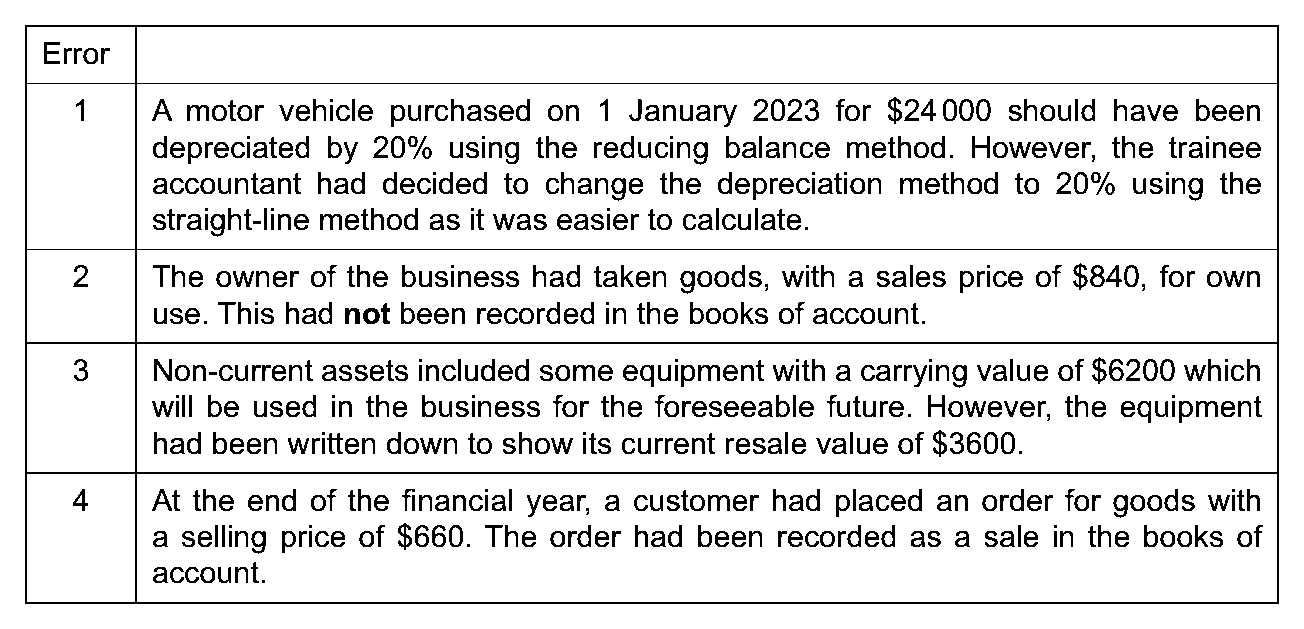
A trainee accountant recently produced the financial statements for a business for the year ended 31 December 2024. However, the following errors were discovered. Error
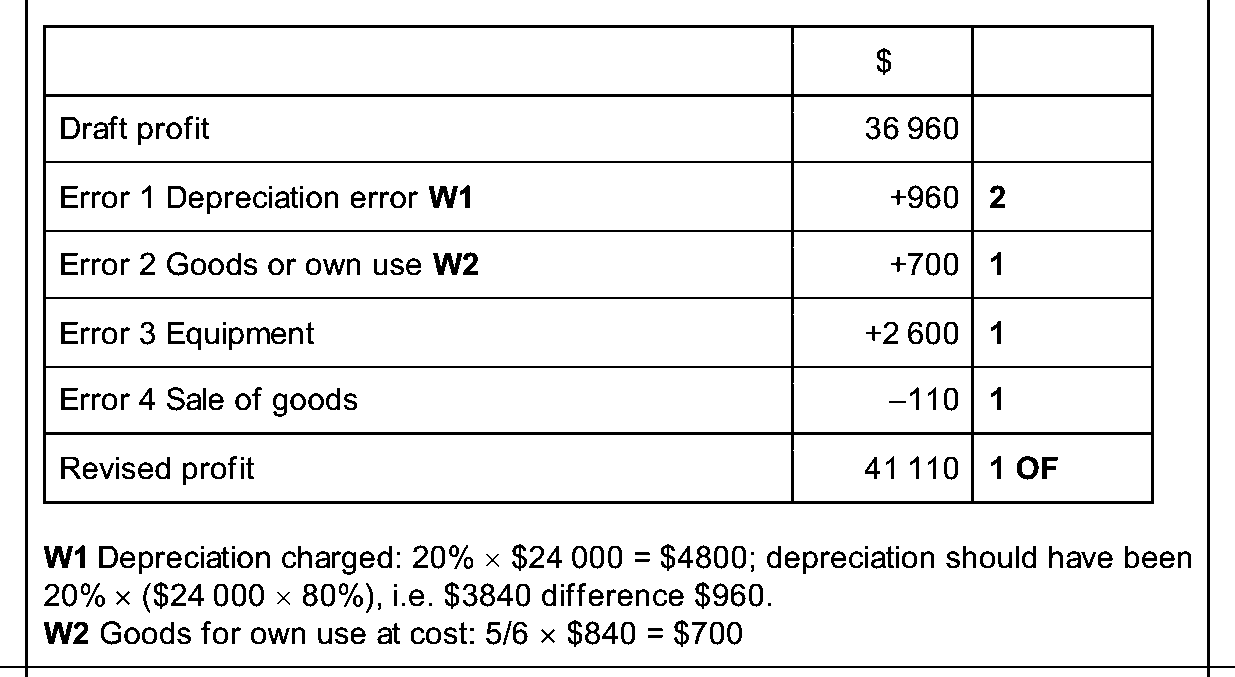
The business sells all goods with a mark‑up of 20%. The draft profit for the year ended 31 December 2024 was $36 960.
(a) Complete the table to identify and describe the accounting concept which has been ignored in each of the errors. [8 marks]
(b) Calculate the revised profit for the year ended 31 December 2024. [6 marks]
The owner of the business wishes to correct the errors that the trainee accountant has made.
(c) State which accounting concept should be applied when deciding whether or not to record this asset in the statement of financial position. [1 marks]
The business has a highly skilled workforce, and the owner is of the opinion that this asset should be reflected in the statement of financial position.
Show mark scheme
(a)
(b)
15 more questions from 2020–2024
🔒 Unlock every Accounting concepts question from 2020–2024
All 15 come with their mark schemes, answers and case studies, and appear in the practice tool above once you’re signed in. It’s free.
9706/13 · May/Jun 2024 · Question 1What are the advantages of being a… 🔒
+ 10 more, by year in the table above
Questions and mark schemes are from past Cambridge papers and are reproduced for revision. Topical Vault is an independent revision resource, not affiliated with or endorsed by Cambridge Assessment International Education.
AS Level Accounting questions by topic
Each topic opens this practice tool with only that topic’s questions, plus how often it comes up and every question on it in one list.
Pick a paper, sub-topics and years to draw from (leave any blank for "all"), choose
how many questions you want, and we'll open a new worksheet page with a random set for you to review
and download.