Question 2(a)May/June 20269609/112 marks
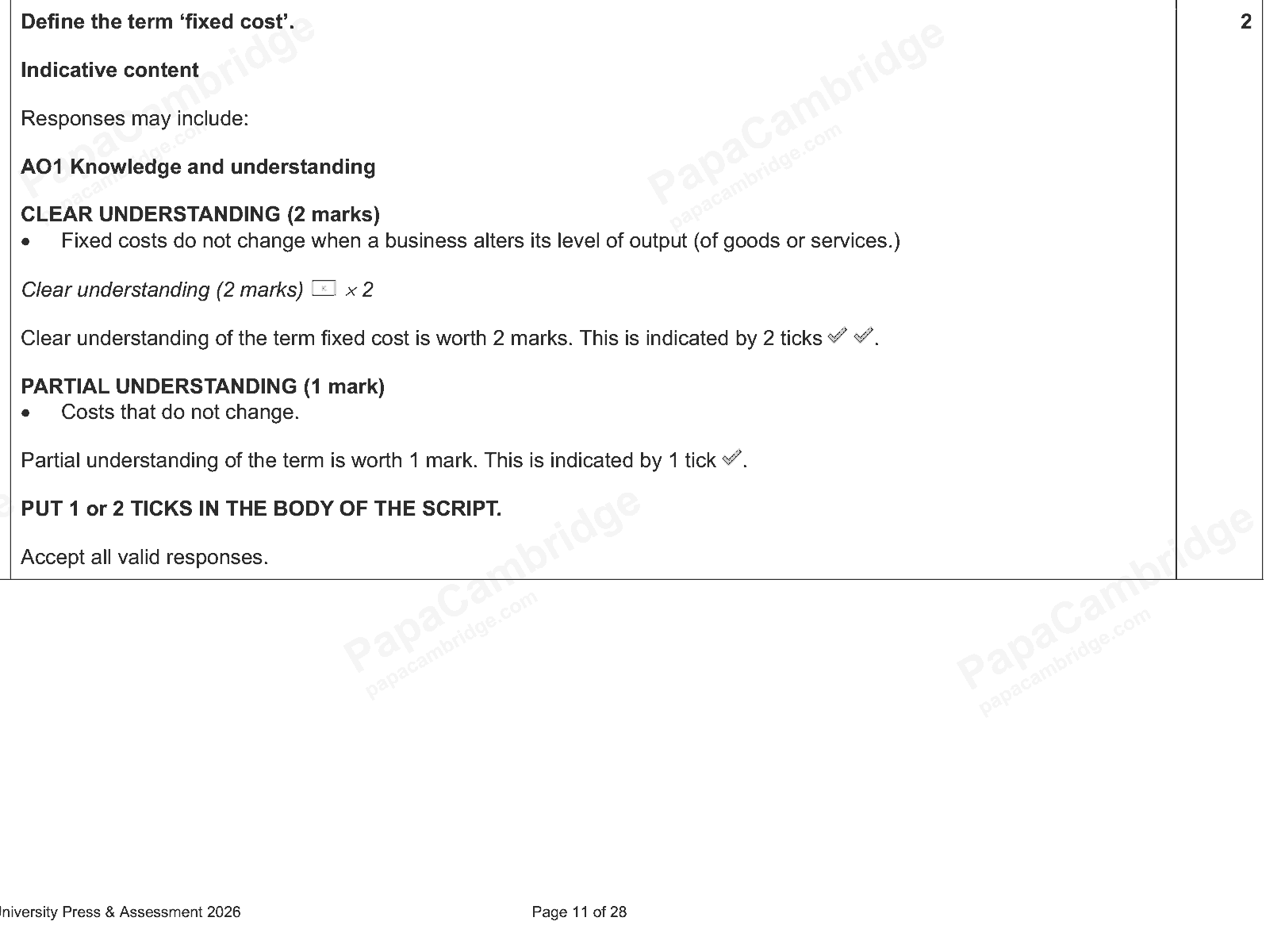
Define the term ‘fixed cost’.
Show mark scheme
Cambridge 9609, Paper 1 & 2. 1,080 questions, 2020 to 2026.
Case studies and questions reproduced from the original Cambridge material; mark schemes are cropped from the official mark scheme PDFs. Papers from 2020–2022 were set on the previous syllabus and can touch content that is A Level today — those topics are marked “A Level content” above.
Types of cost, break-even analysis, and the uses and limitations of cost information in decision making.
91 past paper questions on this topic since 2020, across 17 exam sessions.
| Year | Paper 1 | Paper 2 | Total | Chart |
|---|---|---|---|---|
| 2026 | 4 | 3 | 7 | |
| 2025 | 5 | 9 | 14 | |
| 2024 | 4 | 10 | 14 | |
| 2023 | 6 | 9 | 15 | |
| 2022 | 4 | 8 | 12 | |
| 2021 | 3 | 14 | 17 | |
| 2020 | 3 | 9 | 12 |
The whole topic on one page, with answers and mark schemes. Printing this page prints just this list.
Define the term ‘fixed cost’.
Explain one way that a business may reduce its variable costs.
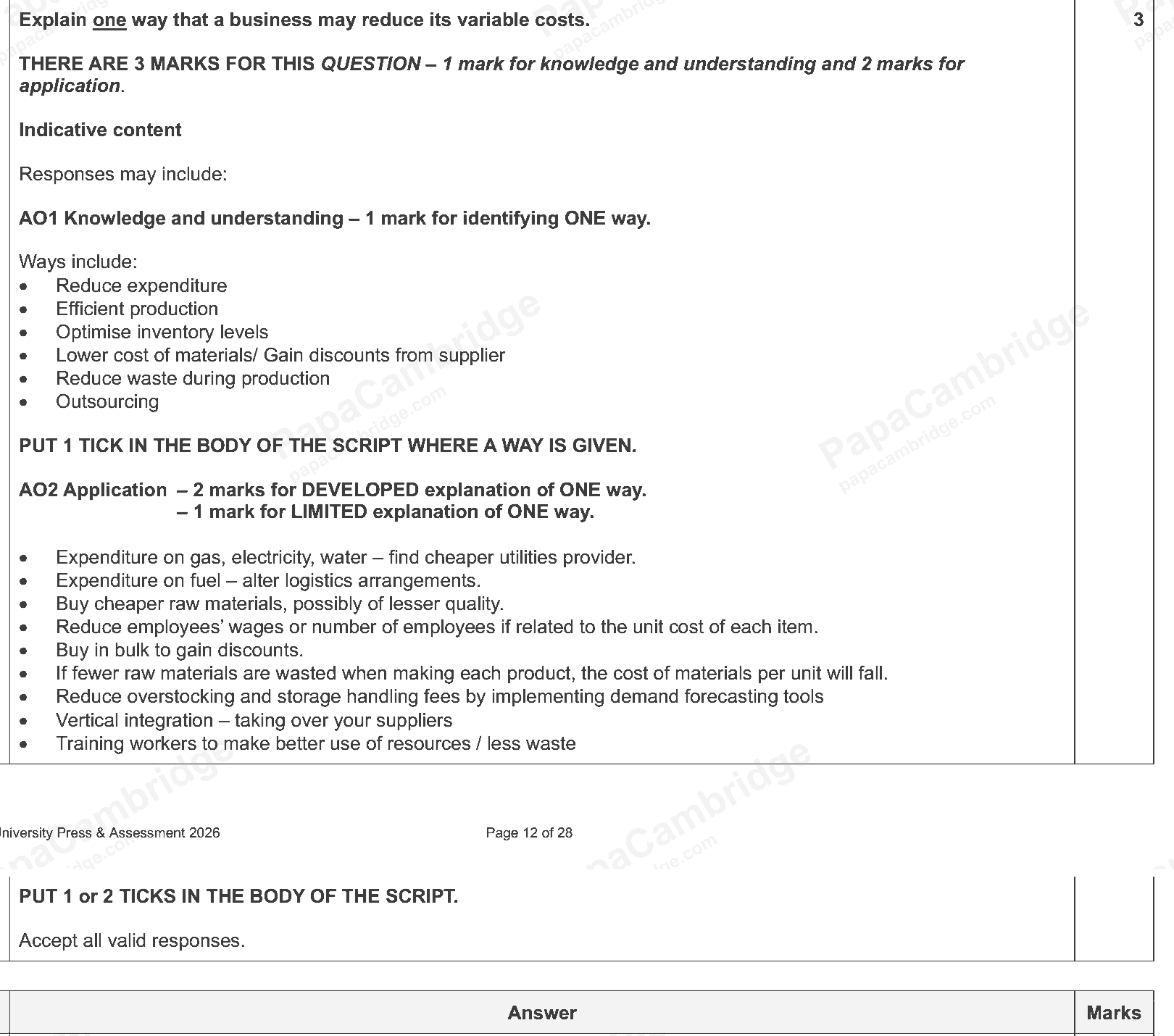
Analyse two reasons why a lack of accurate cost information may lead to business failure.
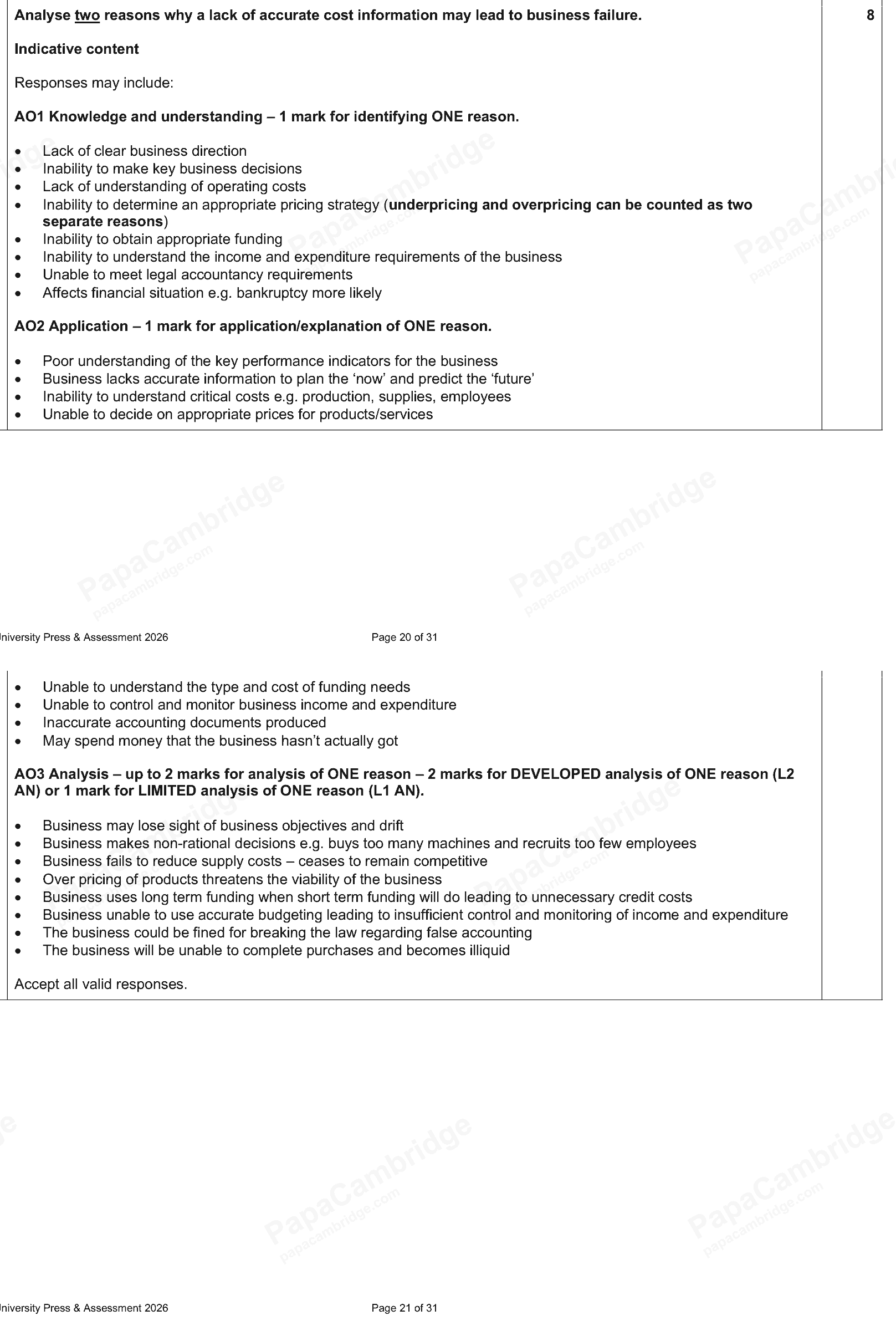
Evaluate whether using break-even analysis is essential for the success of a new hotel.
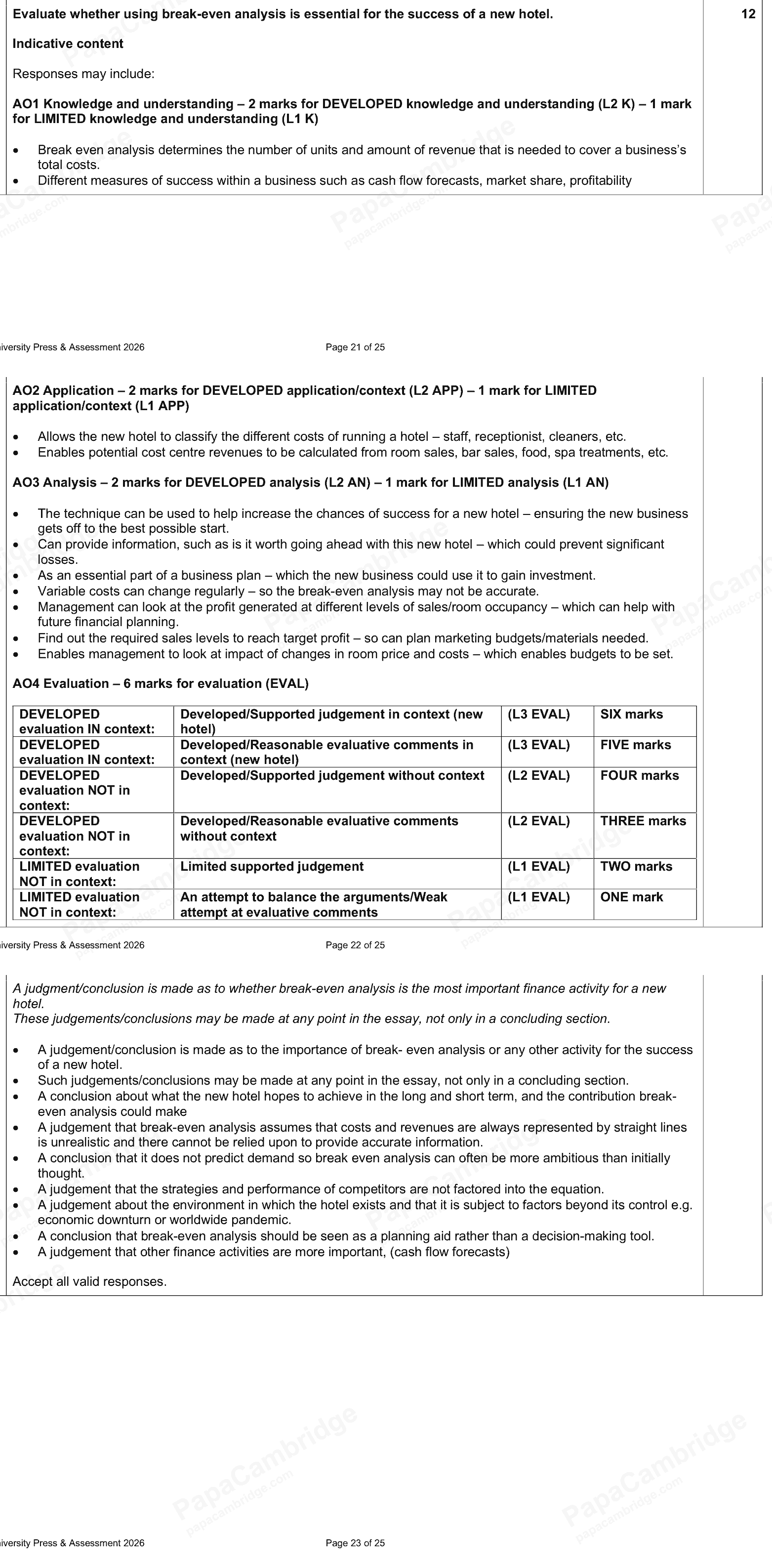
Define the term break-even analysis.
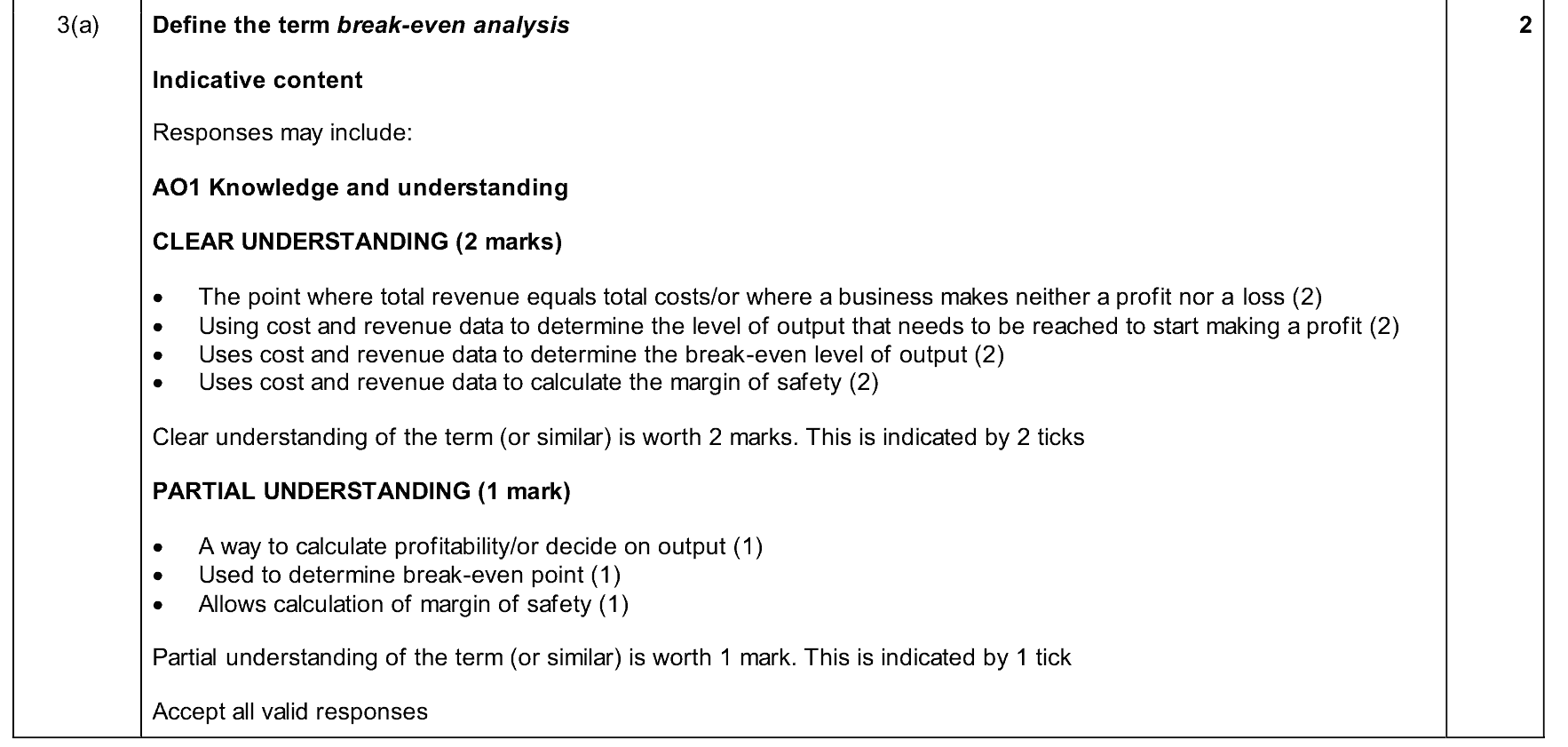
Explain one limitation for a business of break-even analysis.
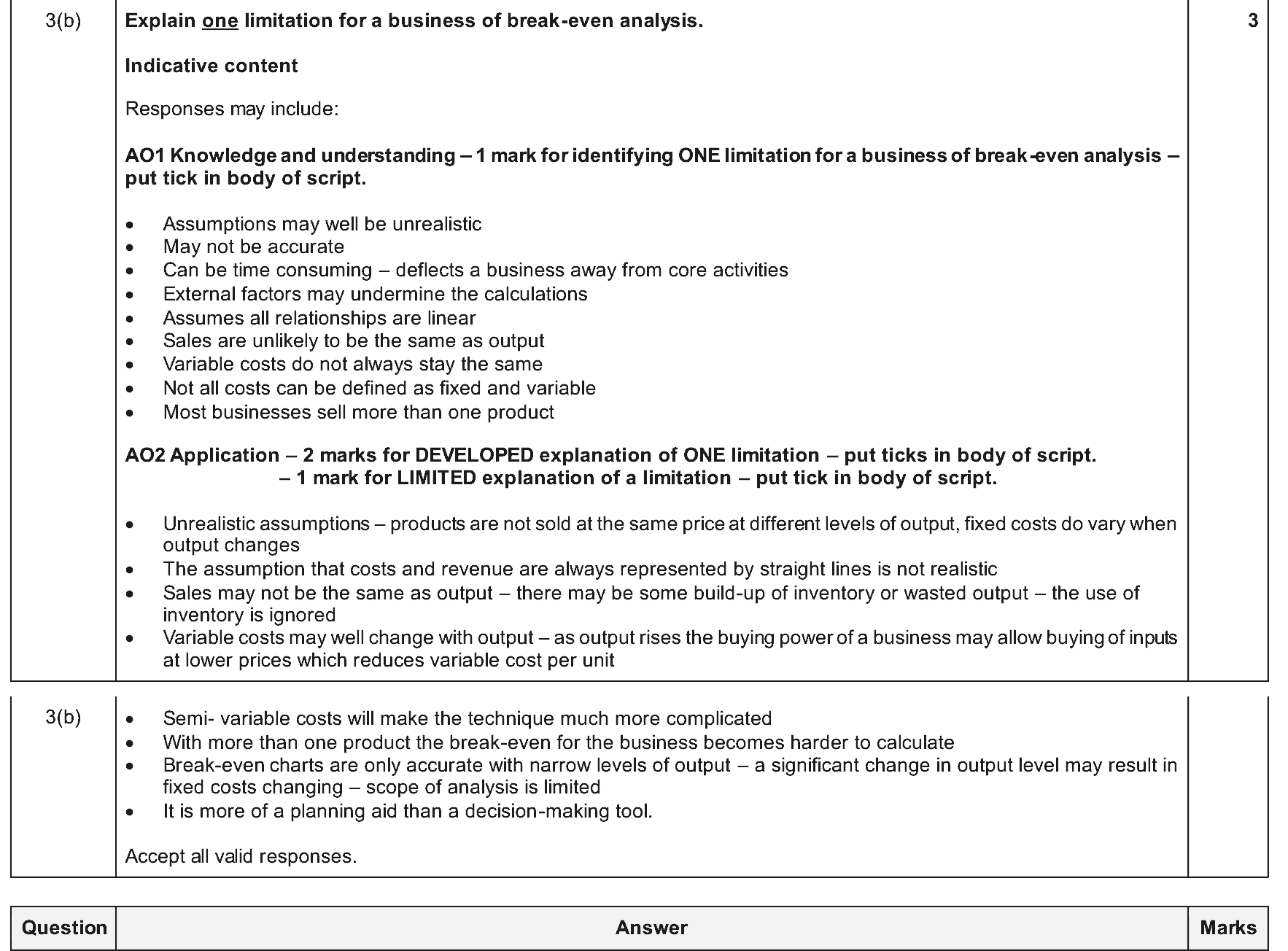
Analyse two uses of cost information for a business.
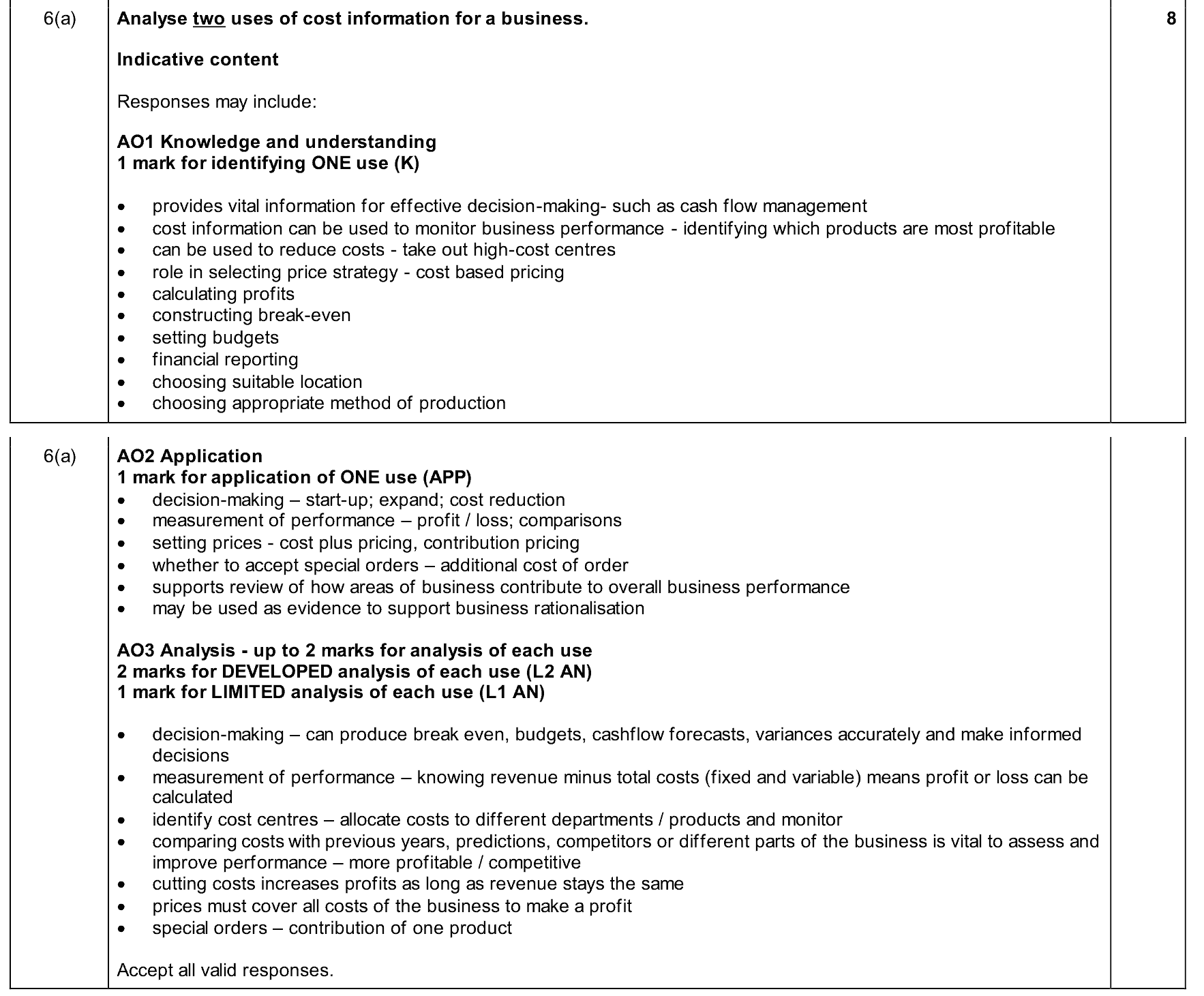
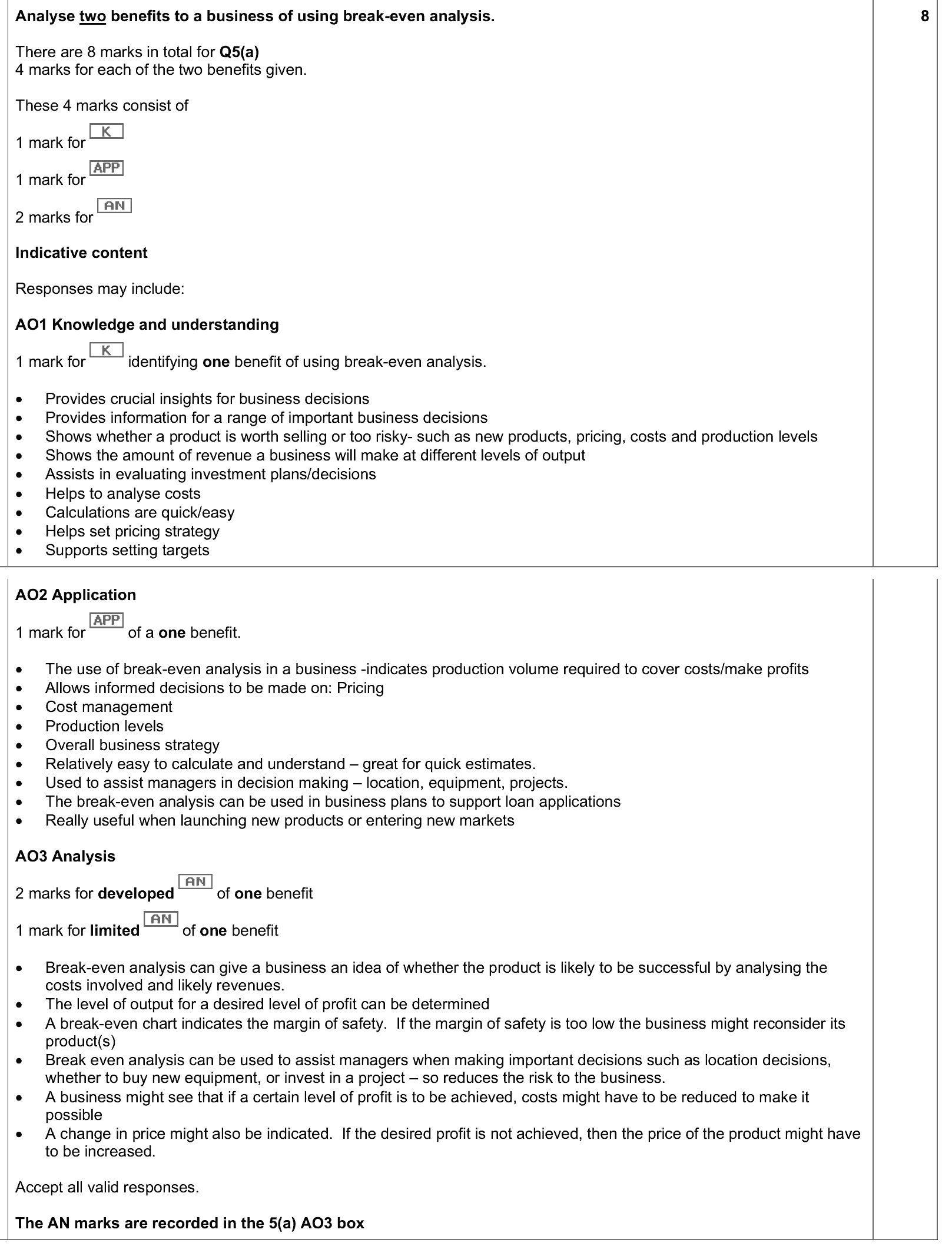
Analyse two benefits to a business of using break-even analysis.
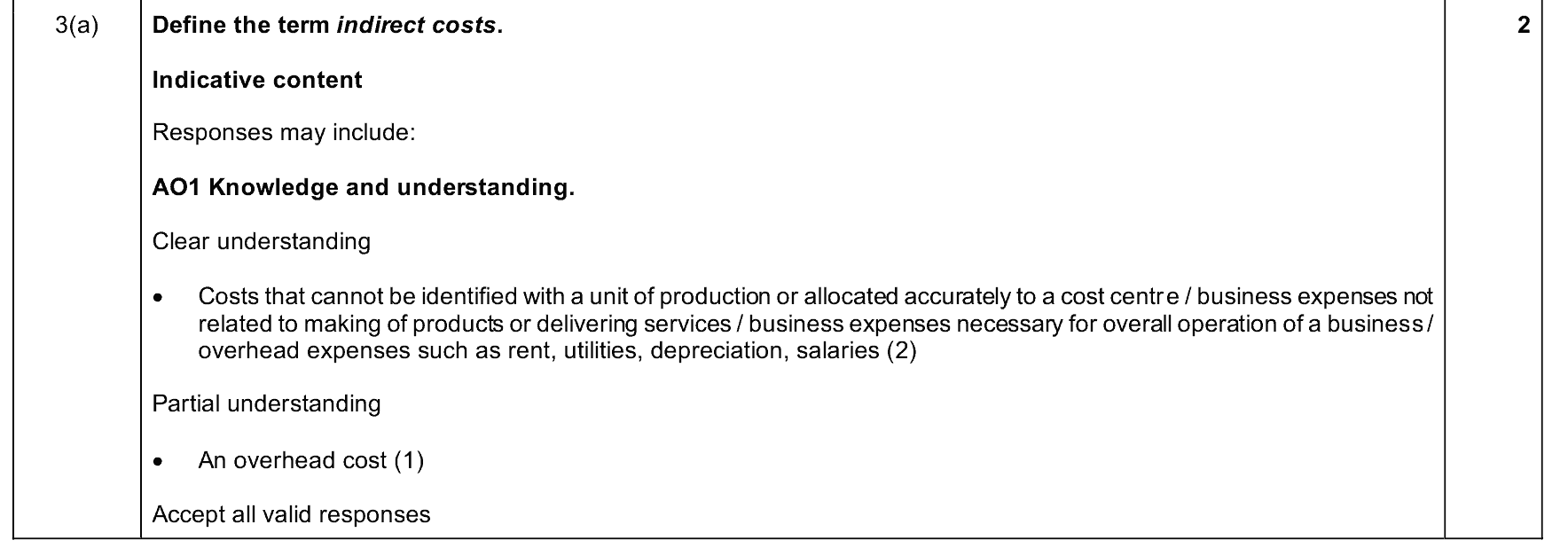
Define the term indirect costs.
DW operates a franchise as a franchisor. Driving instructors can become a franchisee and
sell driving lessons under the DW brand. DW has grown very quickly, gaining a 25% share
of the market in three years.
Driving instructors must prepare a business plan when applying to become a DW
franchisee. To prepare the business plan, the driving instructor must carry out primary 5
market research to assess potential customer demand for driving lessons in their area.
DW sets budgets each year. The budget for advertising was $25 500 in 2025. However, DW
actually spent $31 800 on advertising in 2025.
The prices for DW driving lessons are set by DW’s finance manager, who uses break‑even
analysis to make pricing decisions. 10
In addition to driving lessons, DW sells a ‘learn to drive’ book which customers can buy
from its website with next day delivery. The book is very popular, and the business uses JIC
(Just in Case) inventory management.
DW’s website generates over $28 000 of revenue each year from sales of the ‘learn to
drive’ book. The website is updated by the website manager and an IT assistant. The 15
website manager designs the website and resolves any technical problems. The IT
assistant helps the manager with simple programming and administrative tasks.
The website manager will retire in two months’ time. A new website manager will need
to be recruited. The human resource manager needs to decide whether the new website
manager should be recruited internally or externally. 20
Explain one limitation to DW of using break‑even analysis to make pricing decisions.

JT is owned by Jo as a sole trader business that provides school bus services to local public sector schools in city K. JT’s main customer is the local government. Established in 2015, JT is building a brand reputation as a safe and reliable transportation method for school children in city K. JT offers a range of services: 5

JT has 50 buses and 100 employees. Jo encourages employee participation at all levels of the business operation. Jo would like to implement customer relationship marketing (CRM) at JT, to improve 20 its relationship with the local government. To set up a CRM system will require $3m investment in computer systems, software and staff training. Jo believes that CRM could help JT become the leader in a very competitive school transport market.
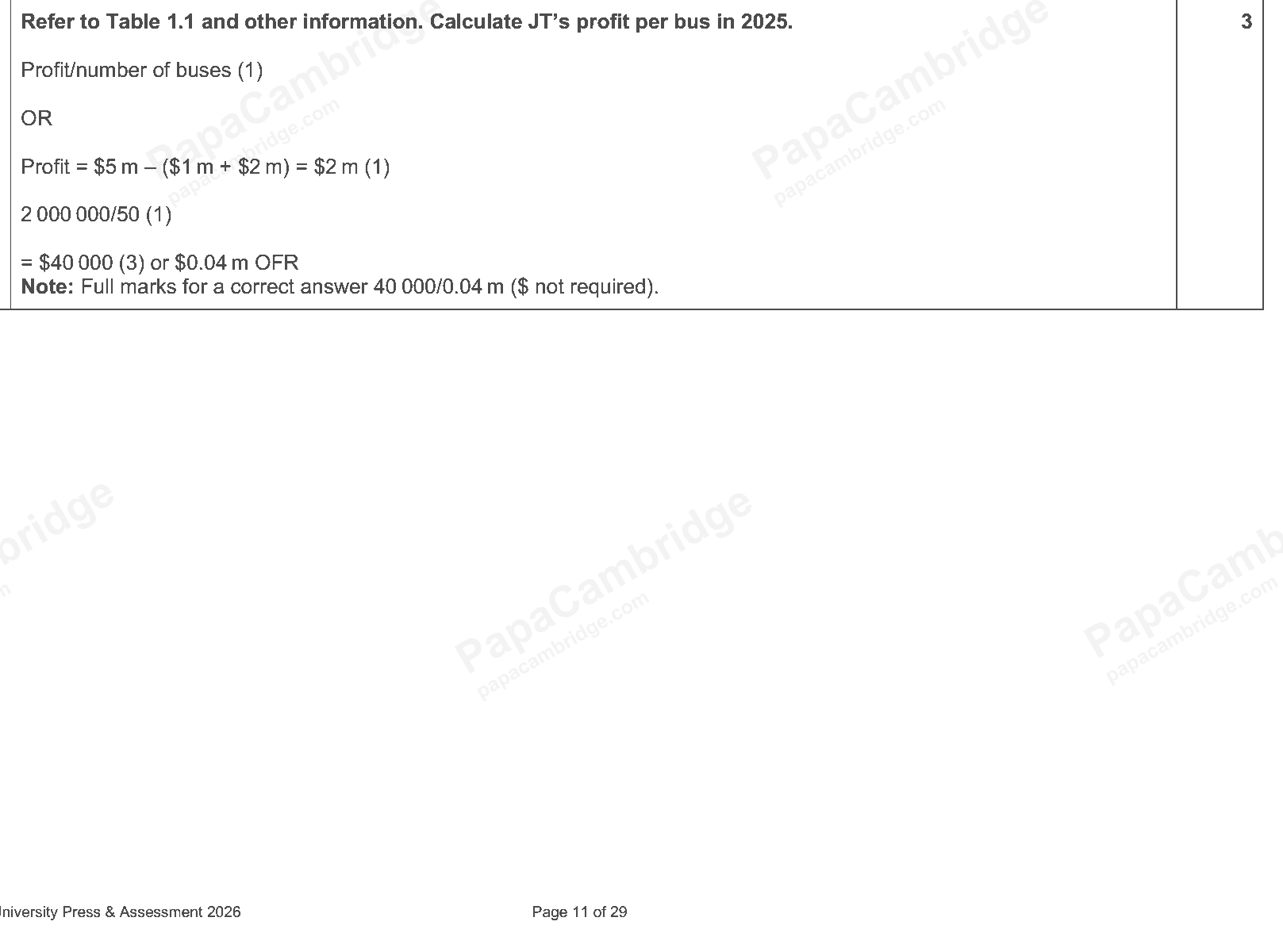
Refer to Table 1.1 and other information. Calculate JT’s profit per bus in 2025.
Refers to: images/cases/s26_23_p2_Table_1_1_Financial_information_for_JT_in_2025.png
LC is a private limited company based in country J, specialising in the manufacture of
high‑quality, eco‑friendly candles. Founded in 2018, LC has grown quickly by using a highly
effective approach to place (distribution channels).
LC sources raw materials from local and international suppliers. LC’s customers are mainly
specialist retail shops (B2B) and online shoppers (B2C). LC operates in a dynamic market 5
but is committed to supporting communities through job creation and sustainability. LC is
seen by the local community as a valuable contributor to the local economy.
LC has the production capacity to manufacture 500 000 candles per year and has 50
employees. LC has two products: ‘Plain Candles’, at a price of $7 each, and ‘Luxury
Candles’, at a price of $8 each. LC sells twice as many Plain Candles compared to 10
Luxury Candles.
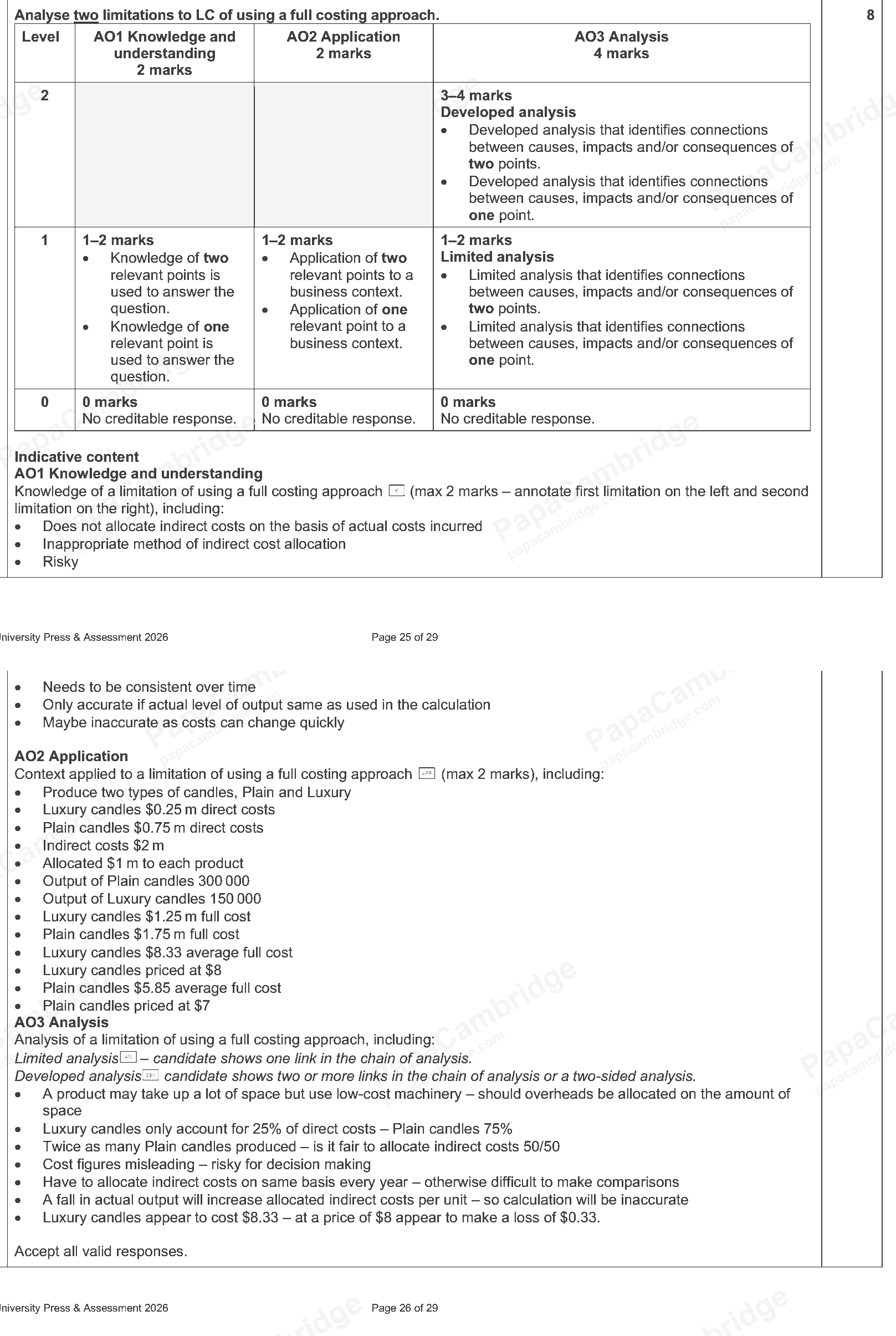
When allocating costs to each product, LC uses a full costing approach. Table 2.1 shows
some key data for LC in 2025.

The owners have decided to convert LC to a public limited company. This will likely increase the value of their shares. However, the directors are concerned about this decision.
Analyse two limitations to LC of using a full costing approach.
CB is a public limited company that operates a chain of coffee shops in several countries.
The company was founded in 2010 by two friends, Shopra and Ben. They share a passion
for coffee and want to offer high-quality products to customers.
CB started with one coffee shop in country Q and gradually expanded, always locating in
high-income areas of major cities. CB operates in a dynamic business environment. There 5
is a high level of competition from other well-known coffee shop chains.
The company sources its coffee beans from fair trade suppliers who grow their coffee in
an environmentally friendly way. CB offers a wide range of coffee products to the mass
market. CB also offers other drinks and a variety of food items, such as sandwiches and
cakes. Recent research shows that customers are now looking for healthy food options. 10
CB’s customers are mainly young professionals, students and tourists. Customers enjoy
CB’s inviting atmosphere, comfortable seating areas, free Wi-Fi access and music. Its staff
are trained to be friendly, helpful and knowledgeable.
Table 1.1 shows some financial data for CB for 2023 and 2024.

Shopra believes that CB should continue to focus on the mass market. However, Ben 20 thinks that greater use of market segmentation will be more successful.
Refer to Table 1.1. Calculate the change in profit from 2023 to 2024.
Refers to: images/cases/w25_21_p2_Table_1_1_CB_s_costs_and_revenue_for_2023_and.png

Explain one use to CB of cost information.

NN is a small business owned by Natalia. NN produces and sells a range of natural skincare products. In 2020, Natalia started making her own skincare products at home using natural ingredients. She realised that there was a demand for her products among her friends and family. Natalia then decided to turn her hobby into a business and launched NN in 2021. 5 Natalia operates her business from a rented workshop with limited space, where she makes her products by hand. She buys her ingredients from local suppliers who share her values of environmentally friendly production. NN has been growing steadily and has gained a loyal customer base. NN has received positive reviews from beauty magazines. Natalia’s skincare products are sold through her 10 own website, social media platforms and local retailers who specialise in selling natural products. Natalia is developing a new face cream. Table 2.1 shows price and cost estimates for the new face cream.

The skincare market is very competitive. There are many established brands that offer similar products to NN, but with wider distribution channels. Natalia needs to balance her time between production, managing orders, delivery, marketing 20 and other administrative tasks. She works long hours and is stressed and exhausted. Natalia is considering outsourcing to increase NN’s production capacity.
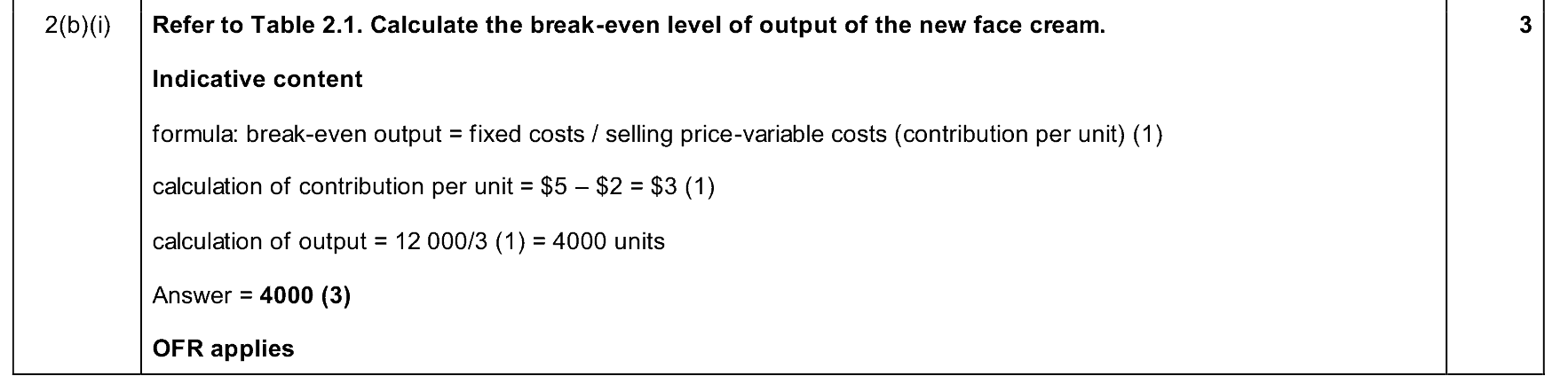
Refer to Table 2.1. Calculate the break-even level of output of the new face cream.
Refers to: images/cases/w25_21_p3_Table_2_1_Price_and_cost_estimates.png
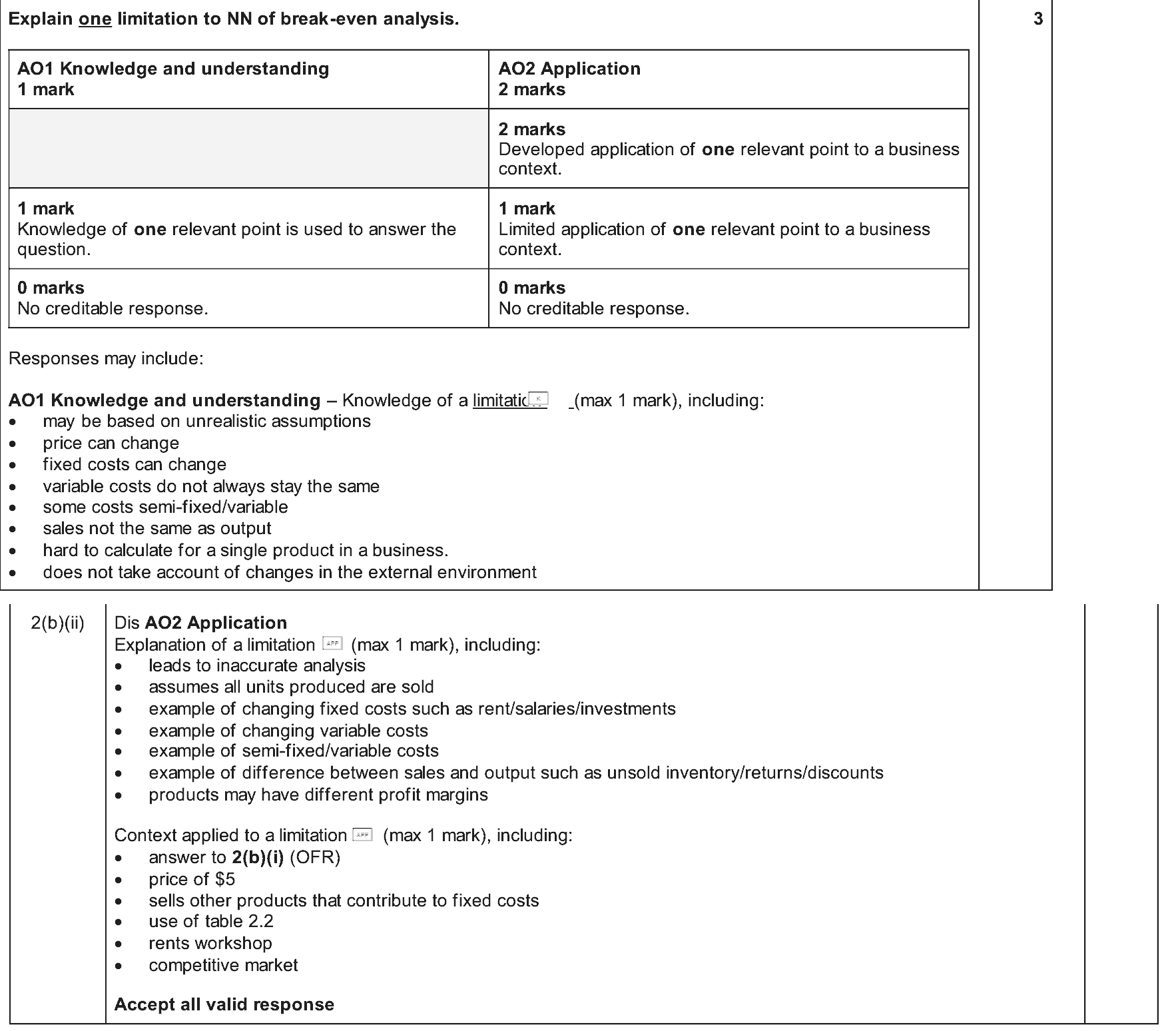
Explain one limitation to NN of break-even analysis.
TT is a private limited company in country J. TT has contracts to deliver products to secondary, tertiary and quaternary sector businesses. QZ is one of the largest manufacturers in country J and plans to outsource its supply chain management. A contract has been agreed between TT and QZ based on the following cost and revenue data (see Table 1.1). TT’s Sales Manager has forecast that TT will make 5 5 000 deliveries with the new contract.

TT employs 120 drivers. The majority of these drivers are white men aged between 40 and 60. A national newspaper has recently criticised the truck industry in country J for not having diversity and equality in the workplace. Klide, the Marketing Manager, has been set an objective to increase TT’s revenue. He has 15 decided to target small online retailers. TT will pick up individual products from the small online retailers and deliver them to households. This would require a new fleet of smaller trucks but has the potential to increase TT’s revenue. Klide plans to use digital promotion to target these small online retailers.
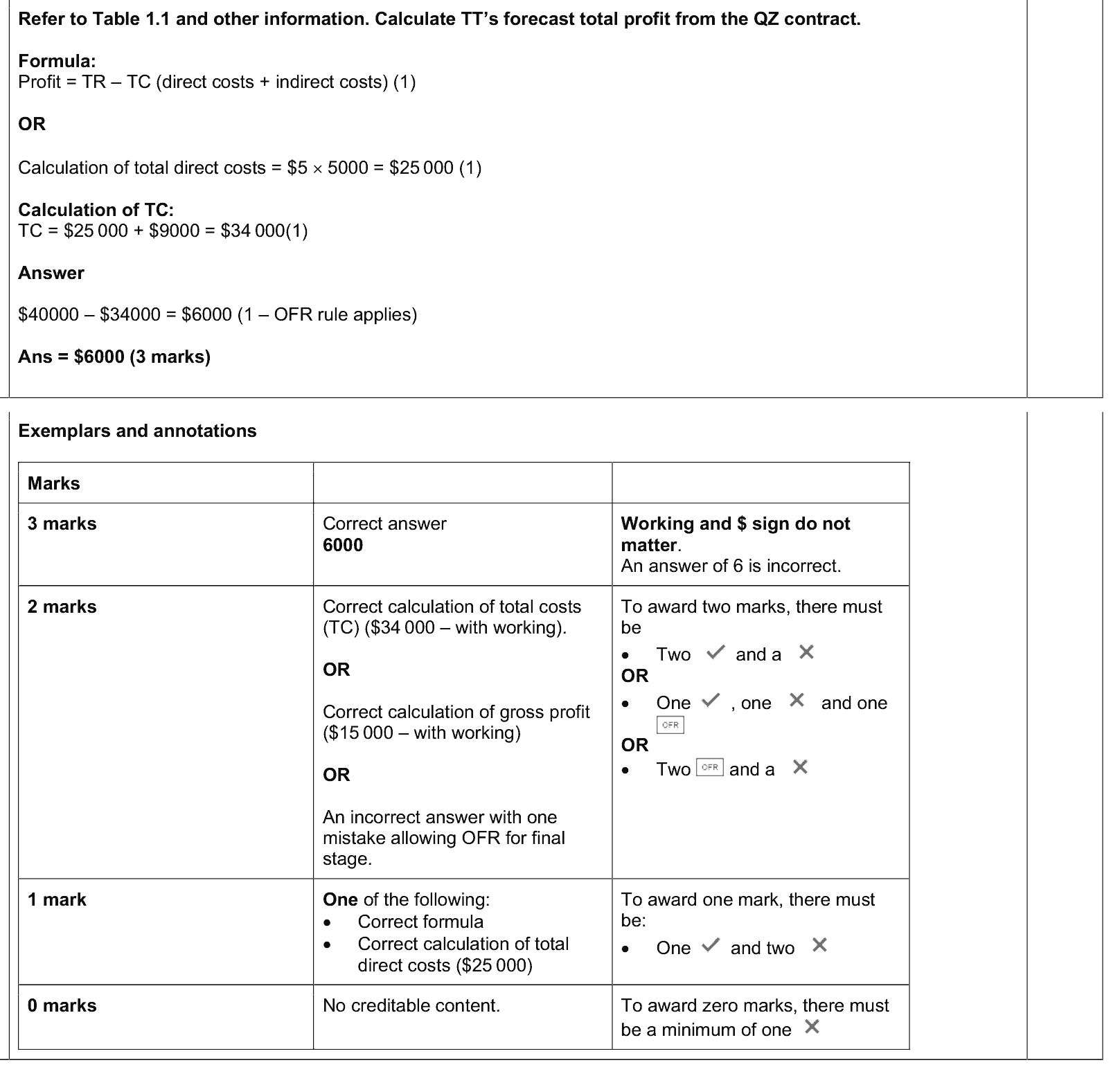
Refer to Table 1.1 and other information. Calculate TT’s forecast total profit from the QZ contract.
Refers to: images/cases/s25_22_p2_Table_1_1_Cost_and_revenue_forecast_for_the_QZ.png
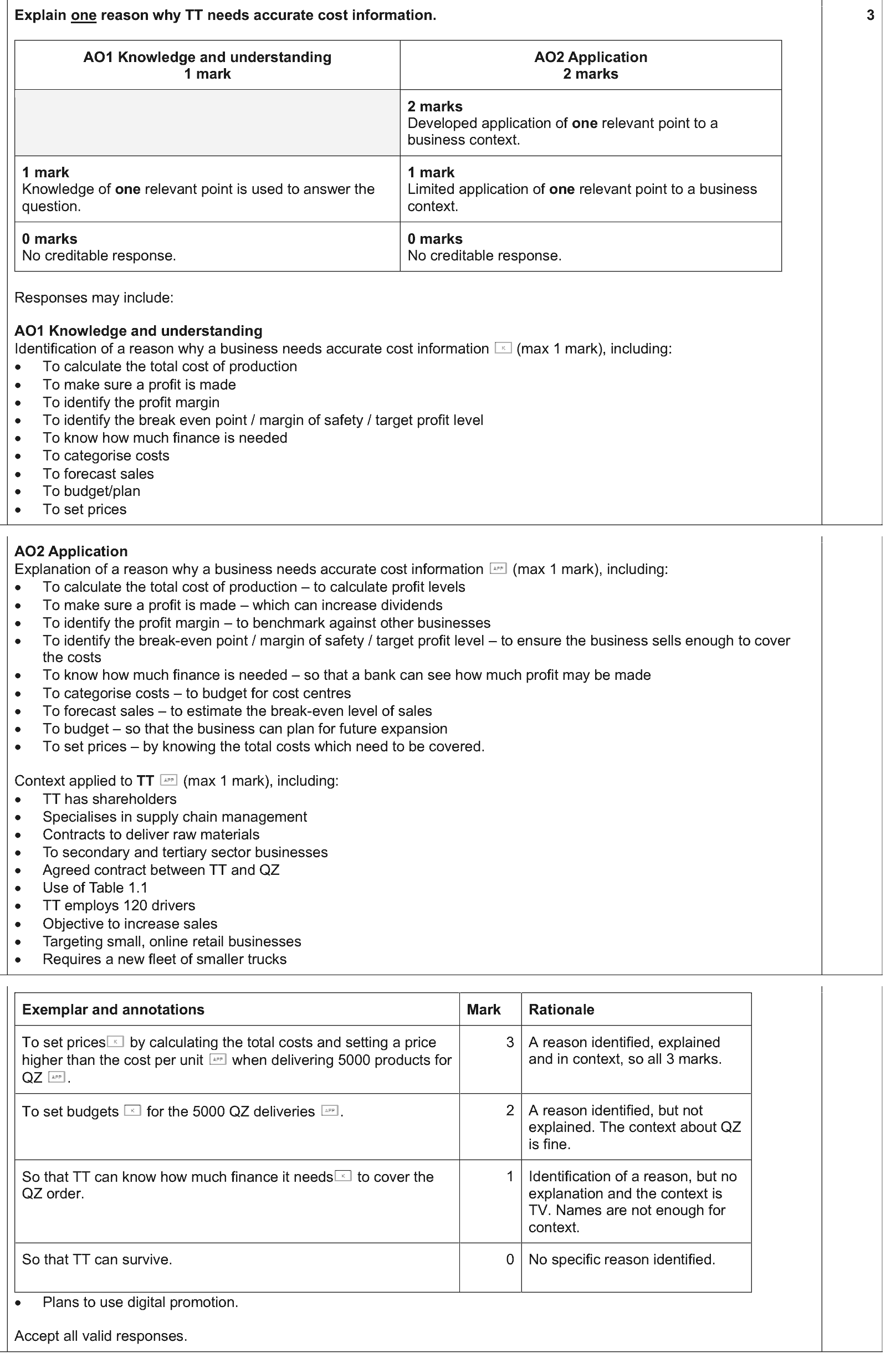
Explain one reason why TT needs accurate cost information.
FF is a partnership in country Q that grows a range of fruits and vegetables, such as apples,
carrots and potatoes. FF also provides an advisory service to other farmers. The partnership
was established in 2018 by three friends, Amrit, Harry and Sally, who provided the working
capital. Their aim was to produce healthy and tasty food for themselves and others.
FF grows crops using natural methods and practices. The produce is free from chemicals 5
and pesticides. It only uses renewable energy sources, such as solar panels and wind
turbines. It harvests the crops by hand or using simple machines that minimise damage or
waste, but this is labour intensive.
FF sells its products directly to consumers through its own farm shop and online delivery
service. It also sells to local restaurants. Table 2.1 shows information on FF’s revenue and 10
costs in 2024.

FF has gained a loyal customer base who appreciate the quality, flavour and nutrition of its products. However, FF also faces some challenges and risks in the competitive and uncertain food market. FF has limited capacity in producing crops. Weather conditions affect its yield and quality. It also must deal with pests, diseases and natural disasters that could 20 damage or destroy its crops. Another challenge that FF faces is the high level of demand for its products in the market. The partnership must meet the expectations and requirements of its customers who want fresh, varied and consistent products throughout the year.
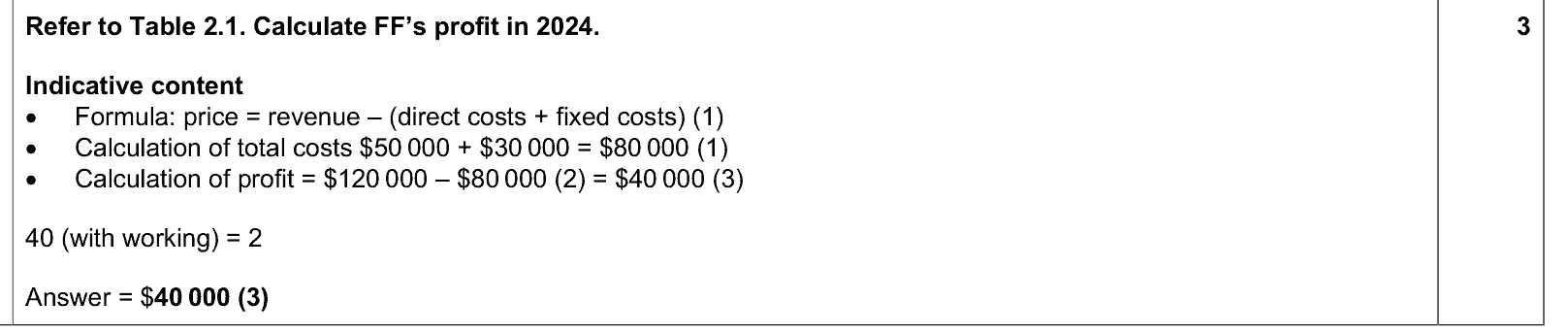
Refer to Table 2.1. Calculate FF’s profit in 2024.
Refers to: images/cases/s25_23_p3_Table_2_1_Extract_from_FF_s_financial_data_for.png
Frank grows fruit, including oranges, on his farm in country J. He sells his fruit at a market in a local city one day a week. Frank is a sole trader and operates in the primary and tertiary sectors. He set up FF using all of his redundancy money from a previous job with a large company. Frank’s business objective is to increase profit by 10% by the end of 2026. He also has a 5 target profitability of 25% by the same date. He uses the data from break-even analysis to make business decisions. Table 1.1 shows forecast data for the sale of oranges in July 2025.

Frank has two main competitors:
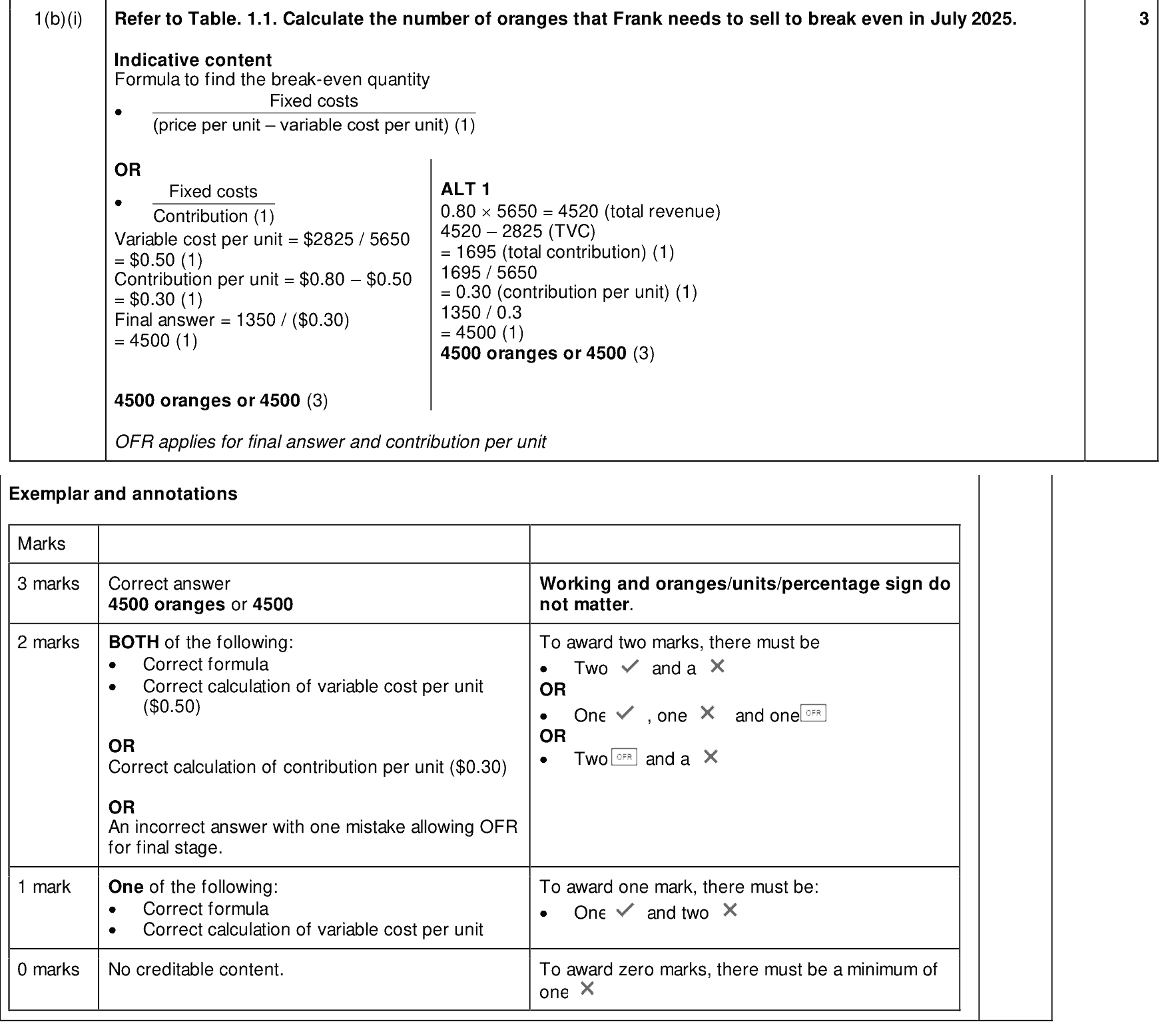
Refer to Table 1.1. Calculate the number of oranges that Frank needs to sell to break even in July 2025.
Refers to: images/cases/m25_22_p2_Table_1_1_Forecast_data_for_FF_July_2025.png
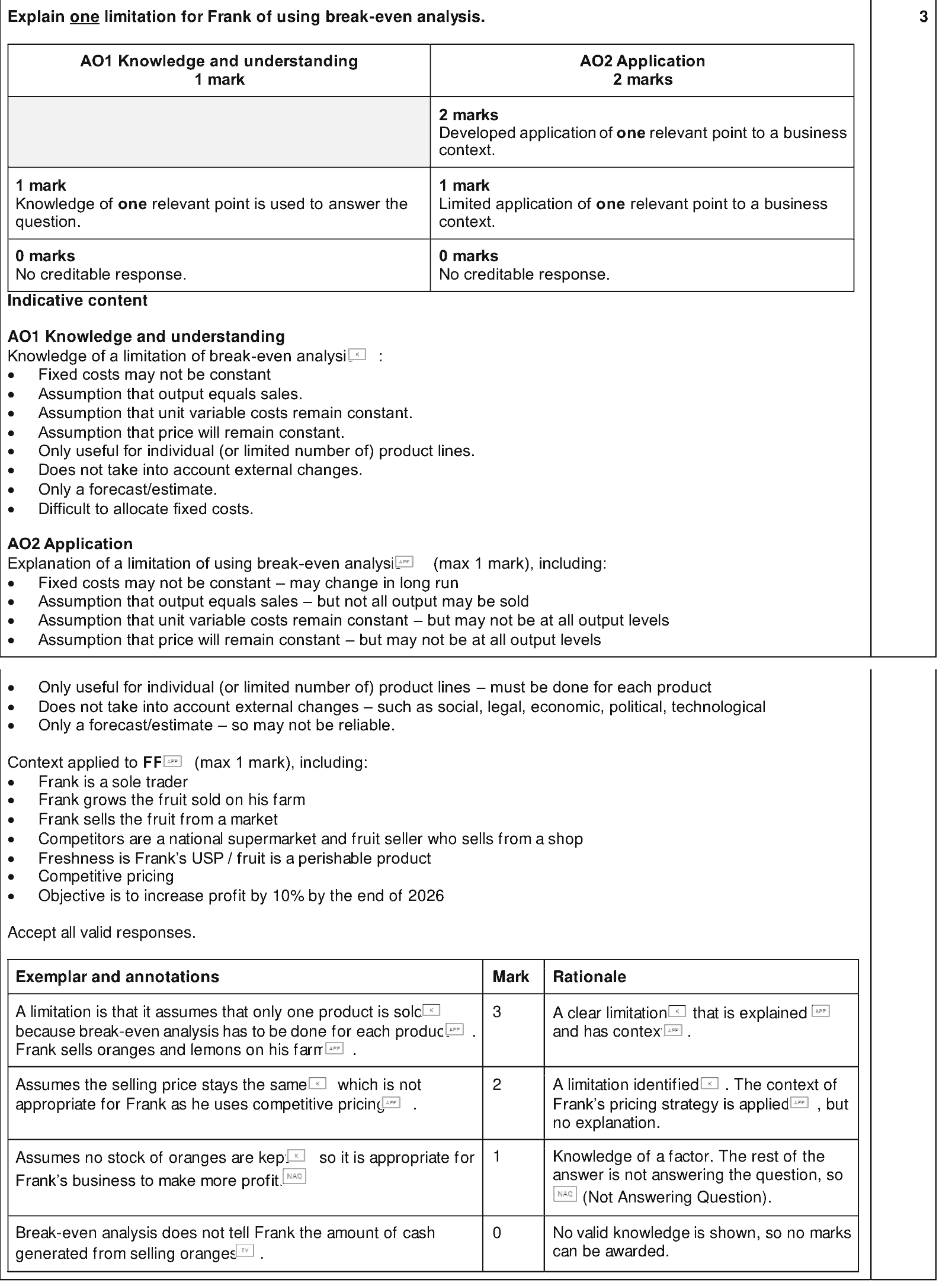
Explain one limitation for Frank of using break-even analysis.
🔒 Unlock every Costs question from 2020–2024
All 70 come with their mark schemes, answers and case studies, and appear in the practice tool above once you’re signed in. It’s free.
Questions and mark schemes are from past Cambridge papers and are reproduced for revision. Topical Vault is an independent revision resource, not affiliated with or endorsed by Cambridge Assessment International Education.
Each topic opens this practice tool with only that topic’s questions, plus how often it comes up and every question on it in one list.