Question 1(b)May/June 20269609/113 marks
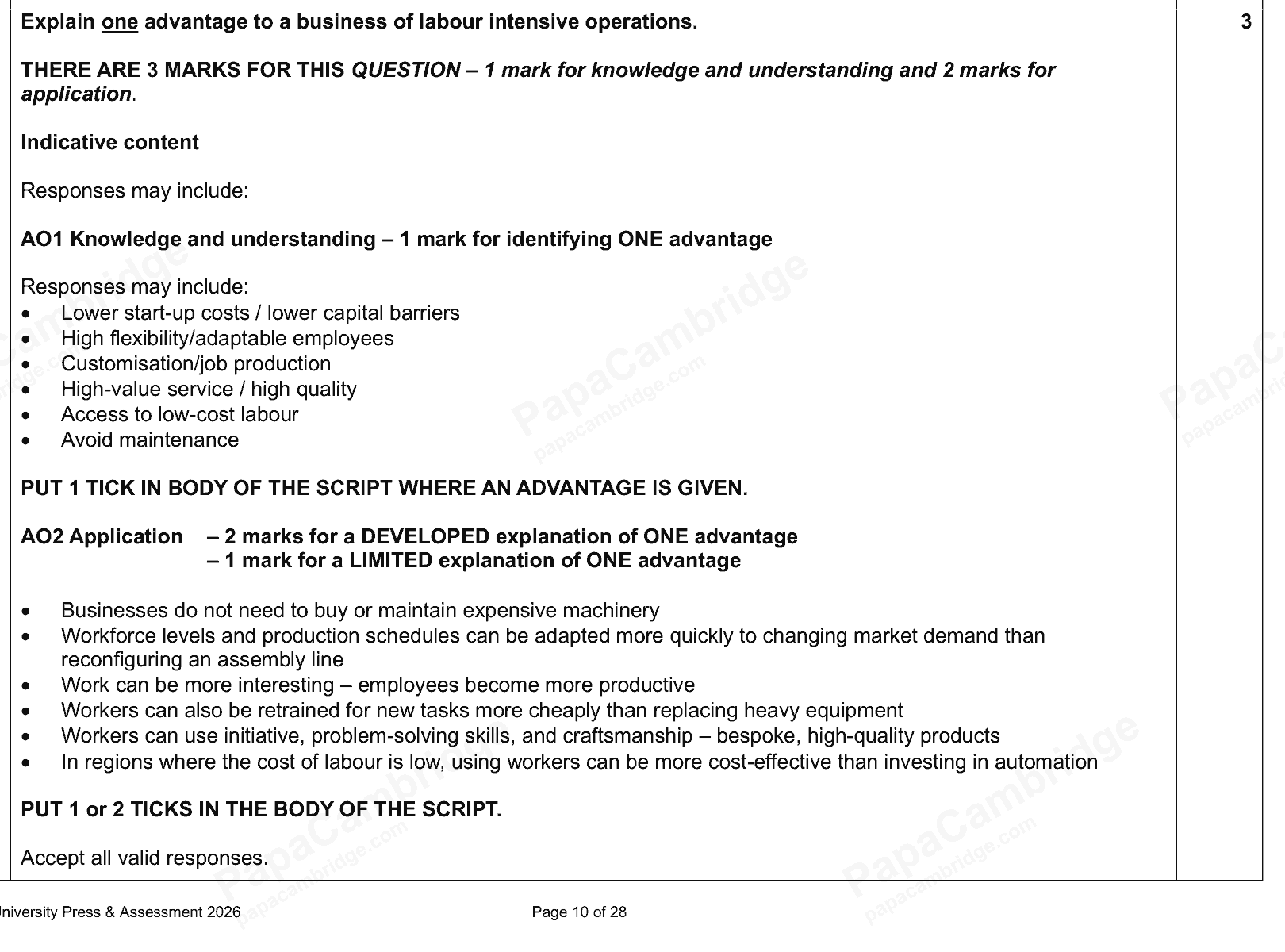
Explain one advantage to a business of labour intensive operations.
Show mark scheme
Cambridge 9609, Paper 1 & 2. 1,080 questions, 2020 to 2026.
Case studies and questions reproduced from the original Cambridge material; mark schemes are cropped from the official mark scheme PDFs. Papers from 2020–2022 were set on the previous syllabus and can touch content that is A Level today — those topics are marked “A Level content” above.
The transformational process, efficiency, effectiveness and productivity, labour and capital intensity, and production methods.
80 past paper questions on this topic since 2020, across 18 exam sessions.
| Year | Paper 1 | Paper 2 | Total | Chart |
|---|---|---|---|---|
| 2026 | 4 | 2 | 6 | |
| 2025 | 6 | 8 | 14 | |
| 2024 | 5 | 5 | 10 | |
| 2023 | 7 | 6 | 13 | |
| 2022 | 5 | 8 | 13 | |
| 2021 | 7 | 3 | 10 | |
| 2020 | 6 | 8 | 14 |
The whole topic on one page, with answers and mark schemes. Printing this page prints just this list.
Explain one advantage to a business of labour intensive operations.
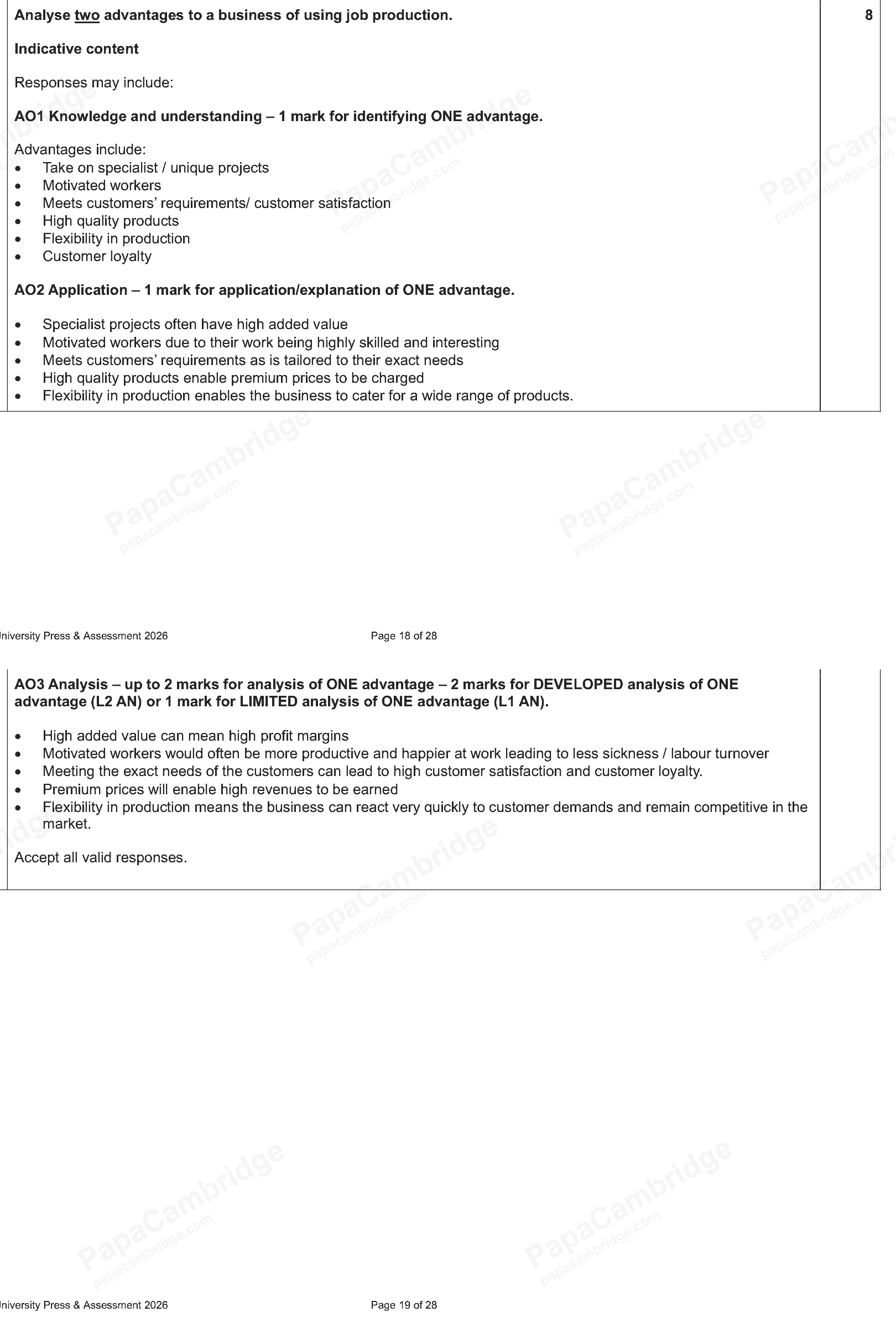
Analyse two advantages to a business of using job production.
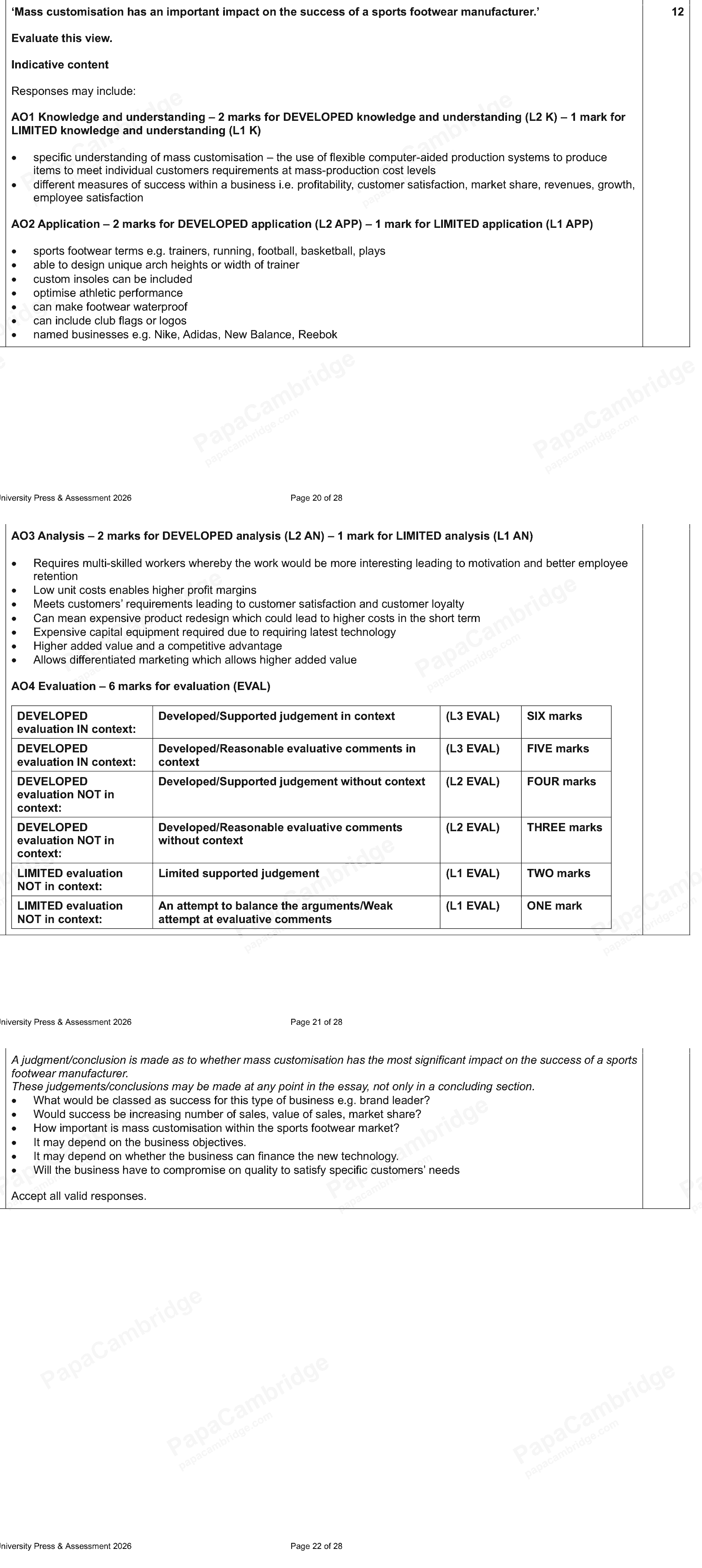
‘Mass customisation has an important impact on the success of a sports footwear manufacturer.’ Evaluate this view.
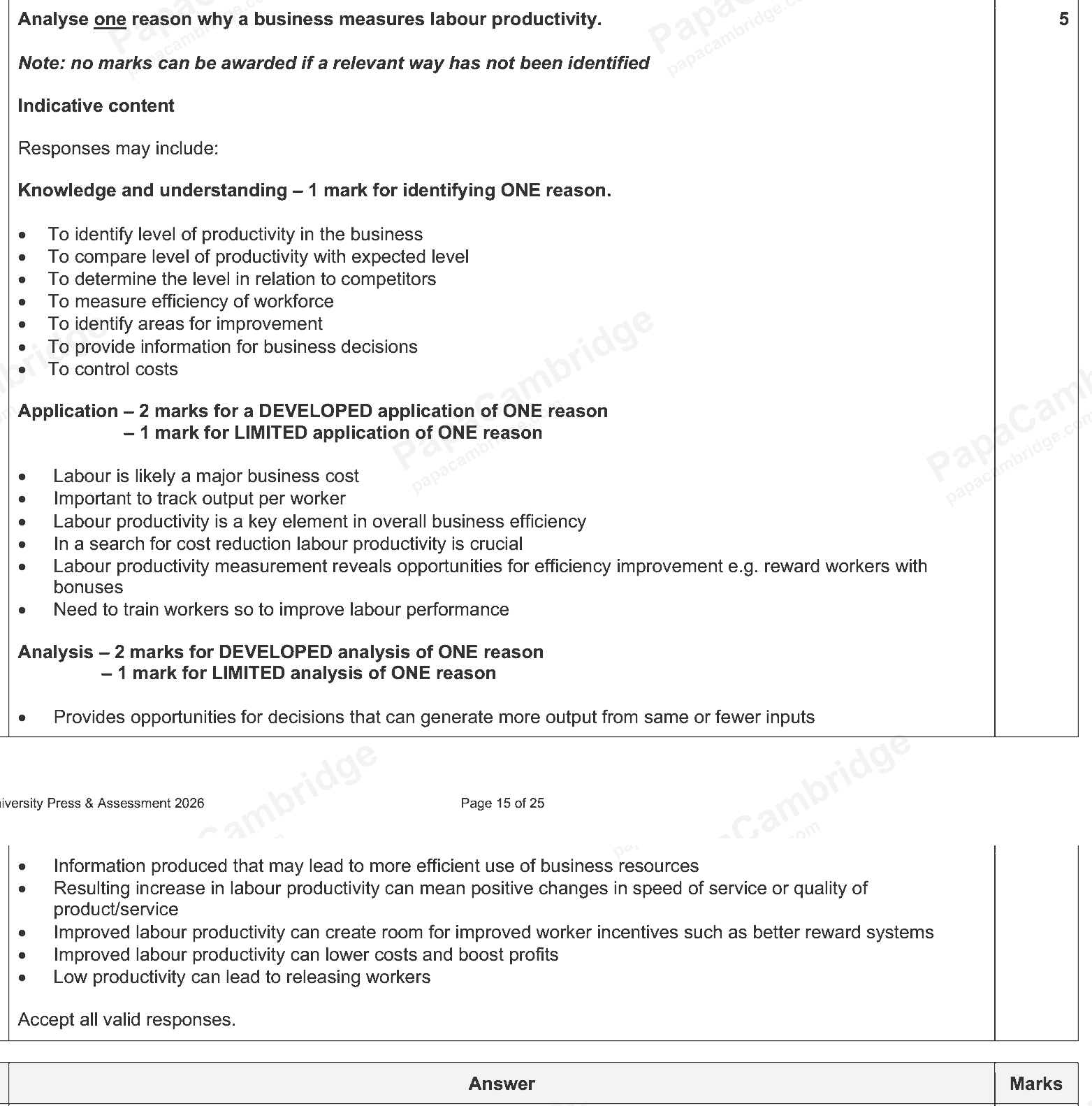
Analyse one reason why a business measures labour productivity.
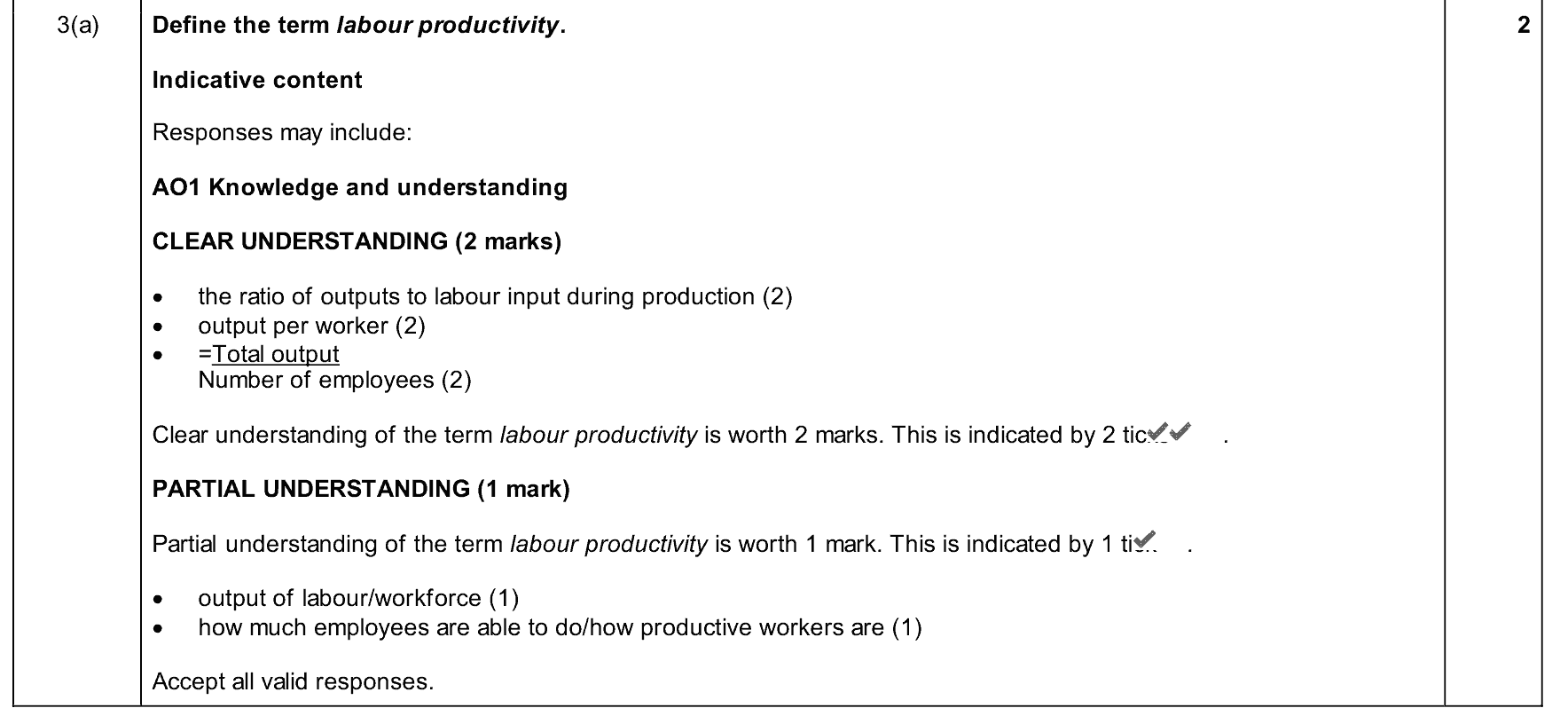
Define the term labour productivity.
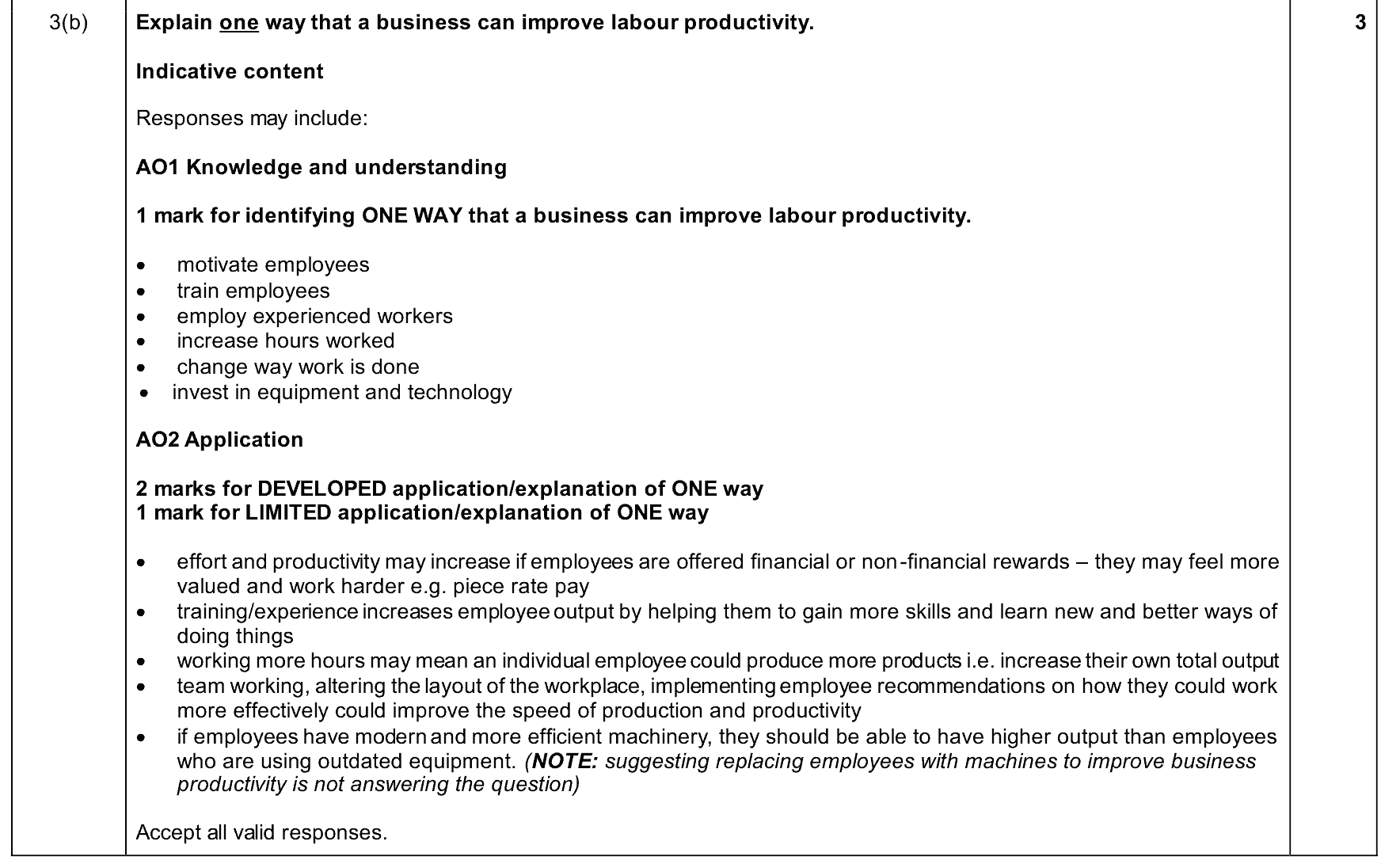
Explain one way that a business can improve labour productivity.
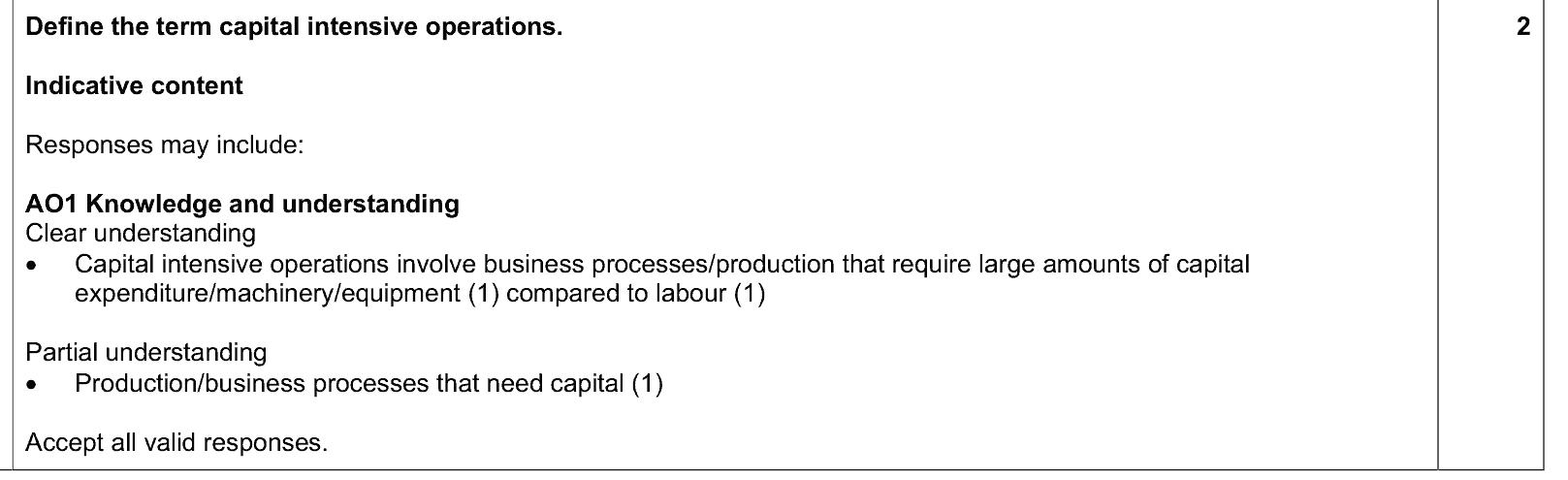
Define the term capital intensive operations.
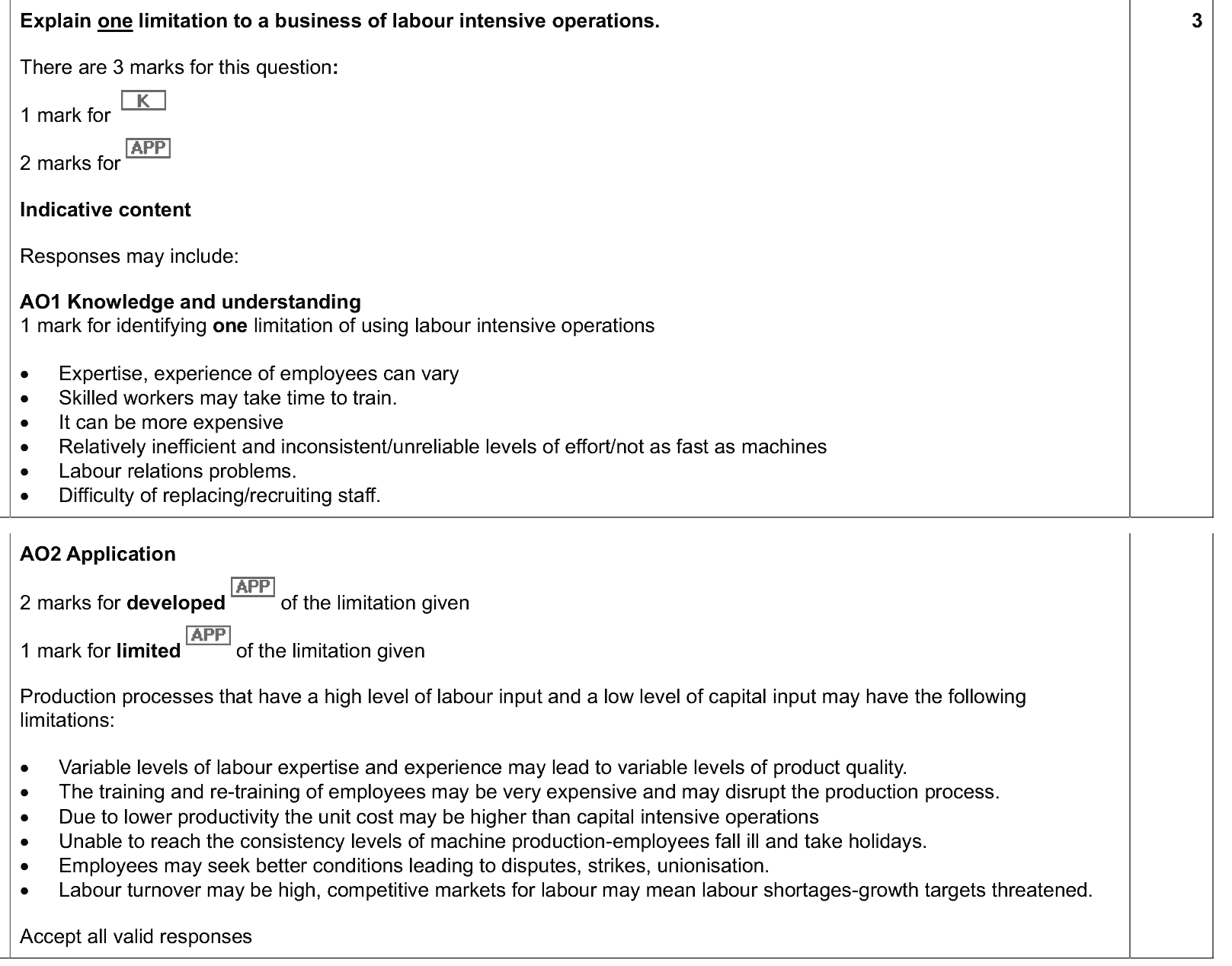
Explain one limitation to a business of labour intensive operations.
Analyse two limitations to a business of capital intensive operations.
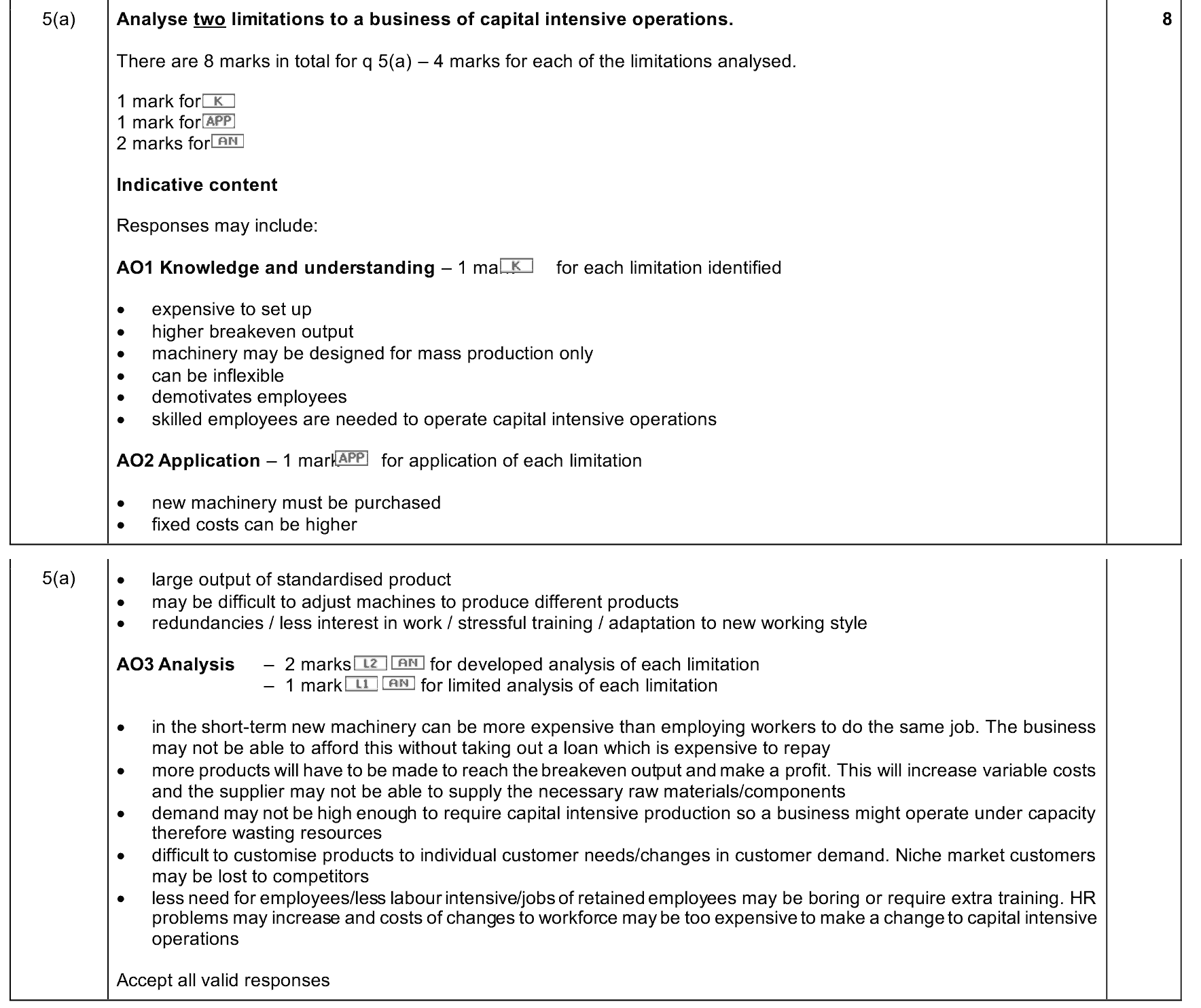
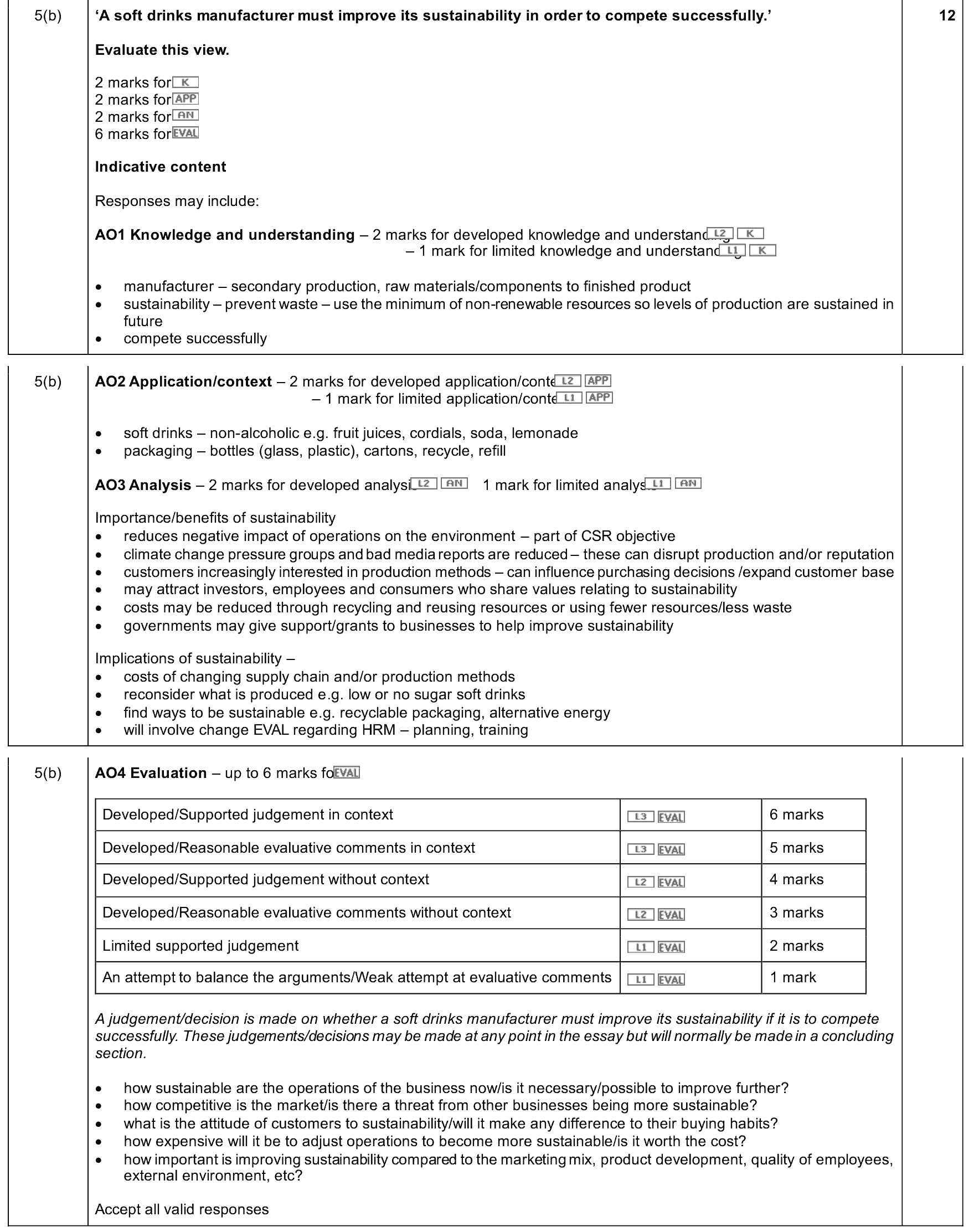
‘A soft drinks manufacturer must improve its sustainability in order to compete successfully.’ Evaluate this view.
CC manufactures a range of cola drinks aimed at the mass market. The company is the market leader for cola drinks in country N. CC produces four variants of its cola drink:

CC’s sales of Cherry cola have decreased by 12% over the past year. The marketing
manager is planning to carry out market research to investigate the reason for this
decrease. The research will collect qualitative data. The marketing manager will use this
data to make decisions about a marketing campaign to increase sales.
CC has 4 factories in country N and employs 1750 employees. All employees are paid 20
using a time‑based payment method and the work is repetitive. Operations are capital
intensive. The human resource manager is concerned that employees lack motivation,
leading to high labour turnover. Labour turnover has increased by 8% over the past year.
The human resource manager is considering changing the employee payment method from
time‑based to piece rate. 25
Analyse two benefits to CC of capital intensive operations.

Kamal is a successful social media influencer. In 2020, Kamal launched his own social media platform, called Influencer Xperience (IX), operating in the quaternary sector of the economy. Kamal targeted other social media influencers with IX’s promotion. IX allows influencers to manage and publish videos on its platform. The unique selling point of IX is that it provides the influencers with better and more detailed information than any other platform. 5 IX is a free-to-use service for social media influencers. IX charges other businesses to advertise on the platform. The price of advertising space is set each month, using dynamic pricing, based on how many users click on an advertisement (price per click). Table 1.1 shows some data about advertising on IX’s platform.

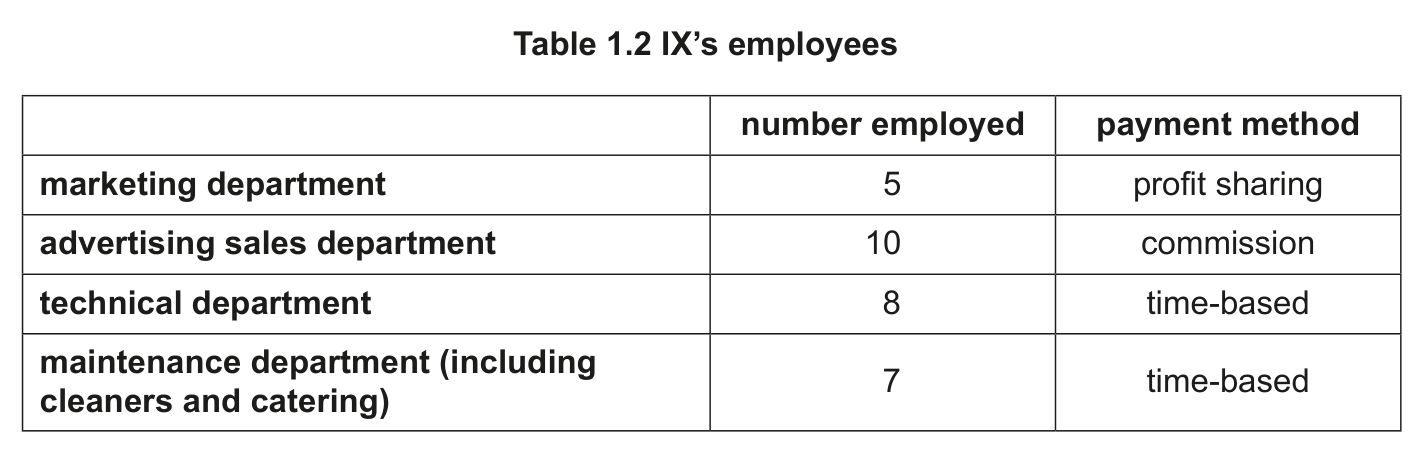
IX’s operations are labour intensive and Kamal describes his management style as laissez-faire. IX has 30 employees who are all managed by Kamal (see Table 1.2).
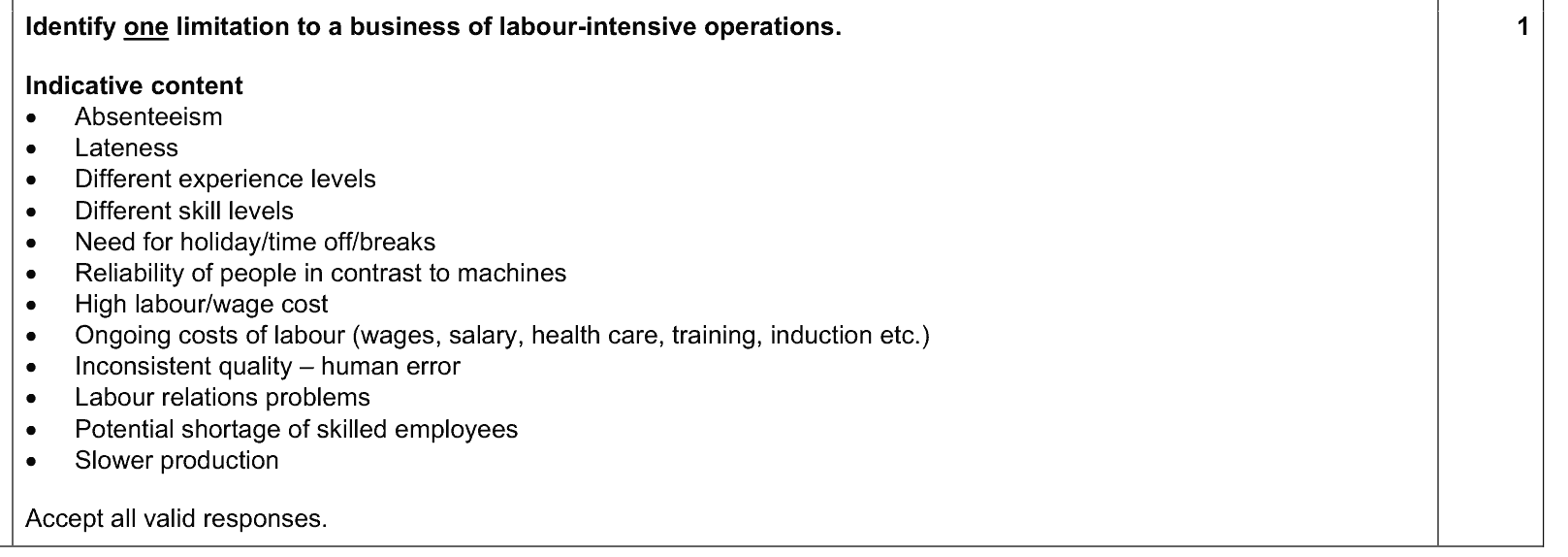
Identify one limitation to a business of labour-intensive operations.
TRA is a quaternary sector business. It is the market leader in providing social media data to food manufacturers in country F. TRA’s market has grown by 40% over the last year. DF is a multinational business that specialises in non-alcoholic drinks. DF has asked TRA for data about a new bottle of water with pod attachments. The pods give a fruity flavour which is combined with sparkling water. TRA has sampled 8000 potential consumers on 5 social media to identify their favourite fruity flavour (see Fig. 1.1). None, 6% Watermelon, 14% Banana, 18% Lemon, 34% Strawberry, 28%
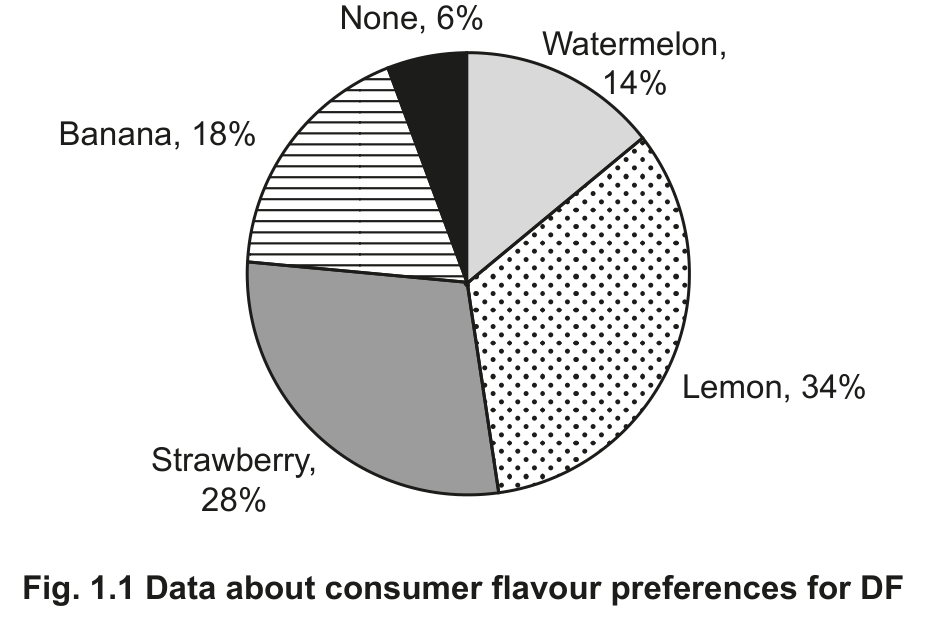
TRA employs 65 researchers. Since 2020, all of these employees work from home. They are provided with all the necessary IT equipment and a high-speed internet connection. However, motivation is poor, and this has led to high labour turnover. The Human Resource 10 Director has received some feedback from employees. Fig. 1.2 shows some of this feedback.

Identify one stage of the transformational process.

Drake has a law degree and works for a partnership of lawyers during the day. Drake owns a website that gives free legal advice. He works on the website in the evenings and at the weekend. He started the website as a hobby, but the website has grown to over 20 000 users and he now sells advertising on his videos and on the website. 5 Drake uses outsourcing for some areas of his website. He has recently been sent a report showing variances in the budget from the previous month (see Table 2.1).

Drake has now left his job and is focusing full time on the website. He rebranded the website as Law Advice Forum (LAF). Drake’s business plan for LAF included:
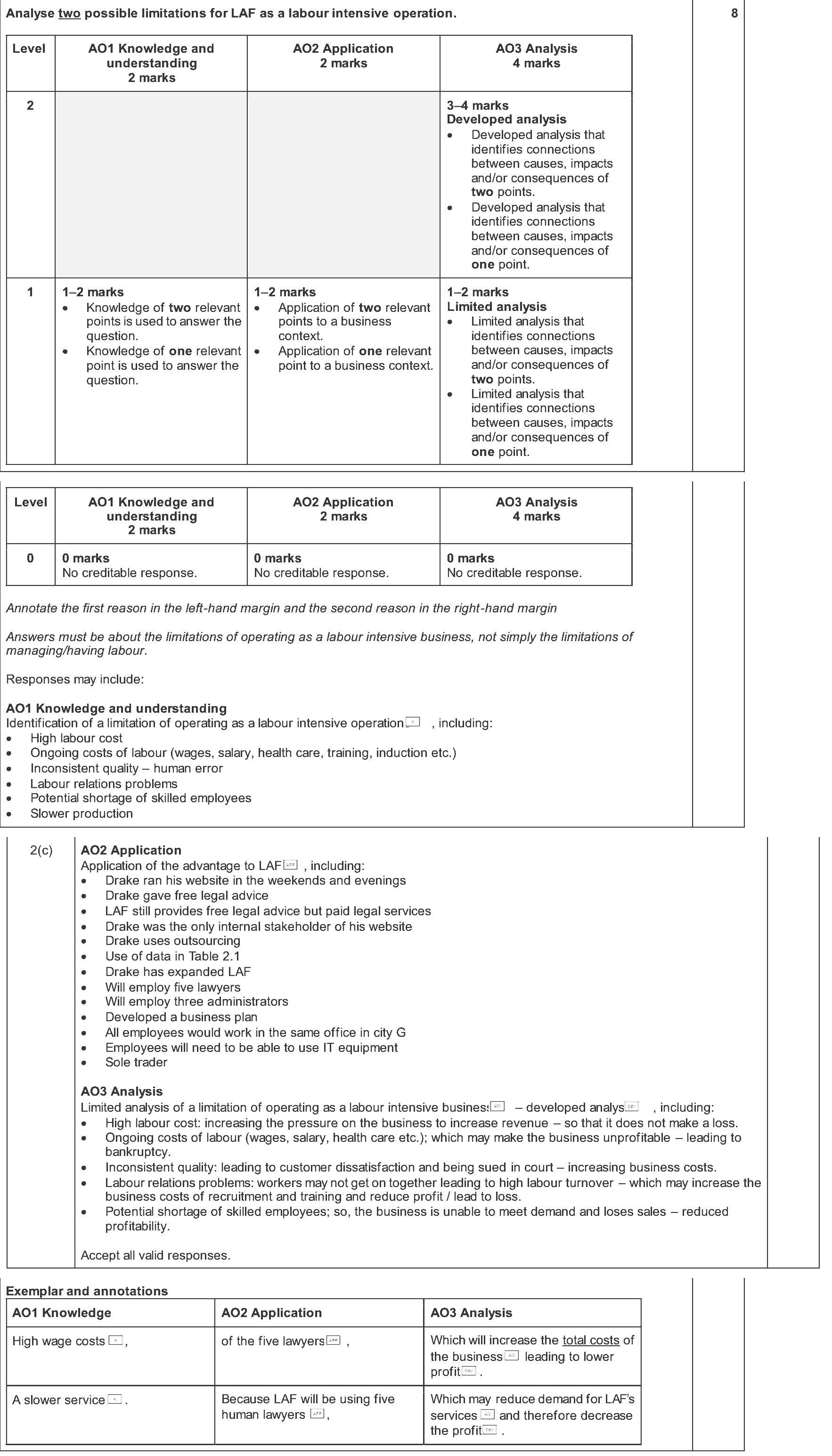
Analyse two possible limitations for LAF as a labour intensive operation.
SF is a private limited company that develops and maintains large-scale solar farms in
country X. SF operates as a capital intensive business.
Bob is an entrepreneur and the majority shareholder of SF. He invested into SF’s first solar
farm. SF took out high-interest bank loans to cover initial cash flow problems and provide
working capital. SF used internal (organic) growth over the next 10 years. 5
SF rents fields from farmers. Its main capital expenditure is solar panels, which are installed
on the rented fields. The solar panels generate electricity, which SF sells to energy providers.
Solar panel technology is constantly improving.
SF operates five solar farms in country X. A team of seven engineers maintain all of SF’s
solar farms. 10
Table 1.1 shows SF’s budgeted and actual data for 2024.

Bob has identified that SF can increase its revenue by using batteries to store electricity
generated by the solar panels. This electricity can then be sold at peak times for premium
prices. This will require significant investment into battery technology. 20
Bob wants to retain control of SF but is concerned about the investment required for further
growth. In 2024 the cost of renting new farmland and purchasing solar panels increased
significantly.
ZB is a multinational battery manufacturer that is keen to start a joint venture with SF. If the
joint venture goes ahead, ZB will insist that SF uses ZB batteries in all future solar farms. 25
Analyse two limitations to SF of operating as a capital intensive business.

PH owns student rental accommodation in all the major cities in country Y. PH used demographic segmentation in its market research. This research identified that university students would pay a premium for high specification rental accommodation. PH has specialist teams focused on sales, maintenance, customer service and finance. There is little opportunity for internal promotion. PH pays low salaries, however, it offers 5 profit sharing to motivate its 150 employees. This has been effective as PH has had low labour turnover. In the last two years, profit levels have fallen by 75%. In 2024, 45 employees left PH. Complaints about maintenance and customer service have increased due to the lack of experienced employees in PH. 10 The Finance Director is reviewing PH’s existing sources of finance, shown in Fig 2.1. Bank loans 8% Owner’s Mortgage investment 42% 28% Overdrafts 22%

Frank, the Operations Director, wants to improve the sustainability of PH’s operations. He plans to:
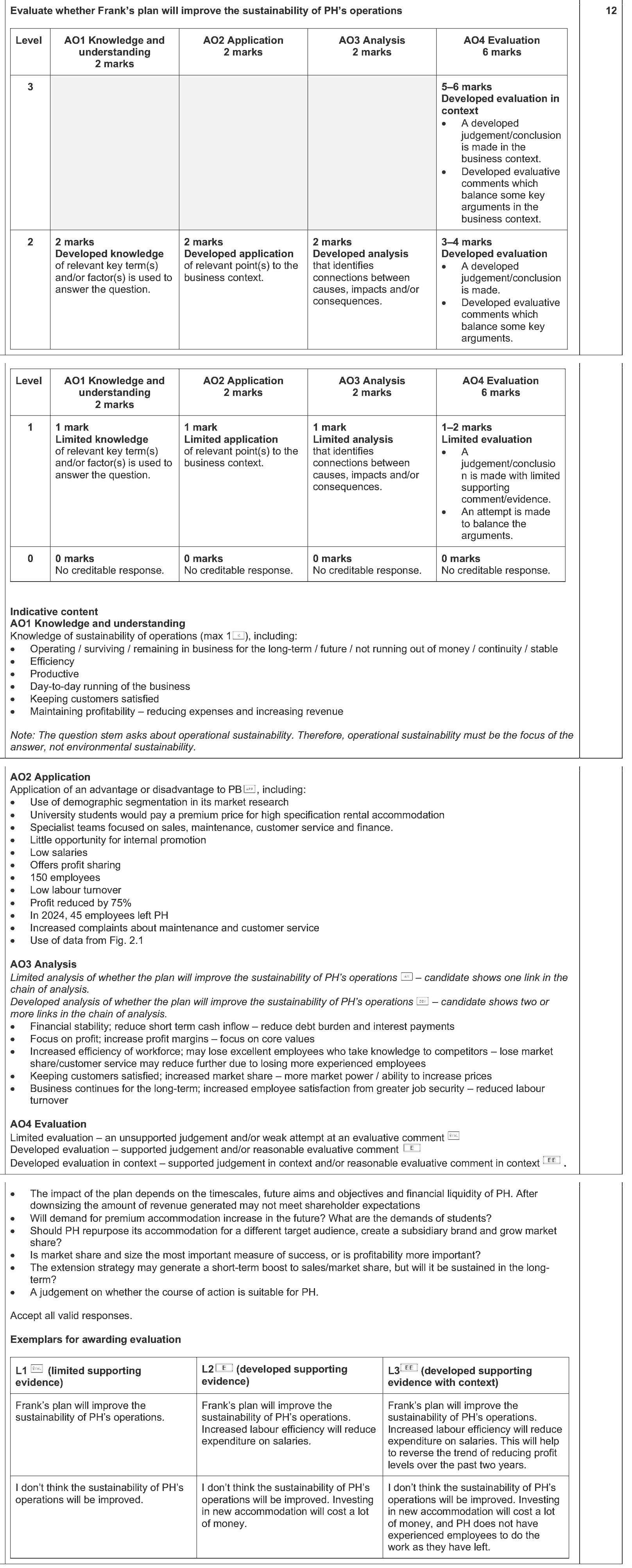
Evaluate whether Frank’s plan will improve the sustainability of PH’s operations.
Kaia left university with a degree in textile design. Using her entrepreneurial qualities, Kaia set up PB as a sole trader. Her current objective is to break even. Kaia uses job production to make blankets which are personalised with a picture. Each customer logs into the PB website and chooses the size of blanket. The customer then uploads a picture that they want printed onto the blanket. 5 Many of Kaia’s customers buy the blankets as gifts for special occasions. Kaia has employed a social media influencer to promote her blankets. The influencer will be paid a salary of $250 a week and a 5% commission on revenue that comes directly from the influencer. Fig 2.1 shows the revenue that came directly from the social media influencer in February. 10 Revenue ($) Week 1 Week 2 Week 3 Week 4

Kaia would like to relocate PB to larger premises. She is applying for external sources of finance, and she has written a five-year business plan to support her applications.
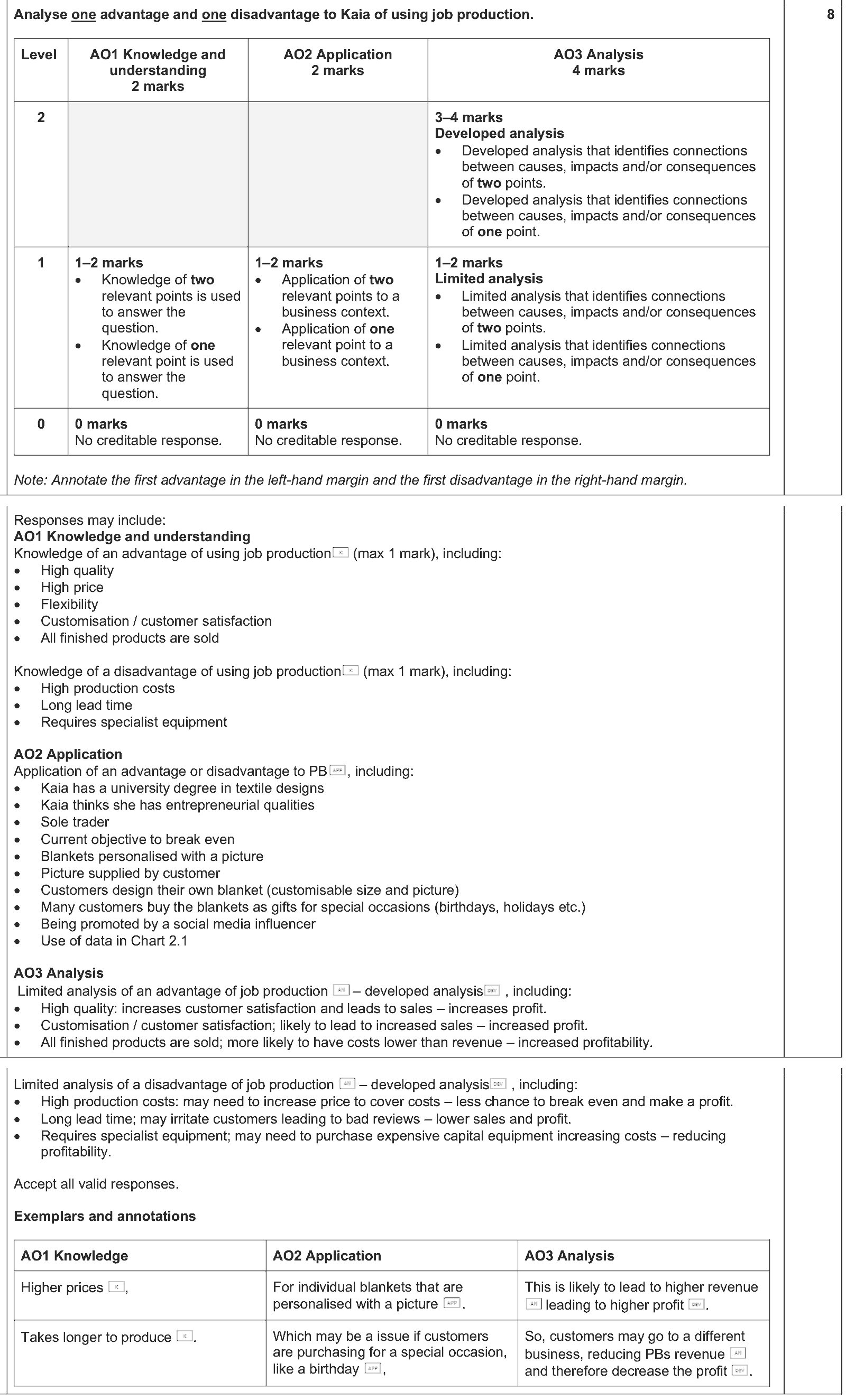
Analyse one advantage and one disadvantage to Kaia of using job production.
CT is a co-operative that produces and sells a range of wooden toys, such as puzzles, cars and dolls. The co-operative was formed in 2020 by a group of 12 people who share a passion for making toys. They wanted to work together to create quality products that would appeal to children and parents. No one person takes on the role of manager; instead, they share the traditional manager functions between them. 5 CT operates from a large workshop in a rural area of country Z, making toys using labour-intensive techniques. CT uses locally sourced wood that is certified as eco-friendly. CT also uses natural paints and finishes that are safe and non-toxic for children. Table 1.1 shows CT’s output in 2024.

CT sells its products online through its own website and social media platforms, as well as through some independent retailers who specialise in ethical products. The co-operative 15 also attends various trade fairs and exhibitions to showcase its products and network with potential customers and suppliers. CT has never researched customer wants. CT faces some challenges in its current operations. These challenges include:
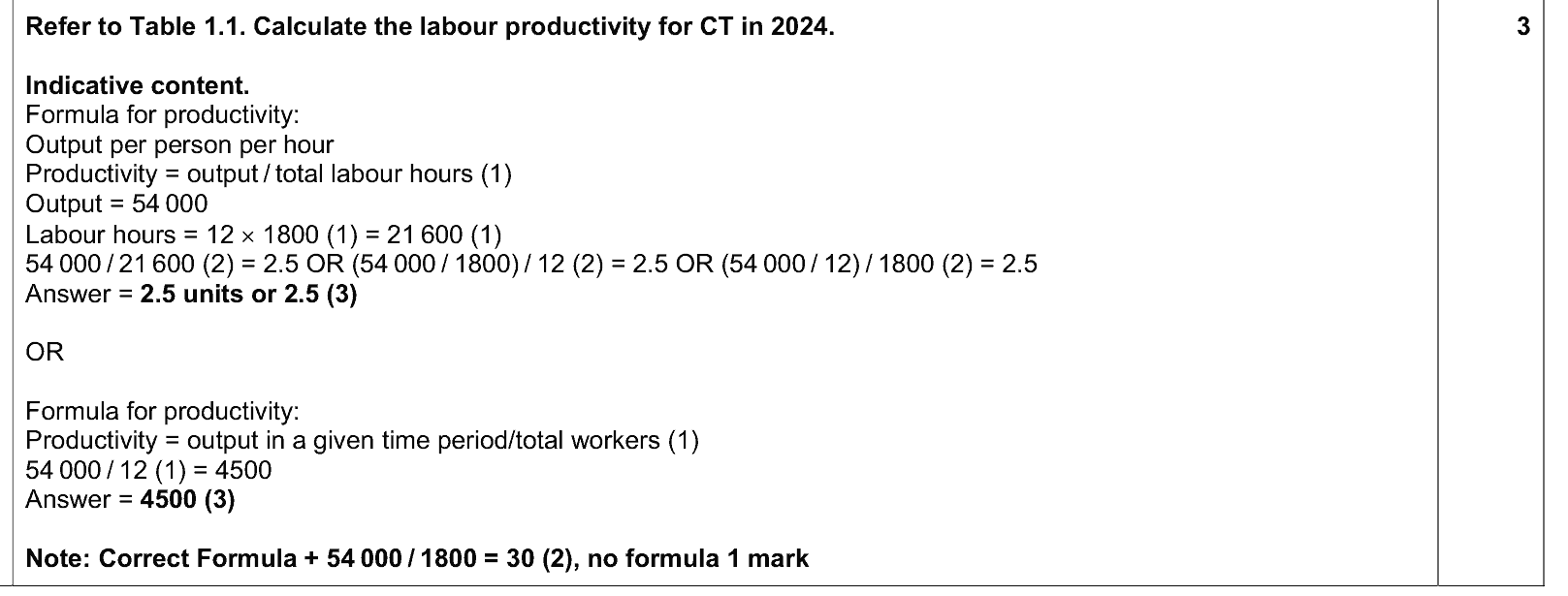
Refer to Table 1.1. Calculate the labour productivity for CT in 2024.
Refers to: images/cases/s25_23_p2_Table_1_1_Output_data_for_CT_in_2024.png
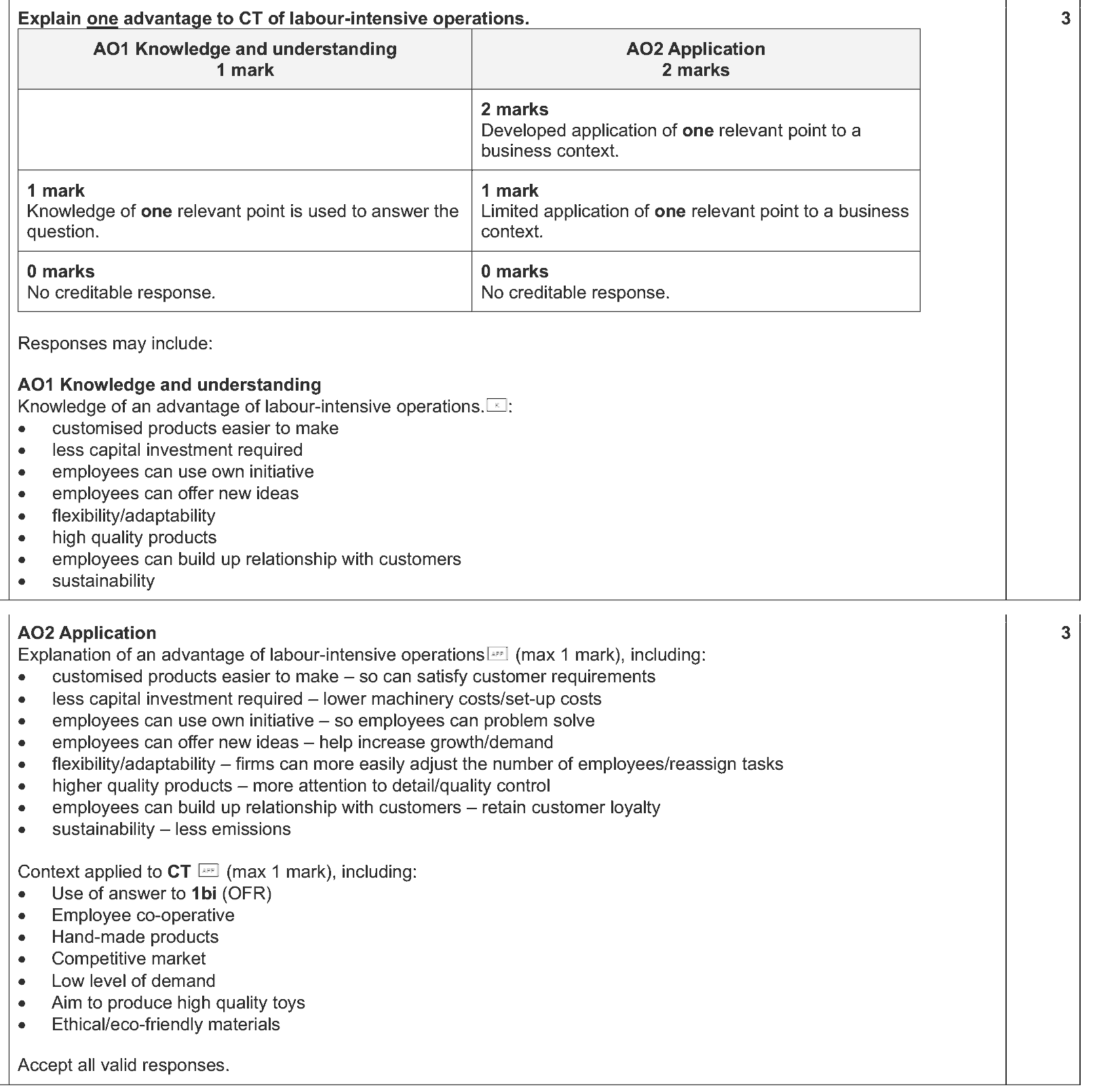
Explain one advantage to CT of labour-intensive operations.
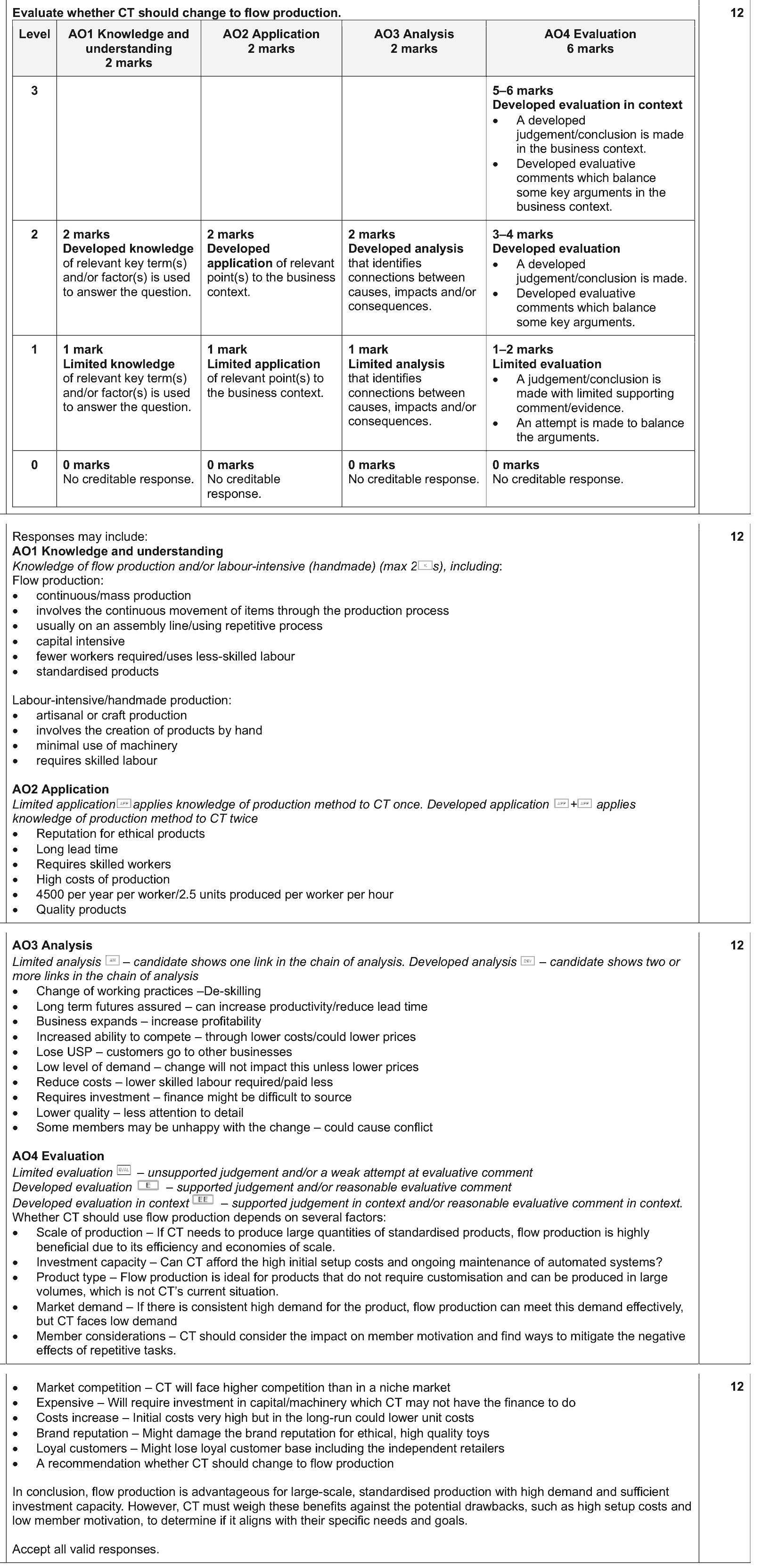
Evaluate whether CT should change to flow production.
🔒 Unlock every The nature of operations question from 2020–2024
All 60 come with their mark schemes, answers and case studies, and appear in the practice tool above once you’re signed in. It’s free.
Questions and mark schemes are from past Cambridge papers and are reproduced for revision. Topical Vault is an independent revision resource, not affiliated with or endorsed by Cambridge Assessment International Education.
Each topic opens this practice tool with only that topic’s questions, plus how often it comes up and every question on it in one list.