Question 6(a)May/June 20269609/128 marks
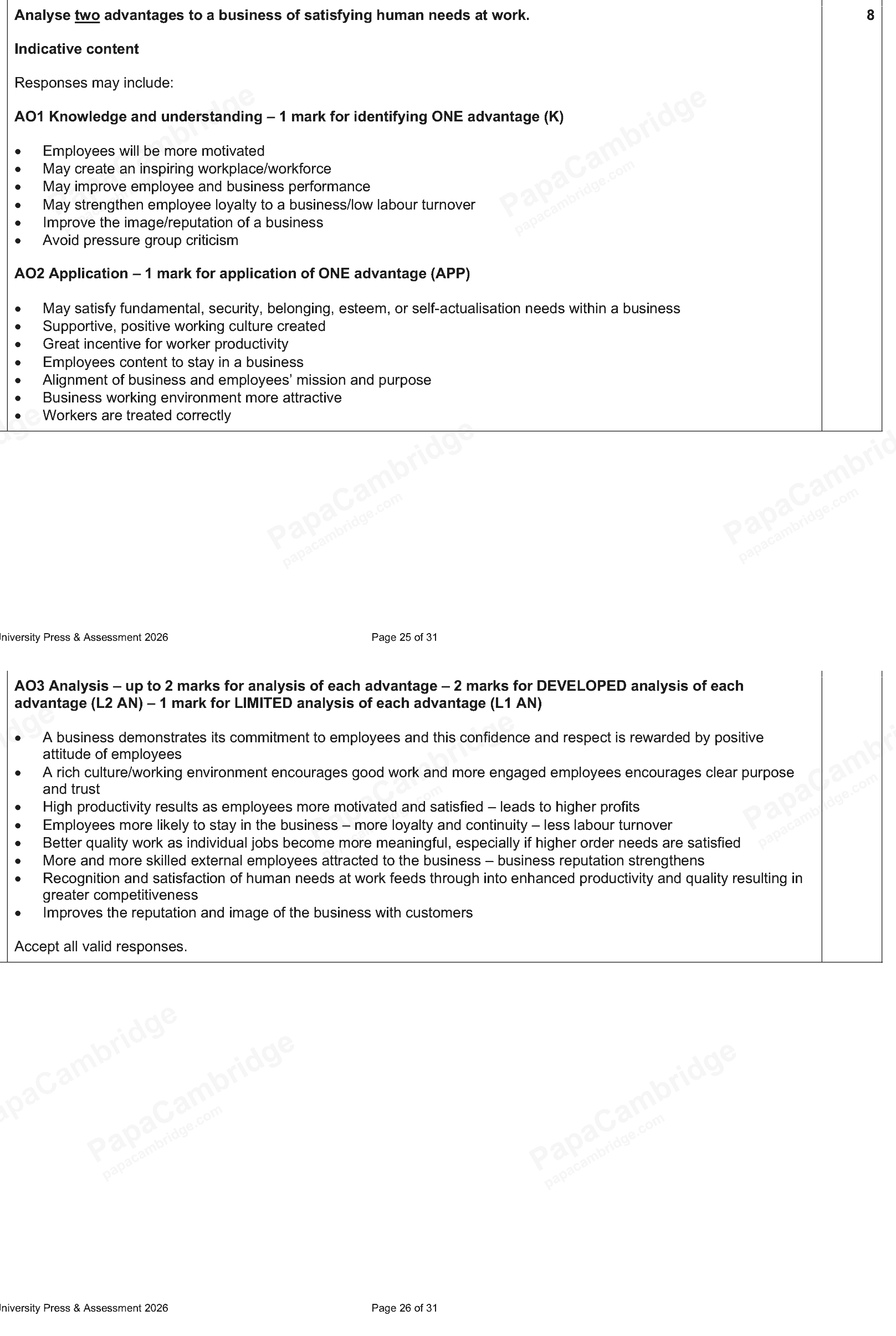
Analyse two advantages to a business of satisfying human needs at work.
Show mark scheme
Cambridge 9609, Paper 1 & 2. 1,080 questions, 2020 to 2026.
Case studies and questions reproduced from the original Cambridge material; mark schemes are cropped from the official mark scheme PDFs. Papers from 2020–2022 were set on the previous syllabus and can touch content that is A Level today — those topics are marked “A Level content” above.
The needs of employees and theories of motivation (Taylor, Mayo, Maslow, Herzberg, McClelland and Vroom), and financial and non-financial motivators.
57 past paper questions on this topic since 2020, across 18 exam sessions.
| Year | Paper 1 | Paper 2 | Total | Chart |
|---|---|---|---|---|
| 2026 | 2 | 2 | 4 | |
| 2025 | 5 | 3 | 8 | |
| 2024 | 3 | 2 | 5 | |
| 2023 | 5 | 10 | 15 | |
| 2022 | 8 | 2 | 10 | |
| 2021 | 5 | 2 | 7 | |
| 2020 | 4 | 4 | 8 |
The whole topic on one page, with answers and mark schemes. Printing this page prints just this list.
Analyse two advantages to a business of satisfying human needs at work.
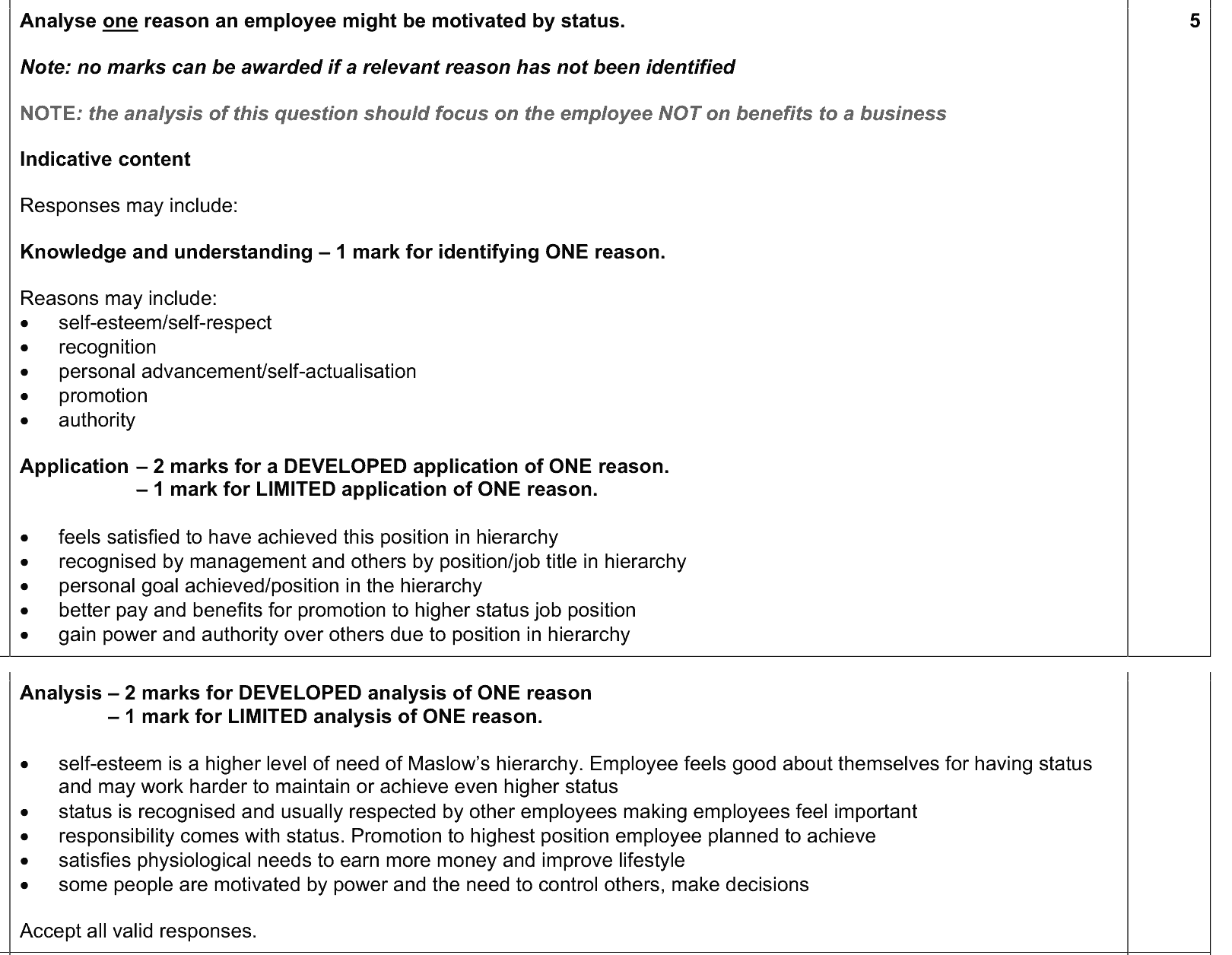
Analyse one reason an employee might be motivated by status.
Explain one method of paying employees.

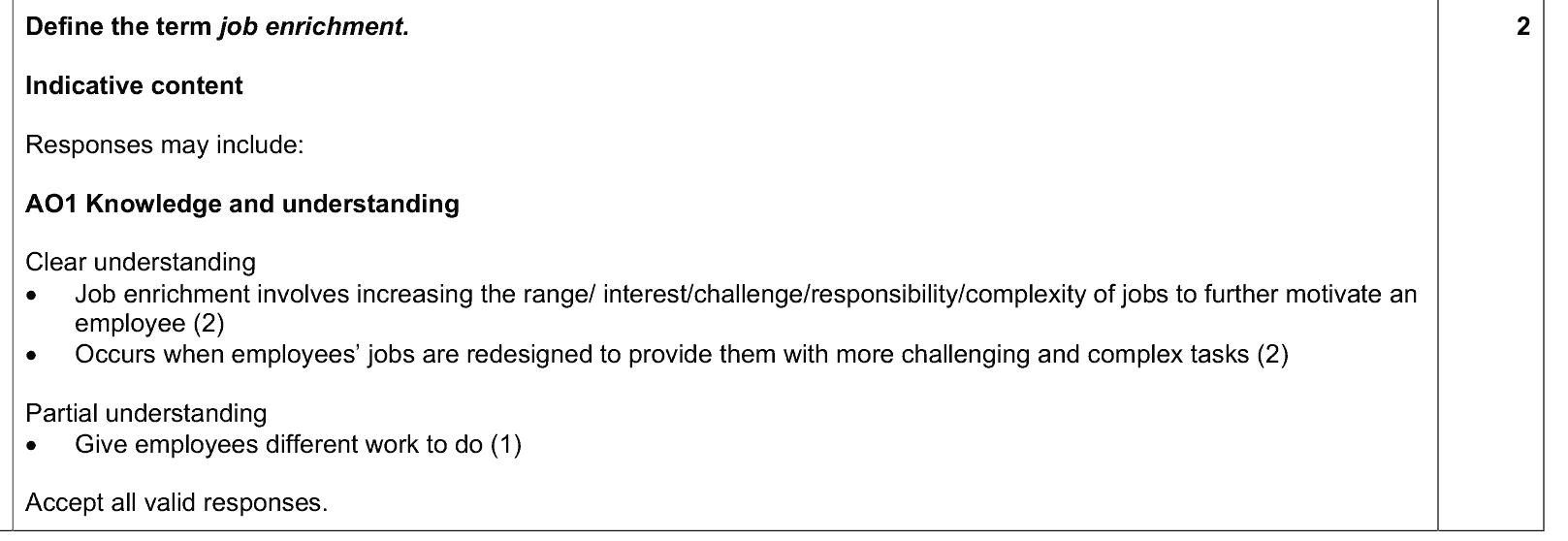
Define the term job enrichment.
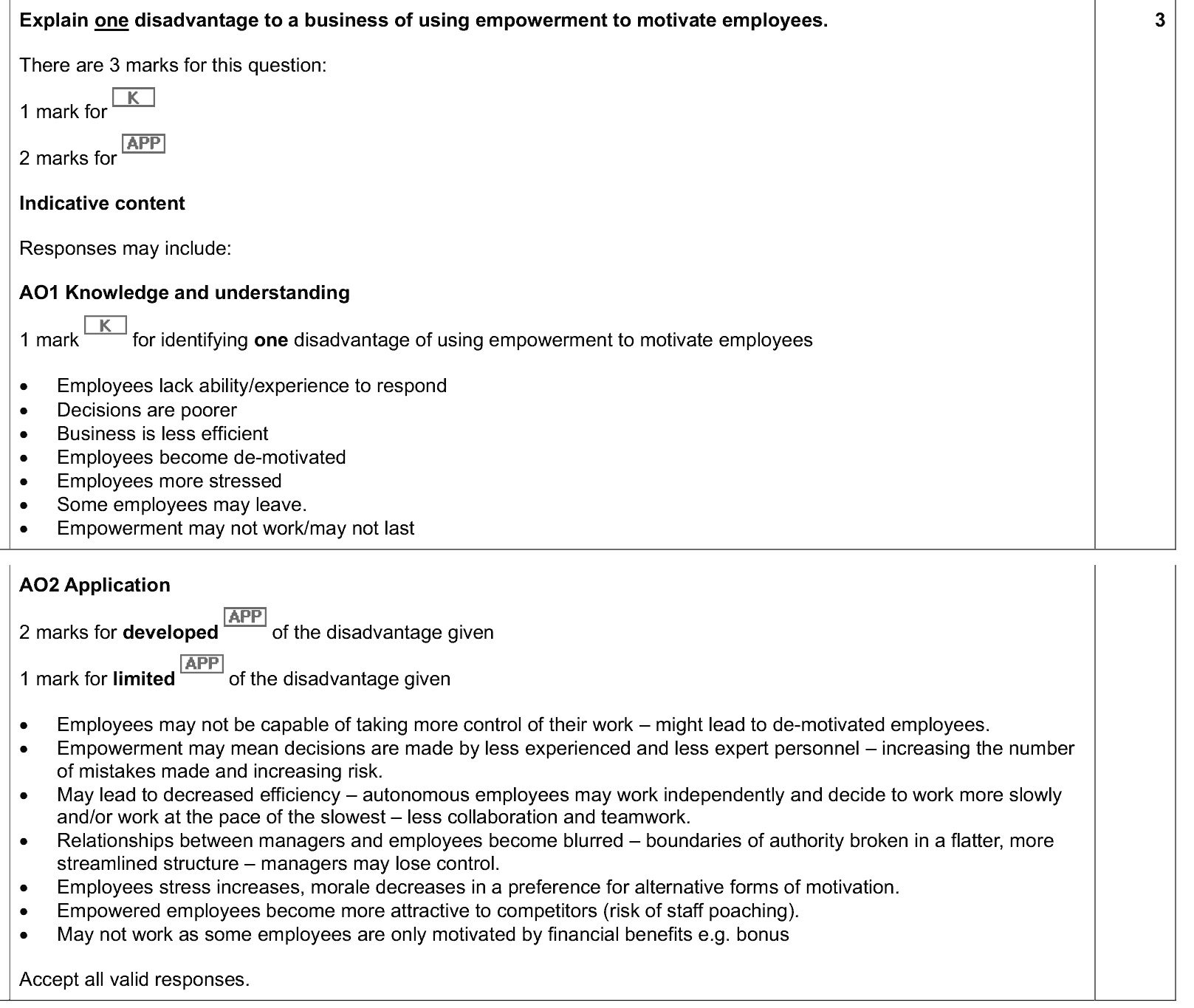
Explain one disadvantage to a business of using empowerment to motivate employees.
Define the term motivation.
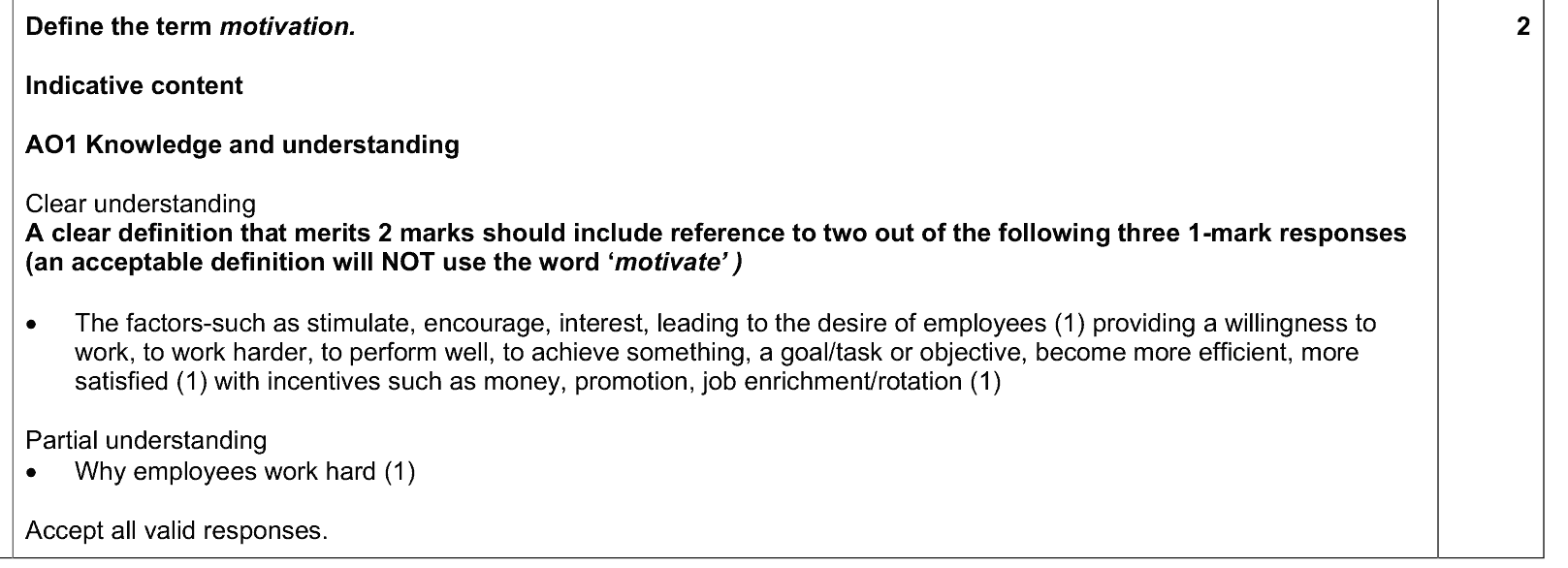
Explain one benefit to a business of motivated employees.
CC manufactures a range of cola drinks aimed at the mass market. The company is the market leader for cola drinks in country N. CC produces four variants of its cola drink:

CC’s sales of Cherry cola have decreased by 12% over the past year. The marketing
manager is planning to carry out market research to investigate the reason for this
decrease. The research will collect qualitative data. The marketing manager will use this
data to make decisions about a marketing campaign to increase sales.
CC has 4 factories in country N and employs 1750 employees. All employees are paid 20
using a time‑based payment method and the work is repetitive. Operations are capital
intensive. The human resource manager is concerned that employees lack motivation,
leading to high labour turnover. Labour turnover has increased by 8% over the past year.
The human resource manager is considering changing the employee payment method from
time‑based to piece rate. 25
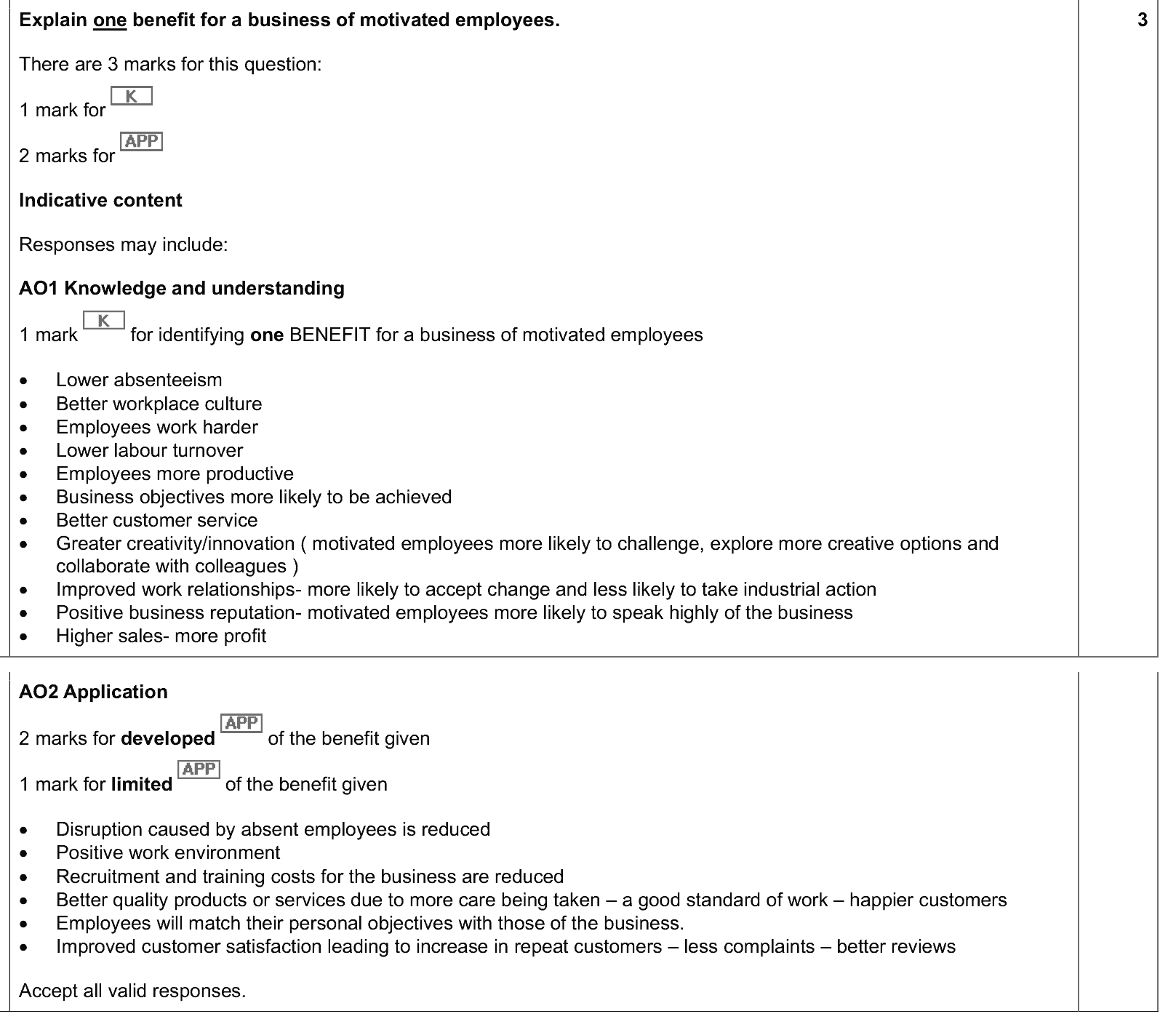
Evaluate whether CC should change the employee payment method from time‑based to piece rate.
JT is owned by Jo as a sole trader business that provides school bus services to local public sector schools in city K. JT’s main customer is the local government. Established in 2015, JT is building a brand reputation as a safe and reliable transportation method for school children in city K. JT offers a range of services: 5

JT has 50 buses and 100 employees. Jo encourages employee participation at all levels of the business operation. Jo would like to implement customer relationship marketing (CRM) at JT, to improve 20 its relationship with the local government. To set up a CRM system will require $3m investment in computer systems, software and staff training. Jo believes that CRM could help JT become the leader in a very competitive school transport market.
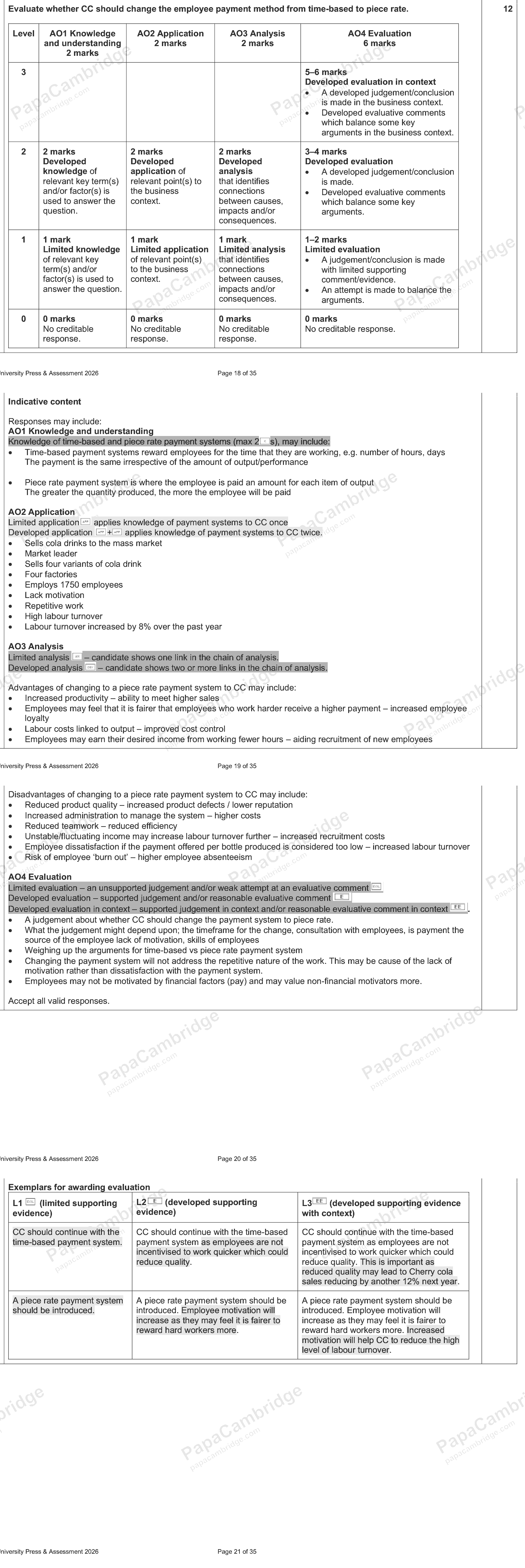
Explain one benefit to JT of motivating its employees using participation.
TRA is a quaternary sector business. It is the market leader in providing social media data to food manufacturers in country F. TRA’s market has grown by 40% over the last year. DF is a multinational business that specialises in non-alcoholic drinks. DF has asked TRA for data about a new bottle of water with pod attachments. The pods give a fruity flavour which is combined with sparkling water. TRA has sampled 8000 potential consumers on 5 social media to identify their favourite fruity flavour (see Fig. 1.1). None, 6% Watermelon, 14% Banana, 18% Lemon, 34% Strawberry, 28%
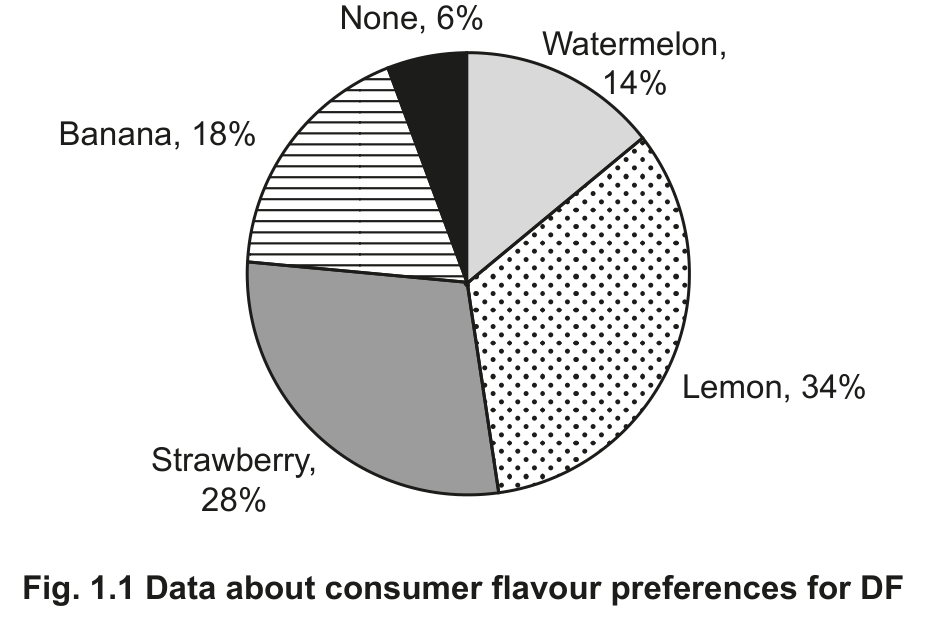
TRA employs 65 researchers. Since 2020, all of these employees work from home. They are provided with all the necessary IT equipment and a high-speed internet connection. However, motivation is poor, and this has led to high labour turnover. The Human Resource 10 Director has received some feedback from employees. Fig. 1.2 shows some of this feedback.

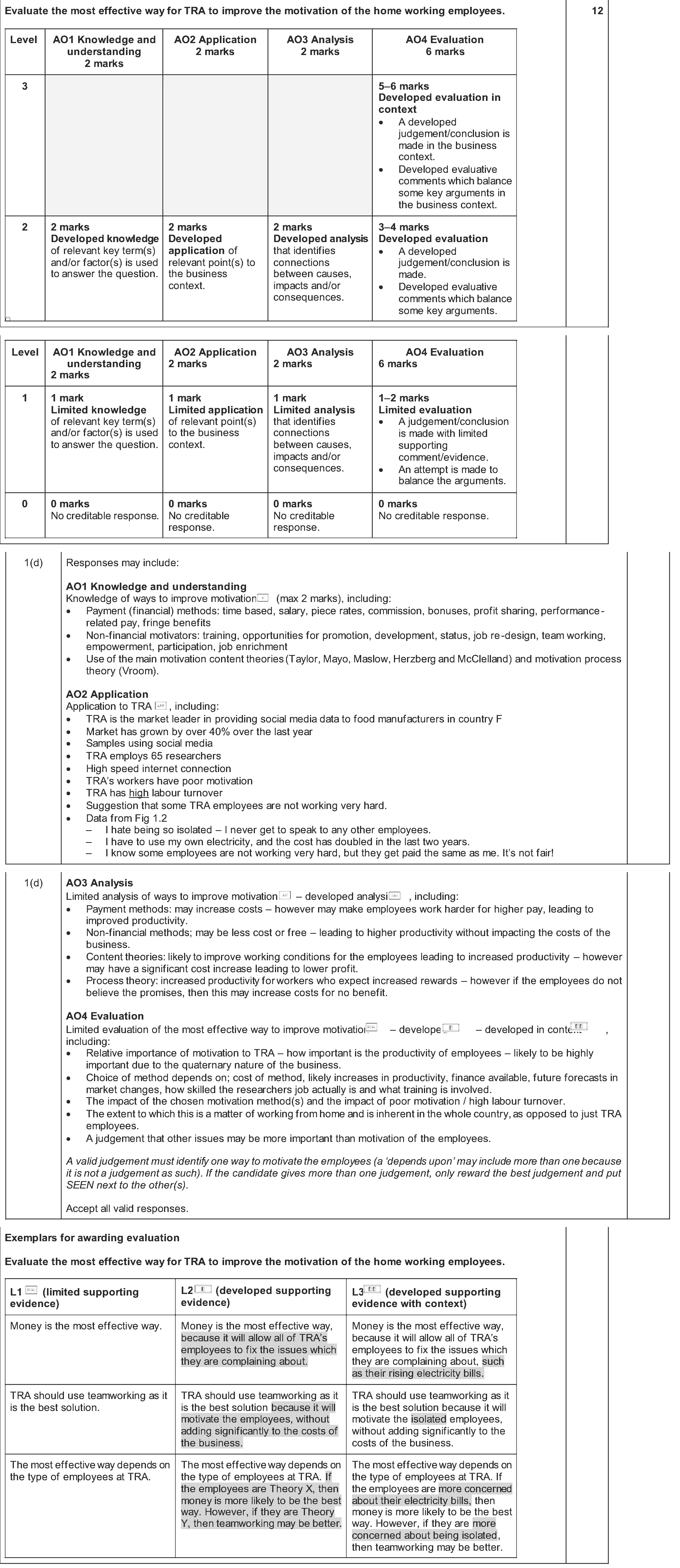
Evaluate the most effective way for TRA to improve the motivation of the home working employees.
PH owns student rental accommodation in all the major cities in country Y. PH used demographic segmentation in its market research. This research identified that university students would pay a premium for high specification rental accommodation. PH has specialist teams focused on sales, maintenance, customer service and finance. There is little opportunity for internal promotion. PH pays low salaries, however, it offers 5 profit sharing to motivate its 150 employees. This has been effective as PH has had low labour turnover. In the last two years, profit levels have fallen by 75%. In 2024, 45 employees left PH. Complaints about maintenance and customer service have increased due to the lack of experienced employees in PH. 10 The Finance Director is reviewing PH’s existing sources of finance, shown in Fig 2.1. Bank loans 8% Owner’s Mortgage investment 42% 28% Overdrafts 22%

Frank, the Operations Director, wants to improve the sustainability of PH’s operations. He plans to:
Explain one way in which PH could use Maslow’s Hierarchy of Needs.

Kaia left university with a degree in textile design. Using her entrepreneurial qualities, Kaia set up PB as a sole trader. Her current objective is to break even. Kaia uses job production to make blankets which are personalised with a picture. Each customer logs into the PB website and chooses the size of blanket. The customer then uploads a picture that they want printed onto the blanket. 5 Many of Kaia’s customers buy the blankets as gifts for special occasions. Kaia has employed a social media influencer to promote her blankets. The influencer will be paid a salary of $250 a week and a 5% commission on revenue that comes directly from the influencer. Fig 2.1 shows the revenue that came directly from the social media influencer in February. 10 Revenue ($) Week 1 Week 2 Week 3 Week 4

Kaia would like to relocate PB to larger premises. She is applying for external sources of finance, and she has written a five-year business plan to support her applications.
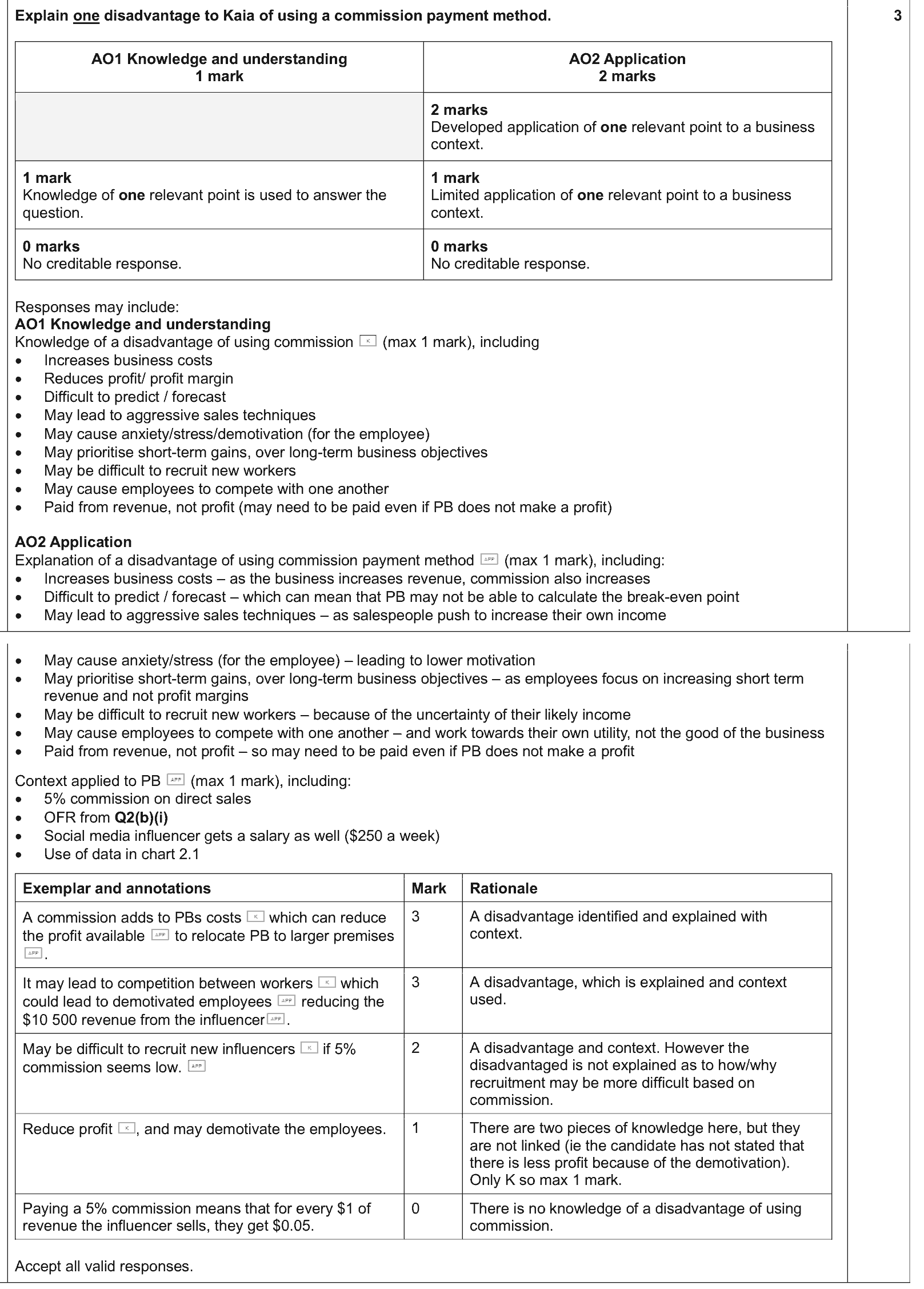
Explain one disadvantage to Kaia of using a commission payment method.
🔒 Unlock every Motivation question from 2020–2024
All 45 come with their mark schemes, answers and case studies, and appear in the practice tool above once you’re signed in. It’s free.
Questions and mark schemes are from past Cambridge papers and are reproduced for revision. Topical Vault is an independent revision resource, not affiliated with or endorsed by Cambridge Assessment International Education.
Each topic opens this practice tool with only that topic’s questions, plus how often it comes up and every question on it in one list.