← Topical Vault

Marketing, competition and the customer · IGCSE Business

Cambridge 0450, Paper 1 & 2. 1,484 questions, 2019 to 2026.

Topic
Year

Every question begins with its business context — a short case for Paper 1, a full case study (shared across all four questions on that paper) for Paper 2. Mark schemes show the typed marking points alongside a cropped image of the official mark scheme page for exact wording.

About Marketing, competition and the customer

The role of marketing, how markets are changing, niche and mass marketing, and market segmentation.

68 past paper questions on this topic since 2019, across 21 exam sessions.

How often it comes up

YearPaper 1Paper 2TotalChart
2026213
2025549
2024729
20238210
2022325
2021819
2020628
201913215

Every 2025–2026 question on Marketing, competition and the customer

The whole topic on one page, with answers and mark schemes. Printing this page prints just this list.

Paper 1 · Short answer and structured (7)

Scenario

SDY sells hats and scarves. One of SDY’s objectives is to increase the number of sales. SDY has 240 shops and 3000 employees. All its shop managers use a democratic leadership style. The human resources director is currently recruiting new employees to work in SDY’s shops. External recruitment will be used. All new employees will be given induction training.

Question 3(c)May/Jun 20260450/114 marks

Outline two ways SDY could increase the number of sales. way 1 way 2

Show mark scheme

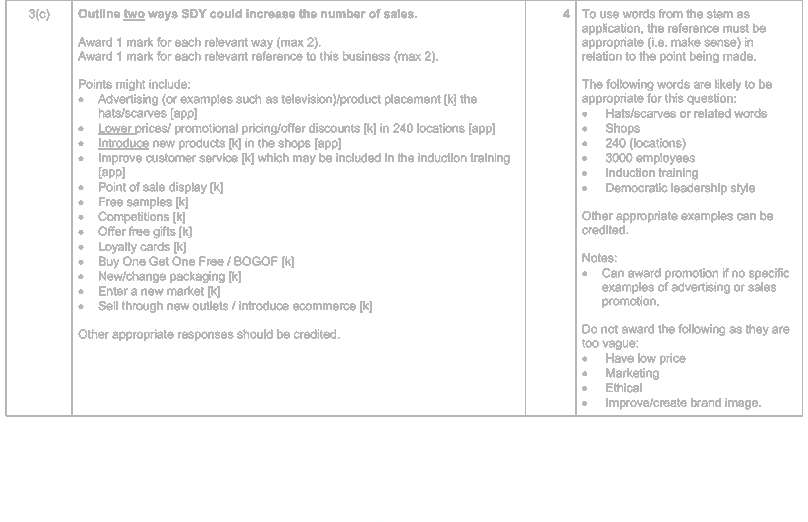
Outline two ways SDY could increase the number of sales. Award 1 mark for each relevant way (max 2). Award 1 mark for each relevant reference to this business (max 2). Points might include:

  • Advertising (or examples such as television)/product placement [k] the hats/scarves [app]
  • Lower prices/ promotional pricing/offer discounts [k] in 240 locations [app]
  • Introduce new products [k] in the shops [app]
  • Improve customer service [k] which may be included in the induction training [app]
  • Point of sale display [k]
  • Free samples [k]
  • Competitions [k]
  • Offer free gifts [k]
  • Loyalty cards [k]
  • Buy One Get One Free / BOGOF [k]
  • New/change packaging [k]
  • Enter a new market [k]
  • Sell through new outlets / introduce ecommerce [k] Other appropriate responses should be credited.
Mark scheme, 0450/11 May/Jun 2026 question 3(c)
Scenario

MCL is a wholesaler which sells fruit and vegetables. Most of MCL’s customers are small retail
businesses. MCL’s owner, George, is aware that the market has become more competitive. He
wants to know how a business can respond to an increase in competition. George is reviewing
MCL’s cash flow forecast. An extract is shown in Table 1.1.
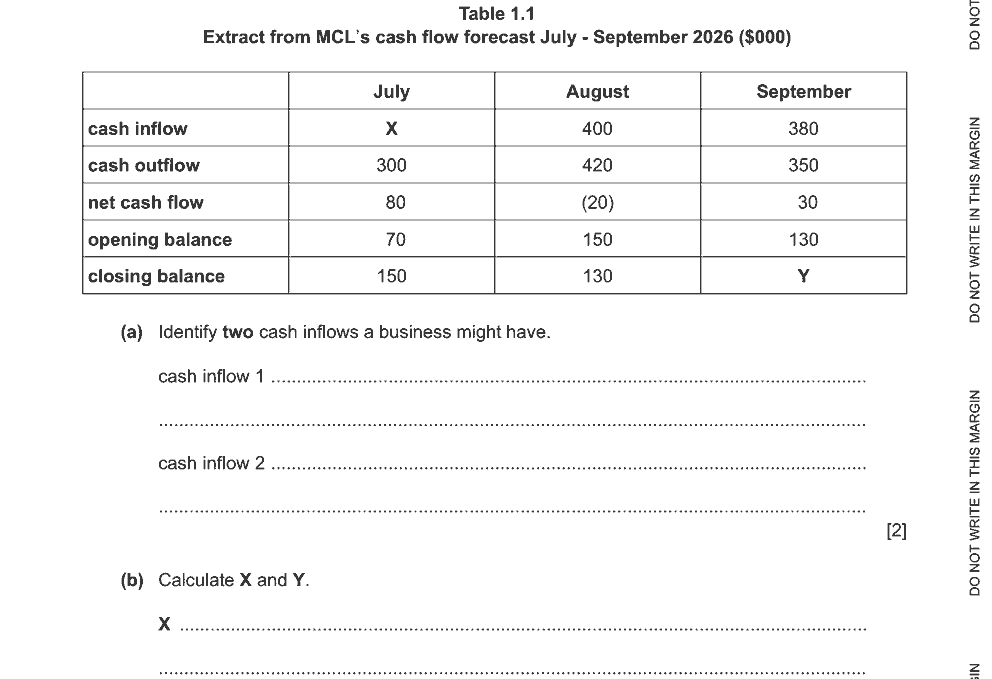
Table 1.1
Extract from MCL’s cash flow forecast July - September 2026 ($000)
July August September
cash inflow X 400 380
cash outflow 300 420 350
net cash flow 80 (20) 30
opening balance 70 150 130
closing balance 150 130 Y

Case material
Question 1(c)May/Jun 20260450/134 marks

Identify four ways a business could respond to an increase in competition. way 1 way 2 way 3 way 4

Show mark scheme

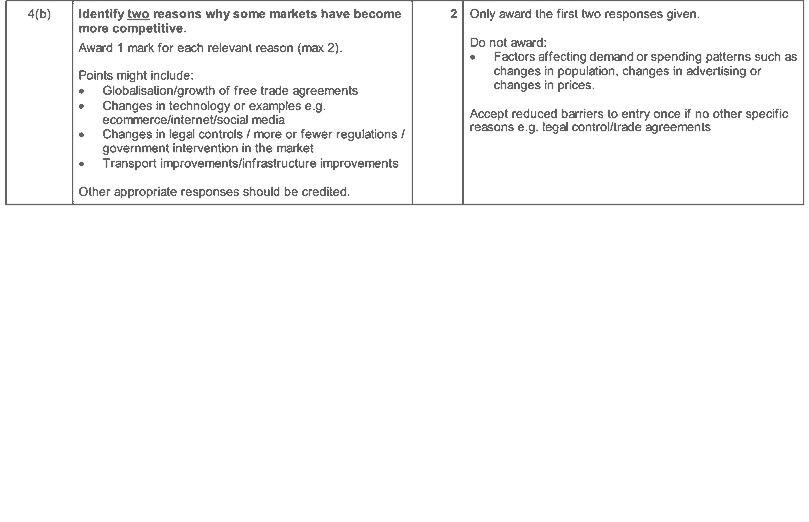
Identify four ways a business could respond to an increase in competition. Award 1 mark per way (max 4). Points might include:

  • Decrease prices / competitive pricing
  • Increase advertising / (or examples such as) social media / television
  • Increase sales promotion / (or examples such as) BOGOF/competitions / free gifts / promotional pricing/ discounts
  • Add/develop new products/services/new features
  • Improve/maintain quality (of existing products)
  • Improve/maintain branding/brand image
  • Improve/maintain packaging
  • Enter/sell in new markets
  • Sell in new locations/sell via ecommerce
  • Improve/maintain customer relationships/loyalty/ offer better customer service
  • Takeover/merge/buy out a competitor
  • Increase added value Other appropriate responses should be credited.
Mark scheme, 0450/13 May/Jun 2026 question 1(c)
Scenario

MTL is a large business which sells children’s toys. MTL wants to act ethically with all of its stakeholder groups including its 430 employees. The market MTL operates in has become more competitive. The business uses a range of methods to promote its products. Having a good brand image is important. MTL’s directors are considering entering a new market in another country. They are aware there may be problems if they choose to do this.

Question 4(b)Oct/Nov 20250450/112 marks

Identify two reasons why some markets have become more competitive. Reason 1: Reason 2:

Show mark scheme

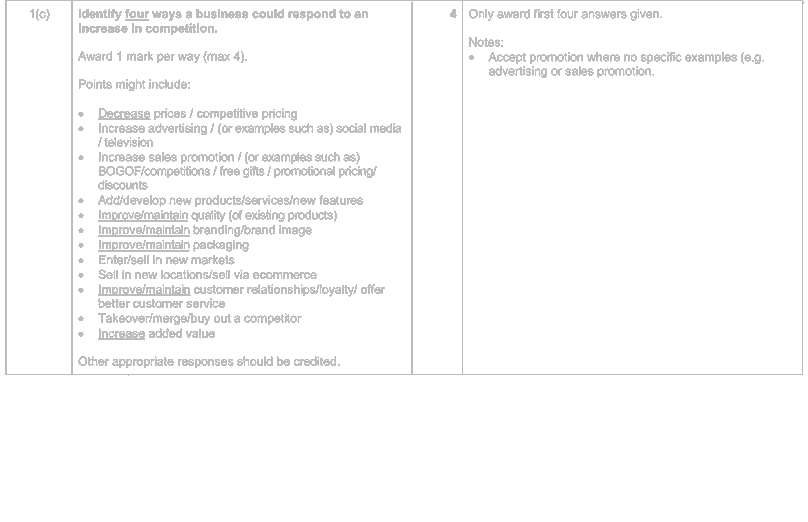
Identify two reasons why some markets have become more competitive. Award 1 mark for each relevant reason (max 2). Points might include:

  • Globalisation/growth of free trade agreements
  • Changes in technology or examples e.g. ecommerce/internet/social media
  • Changes in legal controls / more or fewer regulations / government intervention in the market
  • Transport improvements/infrastructure improvements Other appropriate responses should be credited.
Mark scheme, 0450/11 Oct/Nov 2025 question 4(b)
Scenario

Max is an entrepreneur who wants to start up a business selling books. He has decided to use ecommerce. Max has been told there is government support for start-up businesses. He will use market research to help make business decisions. Max knows it is important for a new business to build customer loyalty.

Question 2(e)Oct/Nov 20250450/136 marks

Explain two ways a business could build customer loyalty. Which is likely to be the best way for a new business to use? Justify your answer.

Show mark scheme

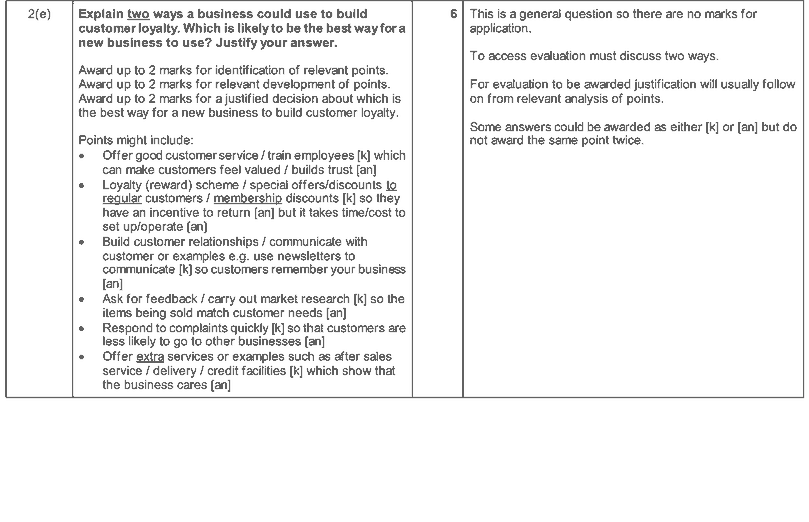
Explain two ways a business could use to build customer loyalty. Which is likely to be the best way for a new business to use? Justify your answer. Award up to 2 marks for identification of relevant points. Award up to 2 marks for relevant development of points. Award up to 2 marks for a justified decision about which is the best way for a new business to build customer loyalty. Points might include:

  • Offer good customer service / train employees [k] which can make customers feel valued / builds trust [an]
  • Loyalty (reward) scheme / special offers/discounts to regular customers / membership discounts [k] so they have an incentive to return [an] but it takes time/cost to set up/operate [an]
  • Build customer relationships / communicate with customer or examples e.g. use newsletters to communicate [k] so customers remember your business [an]
  • Ask for feedback / carry out market research [k] so the items being sold match customer needs [an]
  • Respond to complaints quickly [k] so that customers are less likely to go to other businesses [an]
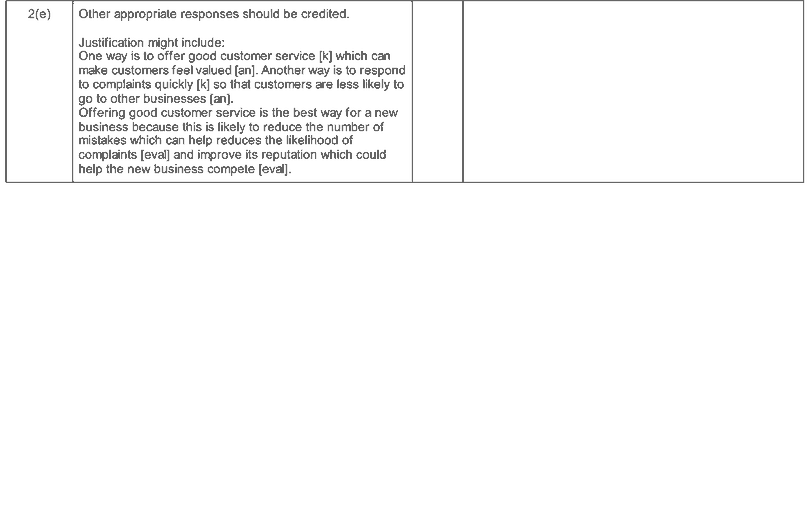
  • Offer extra services or examples such as after sales service / delivery / credit facilities [k] which show that the business cares [an] Other appropriate responses should be credited. Justification might include: One way is to offer good customer service [k] which can make customers feel valued [an]. Another way is to respond to complaints quickly [k] so that customers are less likely to go to other businesses [an]. Offering good customer service is the best way for a new business because this is likely to reduce the number of mistakes which can help reduces the likelihood of complaints [eval] and improve its reputation which could help the new business compete [eval].
Mark scheme, 0450/13 Oct/Nov 2025 question 2(e) (page 1 of 2)
Mark scheme, 0450/13 Oct/Nov 2025 question 2(e) (page 2 of 2)
Scenario

NSL is a business based in country X. It manufactures food products including bread and breakfast cereals. NSL uses lean production in its factory. Maintaining quality is important. NSL imports 15% of its raw materials. Changes in country X’s exchange rate can affect businesses which import raw materials. NSL’s Marketing Manager knows the business should respond to changes in consumer spending patterns. She is aware that market research can be used to help make business decisions.

Question 2(b)May/Jun 20250450/112 marks

Identify two reasons why consumer spending patterns might change. Reason 1: Reason 2:

Show mark scheme

Identify two reasons why consumer spending patterns might change. Award 1 mark for each reason (max 2). Points might include changes in:

  • Price of product
  • Price of competitors products/increased competition
  • Incomes/wages/unemployment/business cycle or examples
  • Population size/structure/life stage of consumers
  • Taste/fashion/preferences
  • Advertising/promotion
  • Technology
  • Taxation
  • Interest rates
  • Exchange rates
  • Weather/season Other appropriate responses should be credited.
Mark scheme, 0450/11 May/Jun 2025 question 2(b)
Scenario

NFC manufactures shoes using batch production. Quality assurance is used to maintain quality. NFC uses market segmentation. The Marketing Director is reviewing NFC’s product range. He knows there are both benefits and limitations to developing new products. He also knows the promotion of products is important.

Question 1(d)May/Jun 20250450/126 marks

Explain two benefits to NFC of using market segmentation. Benefit 1: Explanation: Benefit 2: Explanation:

Show mark scheme

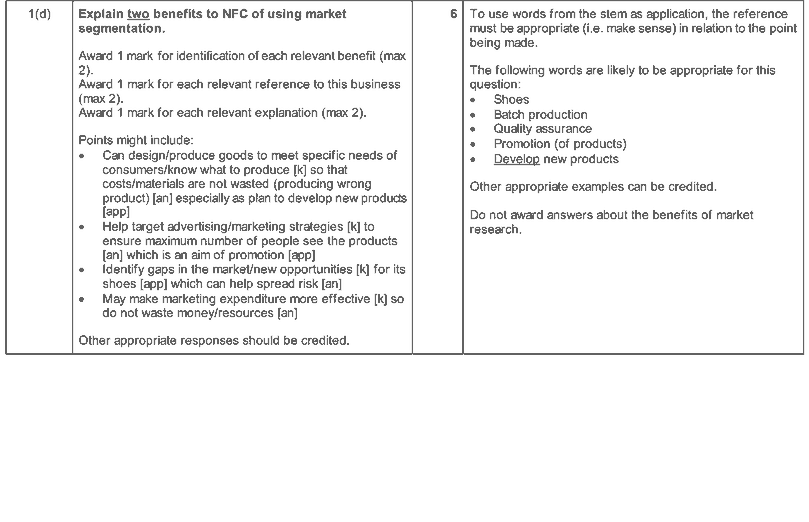
Explain two benefits to NFC of using market segmentation. Award 1 mark for identification of each relevant benefit (max 2). Award 1 mark for each relevant reference to this business (max 2). Award 1 mark for each relevant explanation (max 2). Points might include:

  • Can design/produce goods to meet specific needs of consumers/know what to produce [k] so that costs/materials are not wasted (producing wrong product) [an] especially as plan to develop new products [app]
  • Help target advertising/marketing strategies [k] to ensure maximum number of people see the products [an] which is an aim of promotion [app]
  • Identify gaps in the market/new opportunities [k] for its shoes [app] which can help spread risk [an]
  • May make marketing expenditure more effective [k] so do not waste money/resources [an] Other appropriate responses should be credited.
Mark scheme, 0450/12 May/Jun 2025 question 1(d)
Question 1(c)Feb/Mar 20250450/124 marks

Outline two advantages to Amir and Carla of operating in a niche market. Advantage 1: Advantage 2:

Show mark scheme

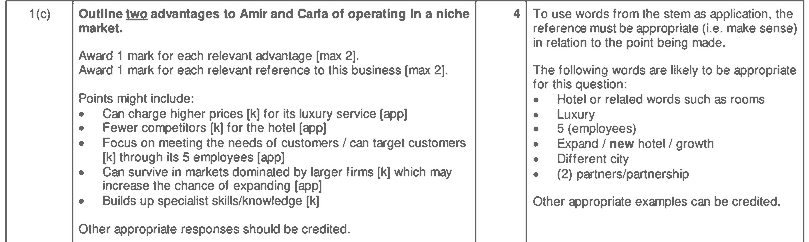
Outline two advantages to Amir and Carla of operating in a niche market. Award 1 mark for each relevant advantage [max 2]. Award 1 mark for each relevant reference to this business [max 2]. Points might include:

  • Can charge higher prices [k] for its luxury service [app]
  • Fewer competitors [k] for the hotel [app]
  • Focus on meeting the needs of customers / can target customers [k] through its 5 employees [app]
  • Can survive in markets dominated by larger firms [k] which may increase the chance of expanding [app]
  • Builds up specialist skills/knowledge [k] Other appropriate responses should be credited.
Mark scheme, 0450/12 Feb/Mar 2025 question 1(c)

Paper 2 · Case study (5)

Case study: Kitty’s Homeshoes (KH)

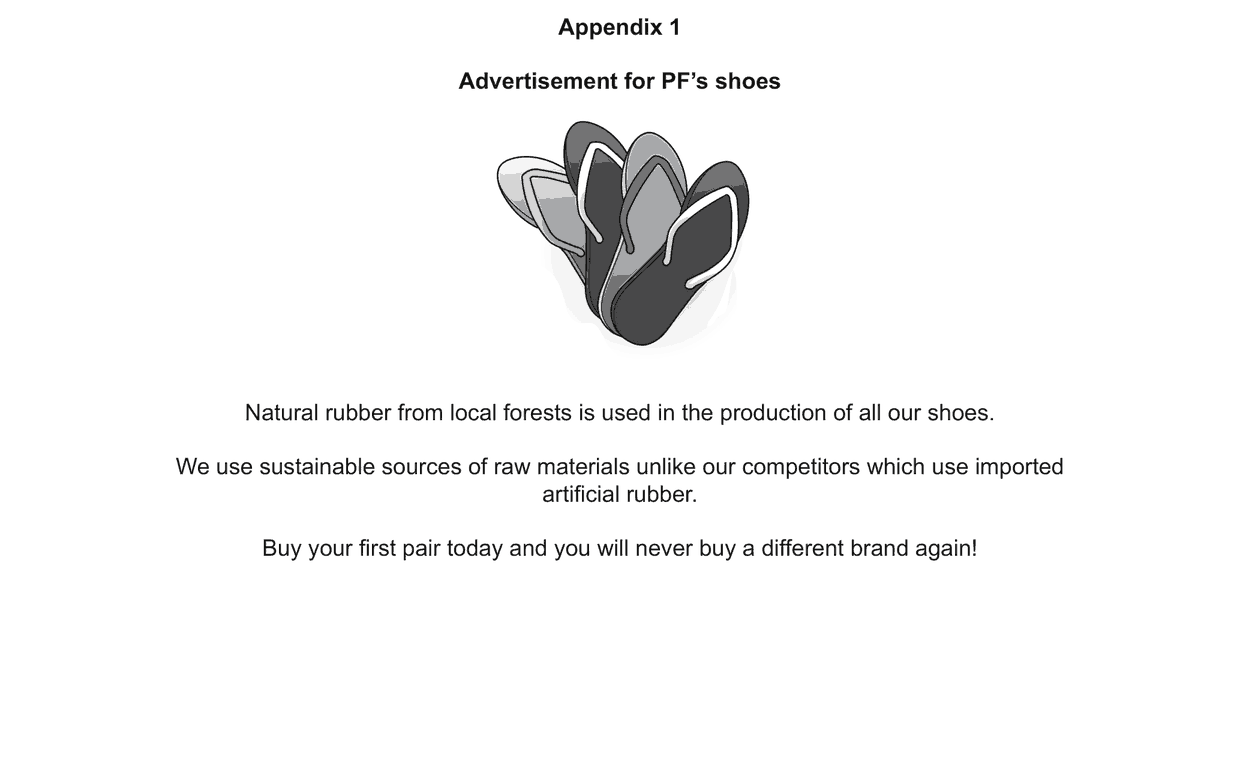
KH is a private limited company. It manufactures shoes for people with large feet. People with large feet often find it difficult to buy shoes to fit them. KH started producing shoes for this niche market 10 years ago. KH has a good brand image and charges a high price for its shoes. The marketing director has produced an advertisement for its current products shown in Appendix 1. She knows it is important that the advertisement meets all the legal controls on marketing. KH’s shoes are made from imported high-quality natural rubber extracted from trees. KH’s suppliers have cleared forests to grow their rubber trees. Pressure groups have been posting their concerns on social media. KH has started to sell its shoes online which has increased its sales. KH’s managing director wants to expand the business and plans to build a second factory. A new operations manager will need to be recruited. Internal or external recruitment could be used for this position. All KH’s managers are encouraged to use delegation. KH’s marketing director is considering whether to produce shoes of all sizes and to start selling to a mass market. If KH starts selling to a mass market many changes will need to be made.

Appendix 1
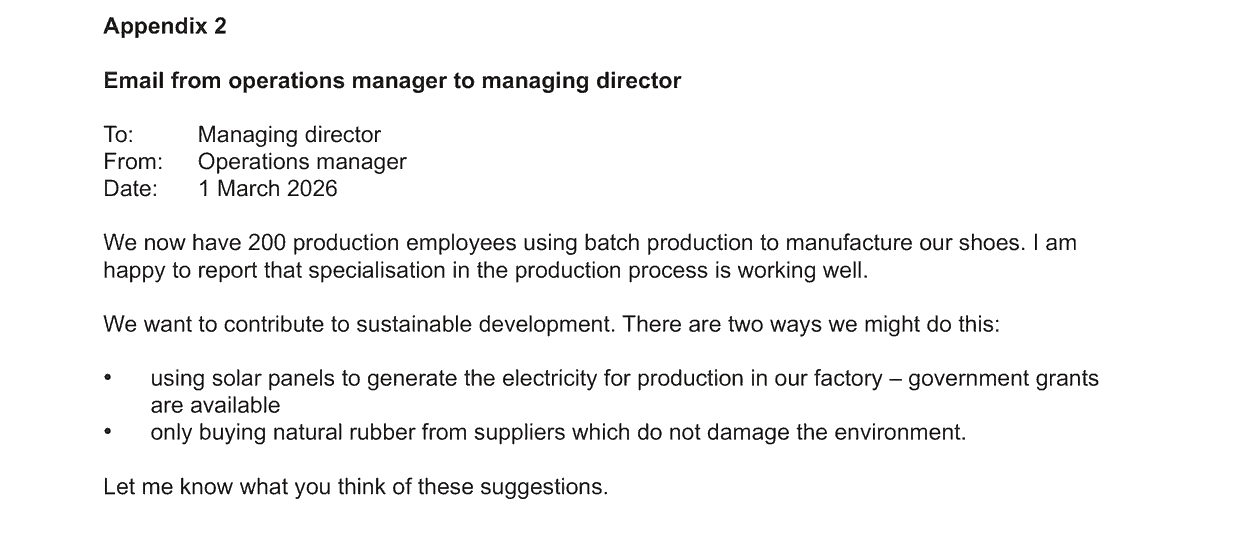
Appendix 2
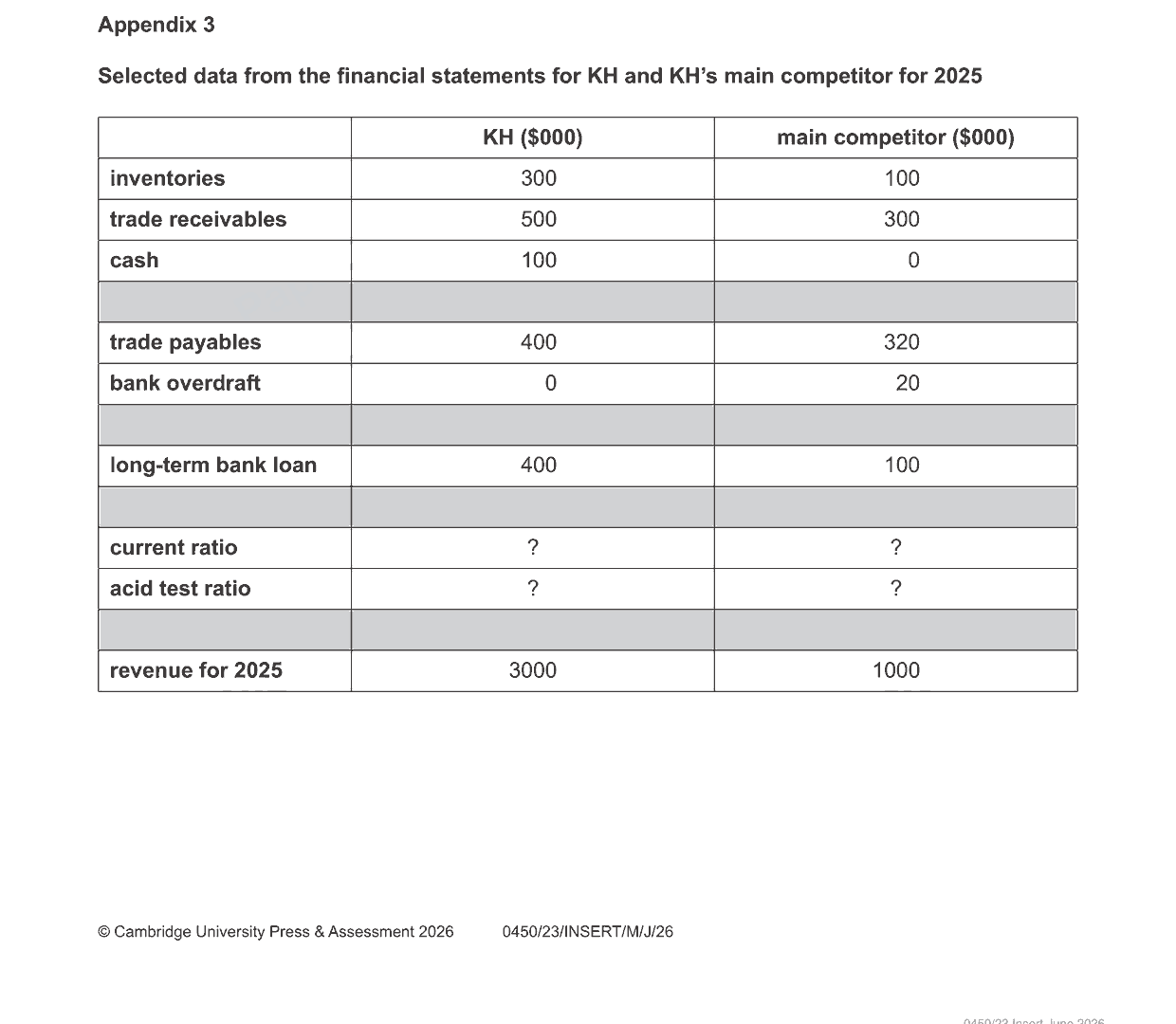
Appendix 3
Question 3(b)May/Jun 20260450/2312 marks

Consider the advantages and disadvantages for KH of selling in a niche market and in a mass market. Should KH change to selling in a mass market? Justify your answer. selling in a niche market selling in a mass market conclusion

Show mark scheme

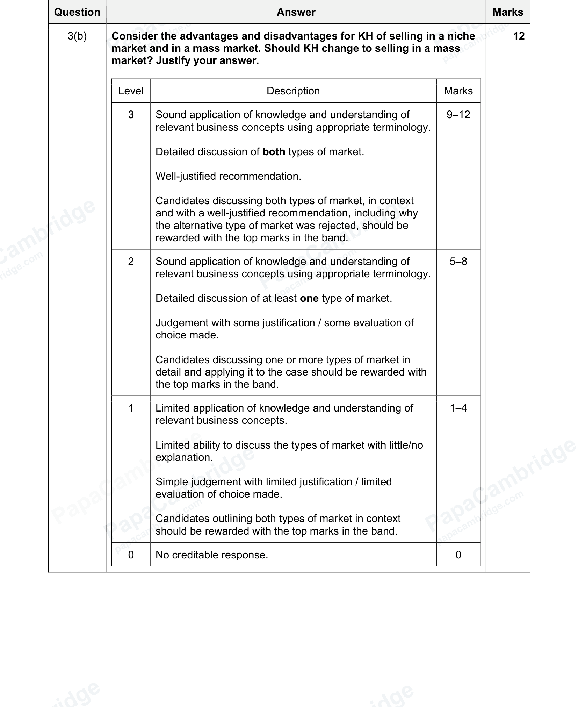
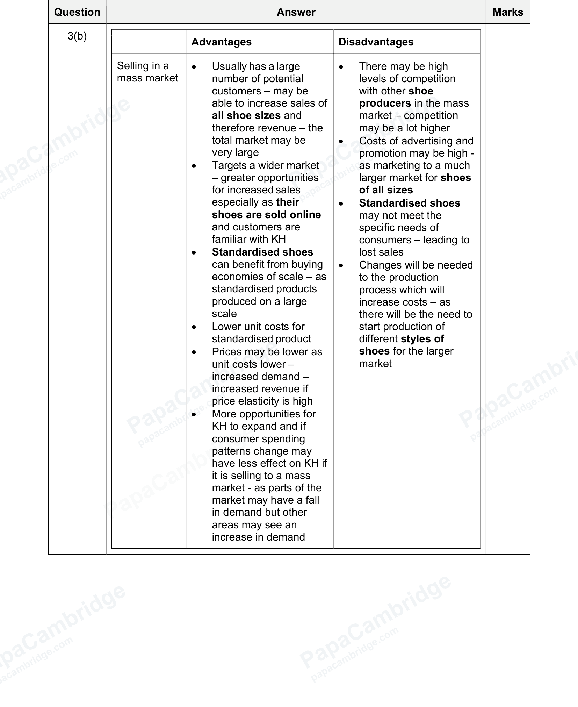
Consider the advantages and disadvantages for KH of selling in a niche 12 market and in a mass market. Should KH change to selling in a mass market? Justify your answer. Level Description Marks 3 Sound application of knowledge and understanding of 9–12 relevant business concepts using appropriate terminology. Detailed discussion of both types of market. Well-justified recommendation. Candidates discussing both types of market, in context and with a well-justified recommendation, including why the alternative type of market was rejected, should be rewarded with the top marks in the band. 2 Sound application of knowledge and understanding of 5–8 relevant business concepts using appropriate terminology. Detailed discussion of at least one type of market. Judgement with some justification / some evaluation of choice made. Candidates discussing one or more types of market in detail and applying it to the case should be rewarded with the top marks in the band. 1 Limited application of knowledge and understanding of 1–4 relevant business concepts. Limited ability to discuss the types of market with little/no explanation. Simple judgement with limited justification / limited evaluation of choice made. Candidates outlining both types of market in context should be rewarded with the top marks in the band. 0 No creditable response. 0 Relevant points might include: Advantages Disadvantages Selling in a • KH’s shoes are a better • May limit growth of KH niche market match to customer as the market for this needs – so more likely niche product is to increase sales as relatively small – may customers more likely to be little potential to choose KH first when increase sales in the buying shoes future

  • Appeals to a specific • If KH wants to grow in type of customer the future it will need to wanting large sizes of start producing other shoes – brand loyalty sizes from satisfied customers • If demand for large size and good customer shoes falls, then KH will relations have a significant fall in
  • Able to charge a higher sales – as only price for the larger specialise in this small sizes as most niche market manufacturers do not • May attract other supply these – leading businesses into this to a higher profit margin market – if KH charging
  • Build market expertise a higher price and in their specialist field – higher profit margin – requiring different the increased specific designs to competition may force produce shoes made KH to reduce prices of natural rubber on a large scale
  • Marketing budget well targeted and more cost effective – as targeted at specific market so does not need to advertise to the wider market Advantages Disadvantages Selling in a • Usually has a large • There may be high mass market number of potential levels of competition customers – may be with other shoe able to increase sales of producers in the mass all shoe sizes and market – competition therefore revenue – the may be a lot higher total market may be • Costs of advertising and very large promotion may be high -
  • Targets a wider market as marketing to a much – greater opportunities larger market for shoes for increased sales of all sizes especially as their • Standardised shoes shoes are sold online may not meet the and customers are specific needs of familiar with KH consumers – leading to
  • Standardised shoes lost sales can benefit from buying • Changes will be needed economies of scale – as to the production standardised products process which will produced on a large increase costs – as scale there will be the need to
  • Lower unit costs for start production of standardised product different styles of
  • Prices may be lower as shoes for the larger unit costs lower – market increased demand – increased revenue if price elasticity is high
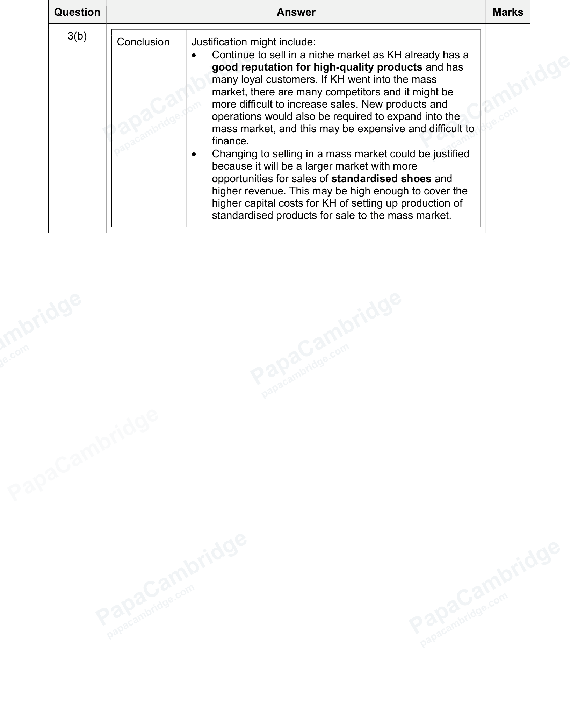
  • More opportunities for KH to expand and if consumer spending patterns change may have less effect on KH if it is selling to a mass market - as parts of the market may have a fall in demand but other areas may see an increase in demand Conclusion Justification might include:
  • Continue to sell in a niche market as KH already has a good reputation for high-quality products and has many loyal customers. If KH went into the mass market, there are many competitors and it might be more difficult to increase sales. New products and operations would also be required to expand into the mass market, and this may be expensive and difficult to finance.
  • Changing to selling in a mass market could be justified because it will be a larger market with more opportunities for sales of standardised shoes and higher revenue. This may be high enough to cover the higher capital costs for KH of setting up production of standardised products for sale to the mass market.
Mark scheme, 0450/23 May/Jun 2026 question 3(b) (page 1 of 4)
Mark scheme, 0450/23 May/Jun 2026 question 3(b) (page 2 of 4)
Mark scheme, 0450/23 May/Jun 2026 question 3(b) (page 3 of 4)
Mark scheme, 0450/23 May/Jun 2026 question 3(b) (page 4 of 4)
Case study: Fun Florals (FF)

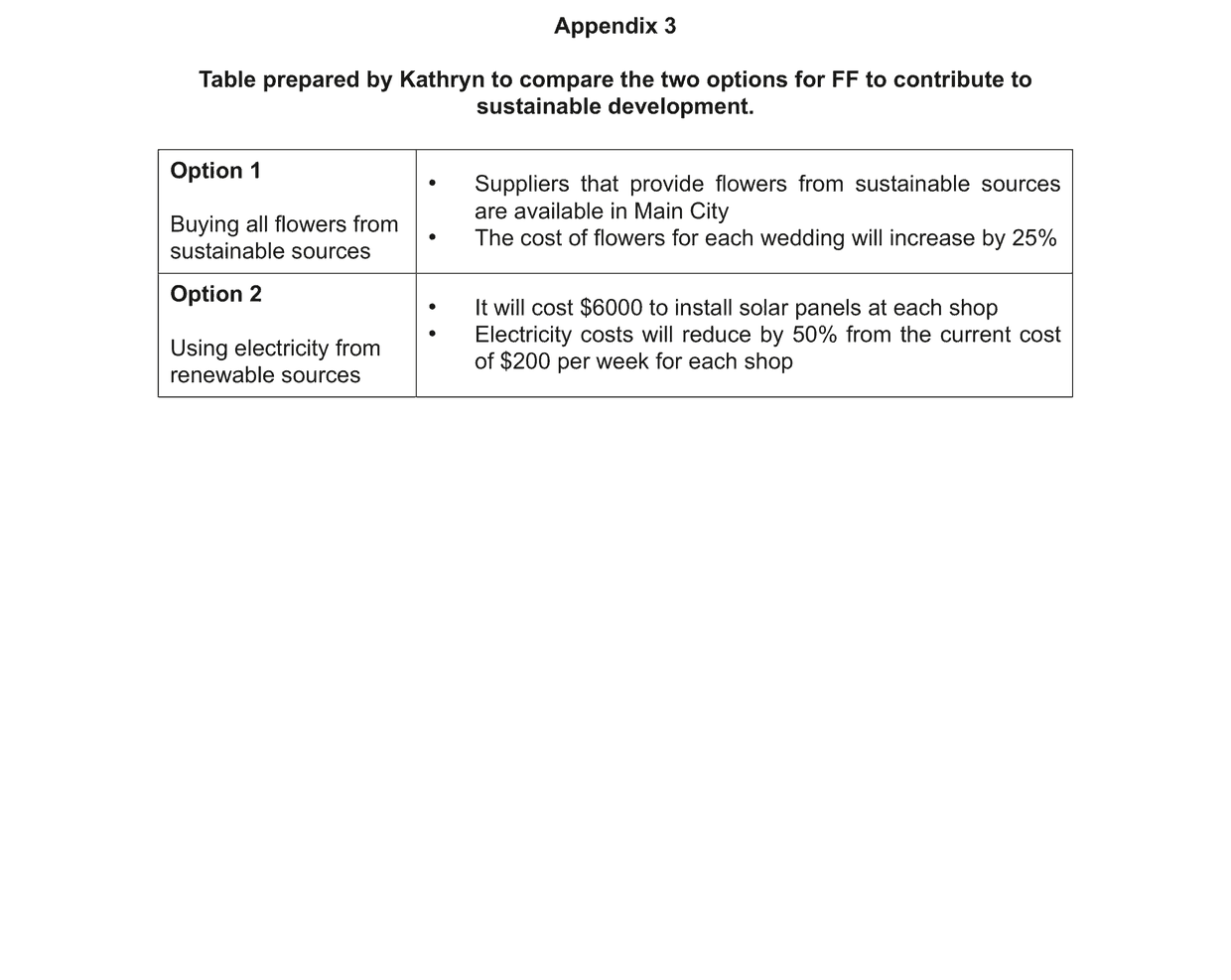
FF is a small business owned by Kathryn. It has 2 small shops in Main City which sell wedding flowers. Each shop has 4 employees. FF has a good reputation for providing high-quality flower arrangements. Most flower shops provide flowers for many occasions, but FF operates in a niche market as it only provides flowers for weddings. The average price customers pay for FF’s wedding flowers is $2000. Kathryn buys flowers from her suppliers every day to ensure that the flowers are fresh and last a long time. She has a good relationship with her suppliers who provide the flowers and other items such as ribbons and packaging materials. Kathryn knows that communication with her suppliers is important. She uses job production for each customer’s order. Kathryn wants to open a larger third shop in the centre of Main City and has written a business plan. She is considering which marketing mix to use for this new shop. FF will need finance for working capital. Kathryn has the choice of using either a bank overdraft or trade credit. Kathryn wants FF to contribute to sustainable development. Many of her customers have told her they are concerned about global warming. Appendix 3 shows information about two ways Kathryn could use to contribute to sustainable development.

Appendix 1

Appendix 2 — referenced by Q2(b)

Email to Kathryn from FF’s Marketing Assistant To: Kathryn From: Marketing Assistant Date: 1 October 2025 Hi Kathryn I have outlined a possible marketing mix for the new larger shop in the centre of Main City. Let me know what you think.

  • Price – using cost-plus pricing for the wedding flowers as we know not all flowers cost the same.
  • Place – selling some of our flowers through wedding planners (businesses which plan weddings for customers).
  • Promotion – using television advertising.
Appendix 3
Question 2(a)Oct/Nov 20250450/228 marks

Explain two benefits and two limitations of a business operating in a niche market. Benefit 1: Benefit 2: Limitation 1: Limitation 2:

Show mark scheme

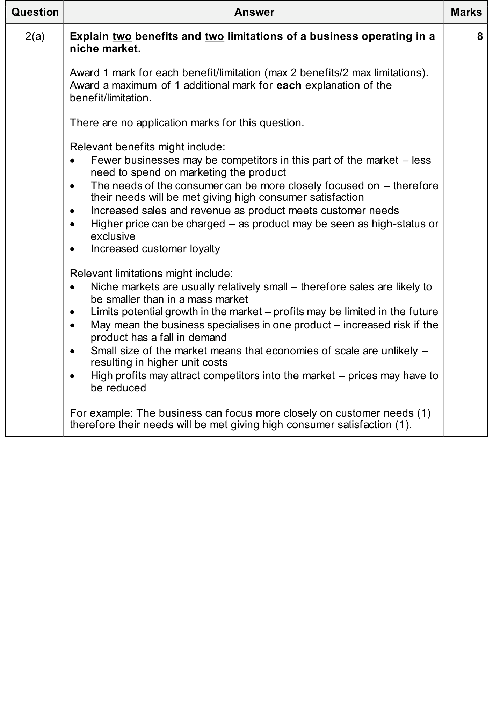
Explain two benefits and two limitations of a business operating in a 8 niche market. Award 1 mark for each benefit/limitation (max 2 benefits/2 max limitations). Award a maximum of 1 additional mark for each explanation of the benefit/limitation. There are no application marks for this question. Relevant benefits might include:

  • Fewer businesses may be competitors in this part of the market – less need to spend on marketing the product
  • The needs of the consumer can be more closely focused on – therefore their needs will be met giving high consumer satisfaction
  • Increased sales and revenue as product meets customer needs
  • Higher price can be charged – as product may be seen as high-status or exclusive
  • Increased customer loyalty Relevant limitations might include:
  • Niche markets are usually relatively small – therefore sales are likely to be smaller than in a mass market
  • Limits potential growth in the market – profits may be limited in the future
  • May mean the business specialises in one product – increased risk if the product has a fall in demand
  • Small size of the market means that economies of scale are unlikely – resulting in higher unit costs
  • High profits may attract competitors into the market – prices may have to be reduced For example: The business can focus more closely on customer needs (1) therefore their needs will be met giving high consumer satisfaction (1).
Mark scheme, 0450/22 Oct/Nov 2025 question 2(a)
Case study: Exceptional Sailing (ES)

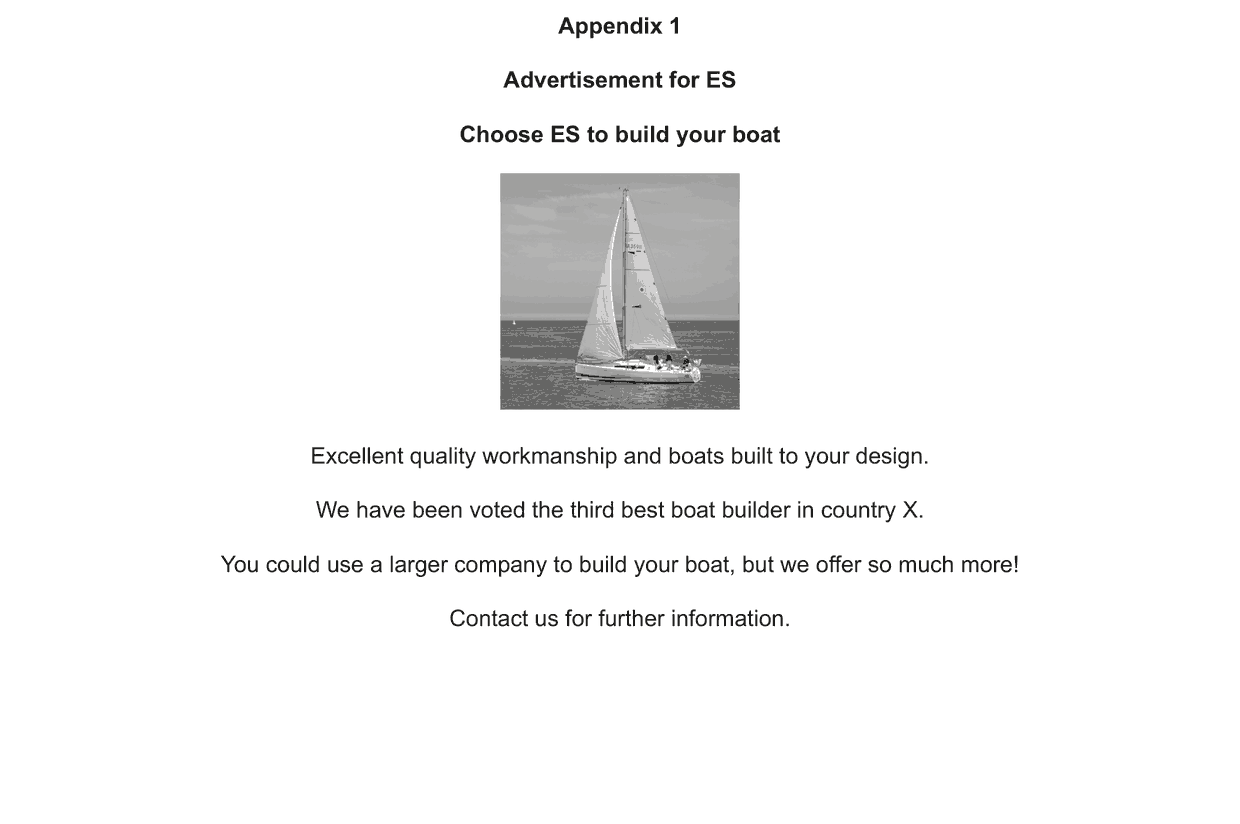
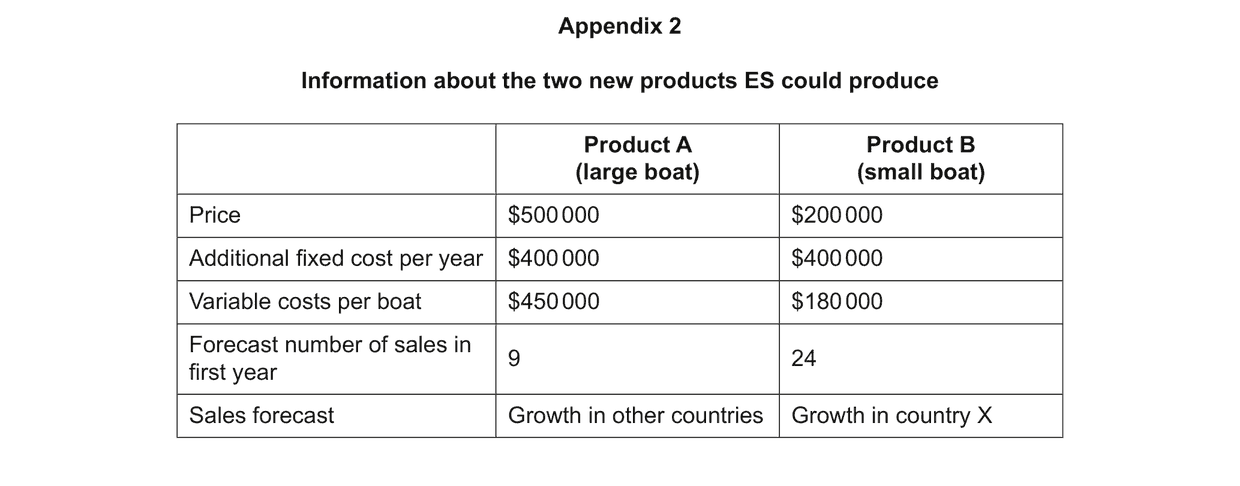
Tim worked at a large boat manufacturer in country X for 20 years. He is highly skilled in building boats. Tim decided to start his own business, called ES, 4 years ago. He currently operates as a sole trader. ES only makes and sells boats in country X. It has become established as a well-known brand with a reputation for high quality. ES has 12 skilled employees including an assistant who helps Tim to run the business. ES has a flat organisational structure with a short chain of command. ES has grown quickly and Tim plans to expand the business further by selling his boats to customers in other countries. He is aware that there are opportunities and threats of globalisation, especially as tariffs and quotas on boats and their component parts have been removed both in country X and in other countries. Tim plans to take out a bank loan to help fund the expansion. His two brothers will also invest in the business. One of his brothers has experience of financial management and the other is skilled in IT. Tim will need to decide whether ES should become a partnership or a private limited company. Tim wants to manufacture a new boat and he will need to choose between Product A and Product B. Information about the two new boats is shown in Appendix 2. ES currently promotes its boats in sailing magazines. Tim is considering using social media to promote his new boat to a wider market. Tim will need to recruit 4 new employees. These new employees will require training and Tim has to decide whether to train them at ES or send them to college two days a week.

Appendix 1
Appendix 2

Appendix 3 — referenced by Q4(a)

Email from Tim to his two brothers To: My two brothers From: Tim Date: 1 October 2025 I am pleased that you have both decided to invest in the business. I know that it will be good to work together and make decisions about the growth of ES. I have included some financial information for 2024.

  • Revenue increased by 50%
  • Gross profit margin was 65%
  • Profit was $100 000
  • Current ratio was 2
  • Acid test ratio was 0.5

---

Question 1(a)Oct/Nov 20250450/238 marks

Explain two reasons why customers might buy from ES rather than from one of its competitors. Reason 1: Explanation: Reason 2: Explanation:

Show mark scheme

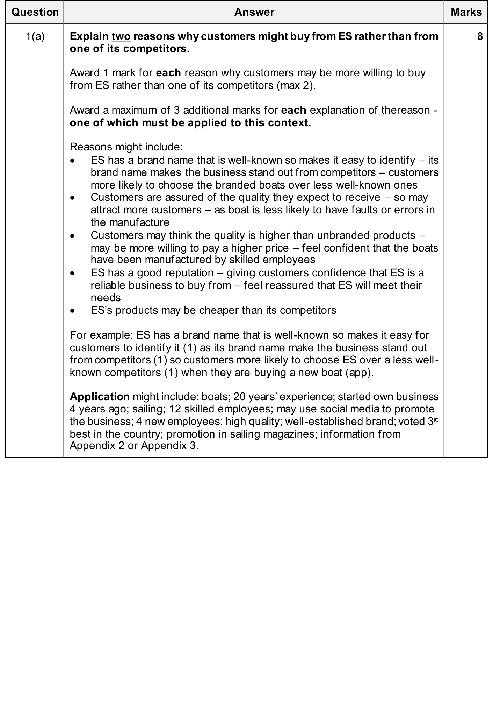
Explain two reasons why customers might buy from ES rather than from 8 one of its competitors. Award 1 mark for each reason why customers may be more willing to buy from ES rather than one of its competitors (max 2). Award a maximum of 3 additional marks for each explanation of the reason - one of which must be applied to this context. Reasons might include:

  • ES has a brand name that is well-known so makes it easy to identify – its brand name makes the business stand out from competitors – customers more likely to choose the branded boats over less well-known ones
  • Customers are assured of the quality they expect to receive – so may attract more customers – as boat is less likely to have faults or errors in the manufacture
  • Customers may think the quality is higher than unbranded products – may be more willing to pay a higher price – feel confident that the boats have been manufactured by skilled employees
  • ES has a good reputation – giving customers confidence that ES is a reliable business to buy from – feel reassured that ES will meet their needs
  • ES’s products may be cheaper than its competitors For example: ES has a brand name that is well-known so makes it easy for customers to identify it (1) as its brand name make the business stand out from competitors (1) so customers more likely to choose ES over a less well- known competitors (1) when they are buying a new boat (app). Application might include: boats; 20 years’ experience; started own business 4 years ago; sailing; 12 skilled employees; may use social media to promote the business; 4 new employees; high quality; well-established brand; voted 3rd best in the country; promotion in sailing magazines; information from Appendix 2 or Appendix 3.
Mark scheme, 0450/23 Oct/Nov 2025 question 1(a)
Case study: Philip Flop (PF)

Philip started PF 10 years ago as a sole trader in country X. PF makes shoes out of natural rubber. Philip used $100 000 of his own money to start up PF. The business has been very successful. Last year Philip changed PF from a sole trader business to a private limited company because he wanted to grow the business. PF employs 20 workers to make the shoes. They are paid a weekly wage based on the number of hours worked. Philip often has to recruit new production workers as the jobs are boring. Other local businesses pay a higher wage for similar work. Philip needs to improve the motivation of PF’s employees and has to decide the best way to do this. Philip wants to build a new factory. This factory will produce a new range of shoes. PF’s products will still be made from natural rubber which is grown in the local area. The bank has agreed to provide a loan to finance the building of the new factory. Philip needs to choose a suitable location for the new factory and is considering the following factors:

  • availability of raw materials
  • transport links
  • government influence. PF operates in a very competitive market. Philip will need to make a decision about how to promote the new range of shoes in a mass market. Philip’s sister is a successful entrepreneur and is considering investing in PF. She is using the extracts from PF’s statements of financial position, shown in Appendix 3, to help her decide.
Appendix 1

Appendix 2 — referenced by Q4(a)

Newspaper article from Main News in country X, 2 April 2025 The government is increasing tax rates on people’s incomes and on business profits. The tax on people’s incomes will increase by 2% and the tax on profits made by businesses will increase by 4%. These increases will be introduced next month. No further tax increases are planned.

Appendix 3
Question 2(a)May/Jun 20250450/218 marks

Explain one advantage and one disadvantage of PF selling its products in a mass market. Advantage: Explanation: Disadvantage: Explanation:

Show mark scheme

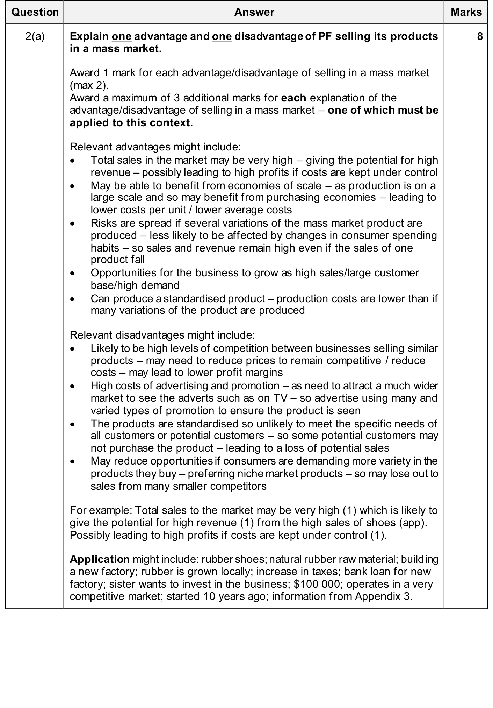
Explain one advantage and one disadvantage of PF selling its products 8 in a mass market. Award 1 mark for each advantage/disadvantage of selling in a mass market (max 2). Award a maximum of 3 additional marks for each explanation of the advantage/disadvantage of selling in a mass market – one of which must be applied to this context. Relevant advantages might include:

  • Total sales in the market may be very high – giving the potential for high revenue – possibly leading to high profits if costs are kept under control
  • May be able to benefit from economies of scale – as production is on a large scale and so may benefit from purchasing economies – leading to lower costs per unit / lower average costs
  • Risks are spread if several variations of the mass market product are produced – less likely to be affected by changes in consumer spending habits – so sales and revenue remain high even if the sales of one product fall
  • Opportunities for the business to grow as high sales/large customer base/high demand
  • Can produce a standardised product – production costs are lower than if many variations of the product are produced Relevant disadvantages might include:
  • Likely to be high levels of competition between businesses selling similar products – may need to reduce prices to remain competitive / reduce costs – may lead to lower profit margins
  • High costs of advertising and promotion – as need to attract a much wider market to see the adverts such as on TV – so advertise using many and varied types of promotion to ensure the product is seen
  • The products are standardised so unlikely to meet the specific needs of all customers or potential customers – so some potential customers may not purchase the product – leading to a loss of potential sales
  • May reduce opportunities if consumers are demanding more variety in the products they buy – preferring niche market products – so may lose out to sales from many smaller competitors For example: Total sales to the market may be very high (1) which is likely to give the potential for high revenue (1) from the high sales of shoes (app). Possibly leading to high profits if costs are kept under control (1). Application might include: rubber shoes; natural rubber raw material; building a new factory; rubber is grown locally; increase in taxes; bank loan for new factory; sister wants to invest in the business; $100 000; operates in a very competitive market; started 10 years ago; information from Appendix 3.
Mark scheme, 0450/21 May/Jun 2025 question 2(a)
Case study: Vegan Veg (VV)

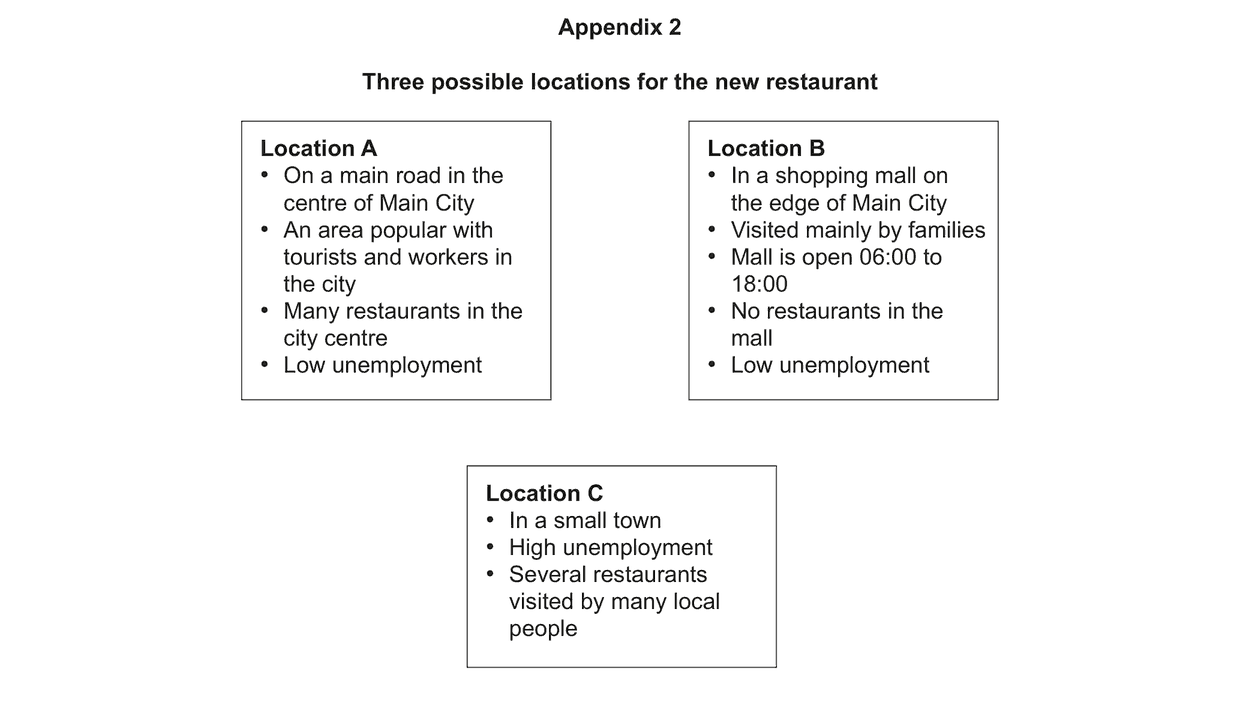
Jemi has always wanted to own a business. She is planning to buy a franchise called VV, a restaurant brand that only serves vegan meals. The meals do not contain any ingredients made from animal products. Market segmentation is important to VV. There has been an increasing trend for people to eat vegan meals. Jemi will need to decide the best location for her restaurant. There are three possible locations outlined in Appendix 2. The restaurant will serve a wide range of vegan meals and Jemi will purchase ingredients, including fruit and vegetables, directly from local suppliers. Jemi will employ a chef to cook the meals. The chef will be expected to work 40 hours a week. Jemi has identified the two best applicants. Their details are shown in Appendix 1. As well as a chef, Jemi plans to employ another 3 people to help in the kitchen and 8 people to serve customers in the restaurant. Jemi knows that keeping these employees motivated will be important. She is considering using job enrichment or giving a discount on meals in the restaurant to keep her employees motivated. Jemi is going to use her own capital of $50 000 to buy the franchise, but she will also need a source of external finance to help set up the business. Jemi knows that the profitability and liquidity ratios for her restaurant will be important for the success of her business.

Appendix 1
Appendix 2

Appendix 3 — referenced by Q4(a)

Newspaper article from Main News, 3 May 2025 A recent government report said that everyone should be eating more fruit and vegetables. It found that this is particularly important to help keep children healthy and to live a long life. Eating less meat is also good for the environment. Five years ago, only 10% of the population ate vegan meals but this percentage has increased to 25%. It is forecast that this trend will continue. Many well-known restaurants are adding vegan meals to their menus. There are also new vegan restaurants being opened. However, it is getting more difficult to find reliable suppliers of fruit and vegetables. Restaurants are now having to buy from suppliers that are further away.

---

Question 2(a)May/Jun 20250450/238 marks

Explain two benefits of market segmentation for VV. Benefit 1: Explanation: Benefit 2: Explanation:

Show mark scheme

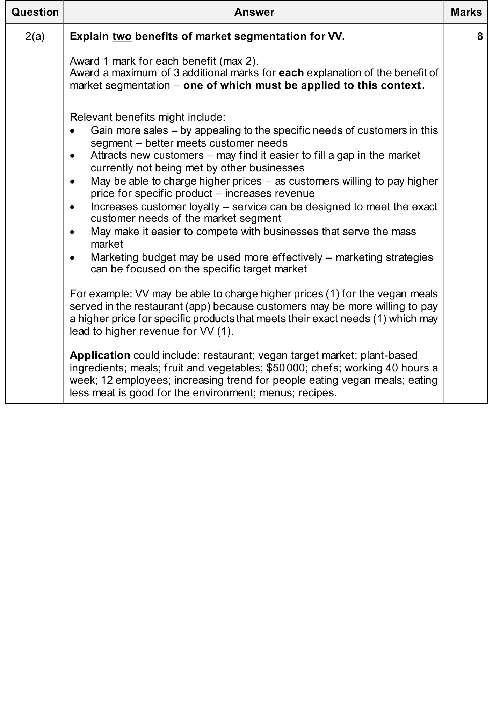
Explain two benefits of market segmentation for VV. 8 Award 1 mark for each benefit (max 2). Award a maximum of 3 additional marks for each explanation of the benefit of market segmentation – one of which must be applied to this context. Relevant benefits might include:

  • Gain more sales – by appealing to the specific needs of customers in this segment – better meets customer needs
  • Attracts new customers – may find it easier to fill a gap in the market currently not being met by other businesses
  • May be able to charge higher prices – as customers willing to pay higher price for specific product – increases revenue
  • Increases customer loyalty – service can be designed to meet the exact customer needs of the market segment
  • May make it easier to compete with businesses that serve the mass market
  • Marketing budget may be used more effectively – marketing strategies can be focused on the specific target market For example: VV may be able to charge higher prices (1) for the vegan meals served in the restaurant (app) because customers may be more willing to pay a higher price for specific products that meets their exact needs (1) which may lead to higher revenue for VV (1). Application could include: restaurant; vegan target market; plant-based ingredients; meals; fruit and vegetables; $50 000; chefs; working 40 hours a week; 12 employees; increasing trend for people eating vegan meals; eating less meat is good for the environment; menus; recipes.
Mark scheme, 0450/23 May/Jun 2025 question 2(a)

56 more questions from 2019–2024

🔒 Unlock every Marketing, competition and the customer question from 2019–2024

All 56 come with their mark schemes, answers and case studies, and appear in the practice tool above once you’re signed in. It’s free.

Create a free accountSign in

A few of them

  • 0450/11 · Oct/Nov 2024 · Question 3(c)Outline two benefits to JTA of selling… 🔒
  • 0450/13 · Oct/Nov 2024 · Question 3(d)Explain two advantages to LRL of maintaining… 🔒
  • 0450/11 · May/Jun 2024 · Question 3(a)Define… 🔒
  • 0450/12 · May/Jun 2024 · Question 1(b)Identify two ways a business can build… 🔒
  • 0450/12 · May/Jun 2024 · Question 1(c)Outline one benefit and one limitation to… 🔒
  • + 51 more, by year in the table above

Questions and mark schemes are from past Cambridge papers and are reproduced for revision. Topical Vault is an independent revision resource, not affiliated with or endorsed by Cambridge Assessment International Education.

IGCSE Business questions by topic

Each topic opens this practice tool with only that topic’s questions, plus how often it comes up and every question on it in one list.

  1. Ch 1Business activity
  2. Ch 2Classification of businesses
  3. Ch 3Enterprise, business growth and size
  4. Ch 4Types of business organisation
  5. Ch 5Business objectives and stakeholder objectives
  6. Ch 6Motivating employees
  7. Ch 7Organisation and management
  8. Ch 8Recruitment, selection and training of employees
  9. Ch 9Internal and external communication
  10. Ch 10Marketing, competition and the customer
  11. Ch 11Market research
  12. Ch 12The marketing mix: product
  13. Ch 13The marketing mix: price
  14. Ch 14The marketing mix: place
  15. Ch 15The marketing mix: promotion
  16. Ch 16Technology and the marketing mix
  17. Ch 17Marketing strategy
  18. Ch 18Production of goods and services
  19. Ch 19Costs, scale of production and break-even analysis
  20. Ch 20Achieving quality production
  21. Ch 21Location decisions
  22. Ch 22Business finance: needs and sources
  23. Ch 23Cash flow forecasting and working capital
  24. Ch 24Income statements
  25. Ch 25Statement of financial position
  26. Ch 26Analysis of accounts
  27. Ch 27Economic issues
  28. Ch 28Environmental and ethical issues
  29. Ch 29Business and the international economy