Question 5May/Jun 20269609/3212 marks
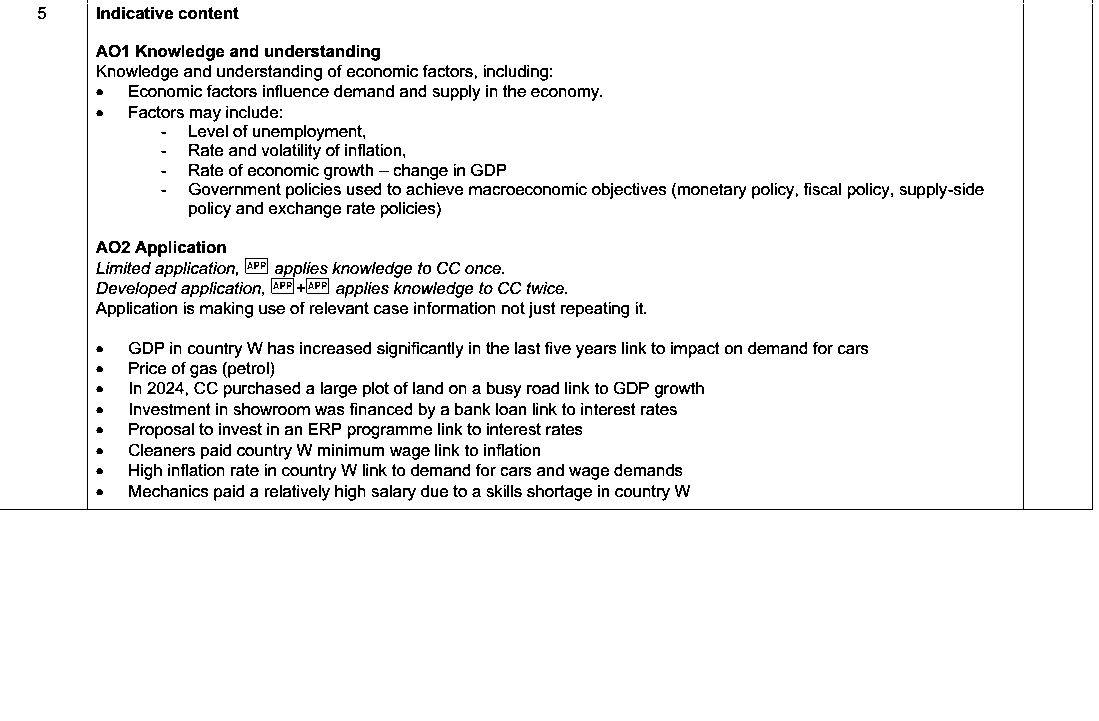
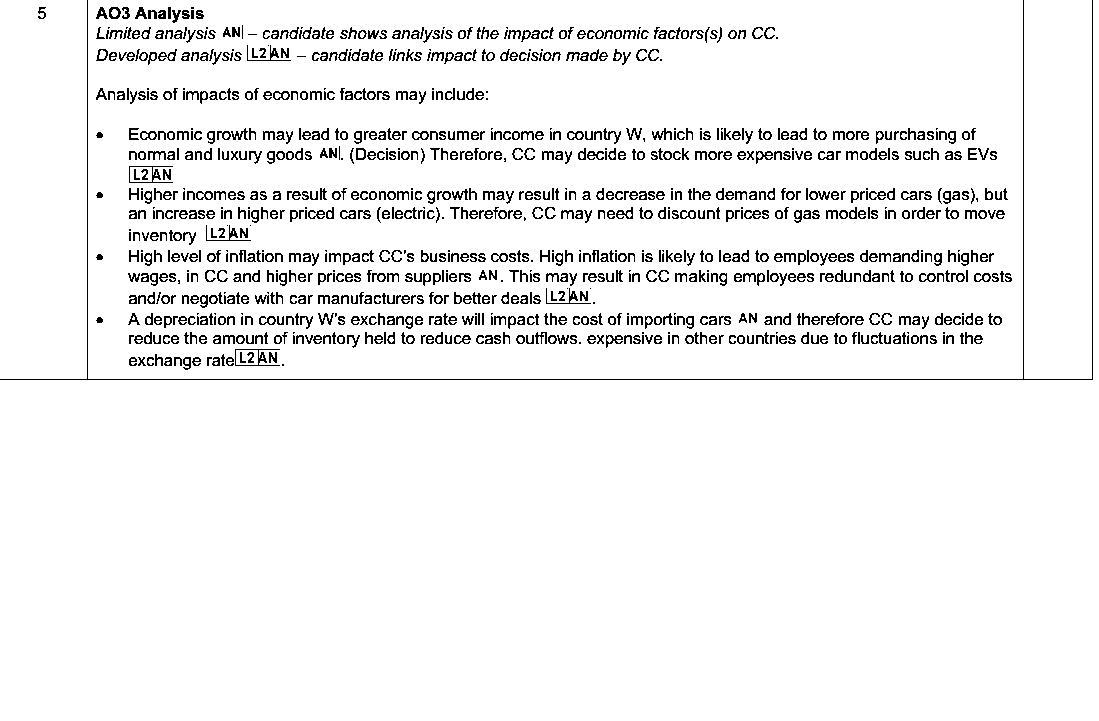
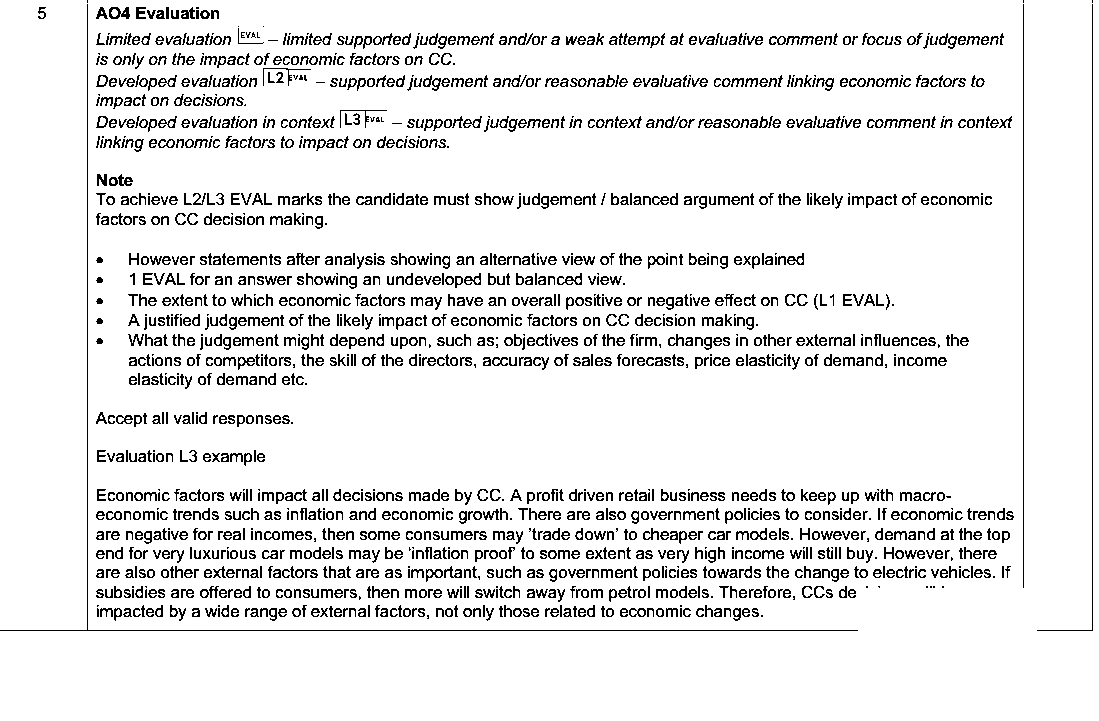
Evaluate the extent to which economic factors may impact CC’s decision making. [12 marks]
Show mark scheme

Cambridge 9609, Paper 3 & 4. 330 questions, 2020 to 2026.
Case studies and questions retyped from the original Cambridge material; Paper 3 mark schemes are cropped from the official mark scheme PDFs, Paper 4 mark schemes are retyped as text. A few 2020–2022 Paper 3 case studies were recovered by OCR from a damaged source file — those are marked where it applies.
Questions on external economic influences: interest rates, exchange rates, economic growth and recession, inflation and unemployment, and the impact of government fiscal, monetary and supply-side policies on a business.
25 past paper questions on this topic since 2020, across 13 exam sessions.
| Year | Paper 3 | Paper 4 | Total | Chart |
|---|---|---|---|---|
| 2026 | 2 | 0 | 2 | |
| 2025 | 3 | 1 | 4 | |
| 2024 | 4 | 0 | 4 | |
| 2023 | 3 | 1 | 4 | |
| 2022 | 3 | 0 | 3 | |
| 2021 | 6 | 0 | 6 | |
| 2020 | 2 | 0 | 2 |
The whole topic on one page, with answers and mark schemes. Printing this page prints just this list.
CC is a private limited company, based in country W, that sells cars. Gross domestic product (GDP) in country W has increased significantly in the last five years.
CC was set up in 2022 and for two years it traded online and from a small showroom in the centre of city A.
CC does not manufacture cars. The business buys cars directly from manufacturers and then sells these from its showroom and on its website.
In March 2024, CC purchased a large plot of land on a busy road in country W. It built a large showroom so that customers can view the cars and take them for a test drive. This investment was financed by a bank loan. In August 2024, CC relocated to the new showroom.
The new showroom building also has offices for the directors and managers and an area for internet sales. Figure 1.1 shows some data about the showroom relocation.
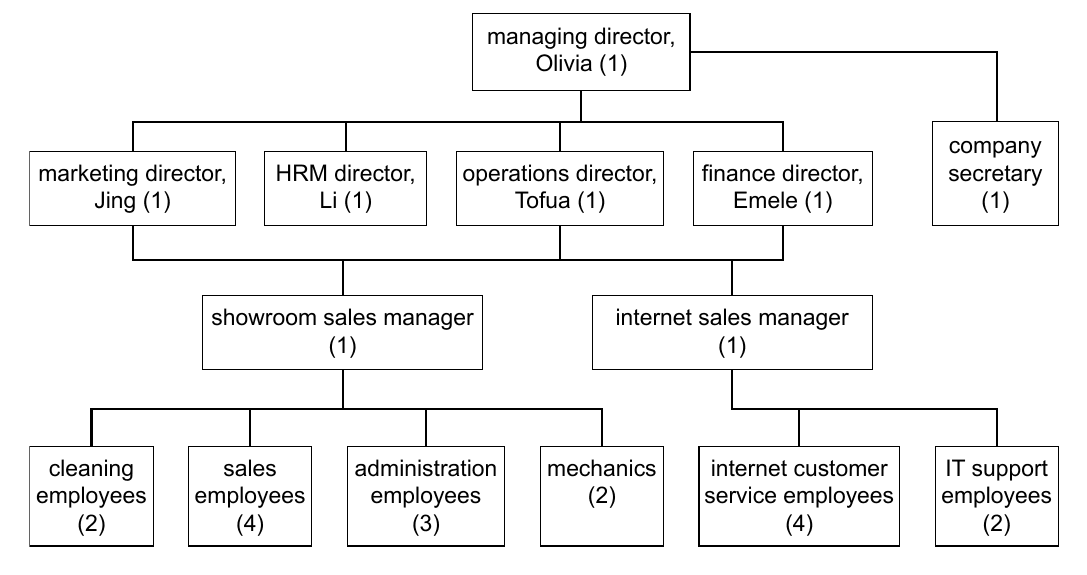
At a recent meeting of the board of directors, the efficiency of CC was discussed. Figure 1.2 shows the current organisational structure for CC in 2026. The number in brackets in each box shows the number of employees in that role.
CC’s finance director, Emele, thinks that the business has too many levels of hierarchy. She has proposed that CC delayers the company by making the showroom sales manager and the internet sales manager redundant. She has proposed that CC should invest in an Enterprise Resource Planning (ERP) programme which would take over most of the managerial functions currently carried out by the two managers.
The showroom sales employees are paid using commission based on achieving sales targets. The cleaners are paid country W’s minimum wage, and the other employees are paid a salary. The mechanics are paid a relatively high salary due to a skills shortage in country W. ERP investment appraisal
Emele has carried out an investment appraisal for the proposed ERP programme (see Table 1.1). There is no residual value for this investment at the end of its four-year life.
The operations director, Tofua, is more concerned about the inventory held by CC. ‘When we were located at the old showroom, we held very little inventory’ said Tofua, ‘and it worked well for us. However, since opening the new showroom, we have been holding more and more inventory, and it is causing significant opportunity costs.’ Table 1.2 shows inventory and cost data for CC.
The managing director, Olivia, thinks that reducing the inventory level in the showroom would be an inappropriate decision. She knows that many customers expect to be able to see and test drive a car before they agree to purchase it. Without inventory of the different car models CC sells, she worries that demand will decrease, especially with the current high inflation rate in country W.
Tofua has prepared a summary report of CC’s current inventory (see Table 1.3).
At a recent board meeting, Jing, the marketing director, presented the quarterly sales forecast. An extract from the quarter 3 (July to September) 2026 forecast is shown in Figure 1.3.
July and August – low sales due to customers prioritising vacations.
September – manufacturers launch new car models – high sales expected.
market trends – 35% increase in demand for electric vehicles.
Olivia, the managing director, is concerned that Jing’s forecast does not include more qualitative sales forecasting.
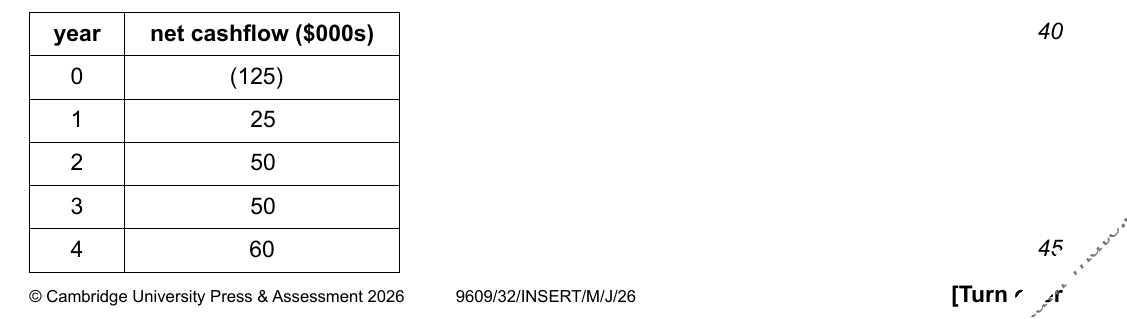

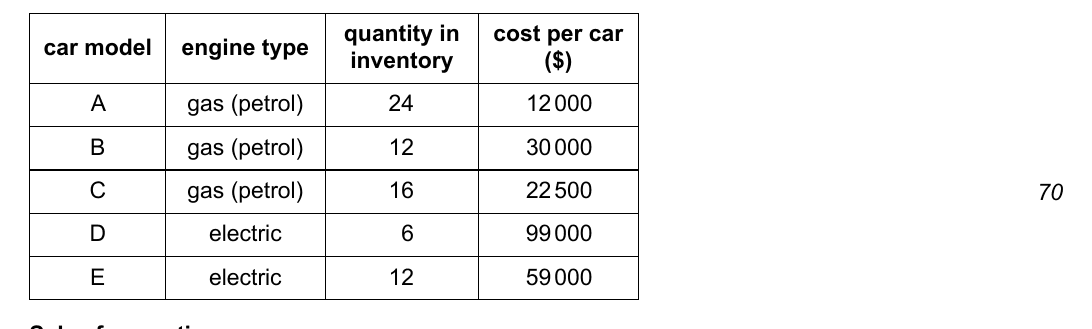
Evaluate the extent to which economic factors may impact CC’s decision making. [12 marks]
RR is a manufacturer and retailer of luxury beauty products. Reeta Roy started RR in 2016 after managing several small enterprises with limited success.
Using her creativity, Reeta produced the first batch of soap in her kitchen. Reeta used fresh ingredients from her home region of country X. Customer feedback was positive and Reeta decided to form a private limited company. RR rented a local factory to start production. The location of the factory was important as Reeta’s business plan was to work with local farmers who could supply fresh ingredients. RR decided not to use machines and instead recruited skilled workers to hand-make its products.
Reeta believes the culture of RR is essential in creating a luxury product. Reeta expects employees to share her pride in RR’s products whether they work in manufacturing or have face-to-face contact with the final consumer.
RR’s first retail store opened in 2017 selling only RR products. By 2026, RR had opened 22 retail stores in country X, with more planned.
Though employees admire Reeta’s determination, energy and charisma, RR has a high labour turnover of graduate level managers due to limited promotion opportunities and training. Reeta believes that leaders are born with the traits and abilities to lead.
The success of RR’s brand is built on using local ingredients. Sourcing quality ingredients to meet demand is a constant problem. RR occasionally has to accept a variation in the standard of ingredients. Some of RR’s products made using these ingredients have to be rejected after quality control. The operations manager has suggested that RR should introduce lean production.
Since 2016, there has been rapid economic growth in country X, see Table 1.1.
RR plans to expand internationally. Reeta wants RR to expand by opening retail units in other countries. However, the marketing team believes that RR should start selling its products using information technology (IT), for example, by using RR’s website and social media. Reeta believes that selling online will have a negative impact on RR’s luxury brand. Reeta thinks that the consumer’s positive interaction with the retail staff is important.
Table 1.2 shows some information about the sales of luxury beauty products in country X.
A survey of RR’s consumers found that 60% said visiting an RR store was a key factor in their purchase decisions and that 45% would consider buying RR products online.
The marketing team has produced an investment appraisal for its IT proposal, see Table 1.3.
FSA is a multinational company and the market leader in beauty products. FSA is aiming to add to its portfolio of luxury brands. RR’s growing reputation has come to the attention of FSA’s Chief Executive, Gabriel Laurent. Gabriel met with Reeta to discuss purchasing 20% of RR’s share capital. Gabriel was impressed by Reeta’s vision for RR and her leadership values. Reeta has placed a high financial value on RR’s shares which is far greater than shown by RR’s latest published accounts. FSA’s Chief Financial Officer (CFO) is concerned by RR’s lack of detailed accounting data including financial ratios. However, Gabriel is convinced that buying 20% of RR’s shares at the value proposed by Reeta is a unique investment opportunity for FSA.
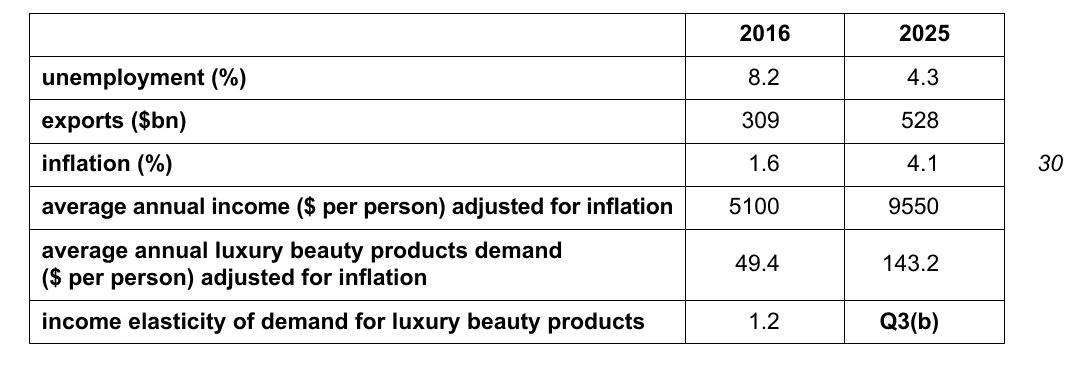

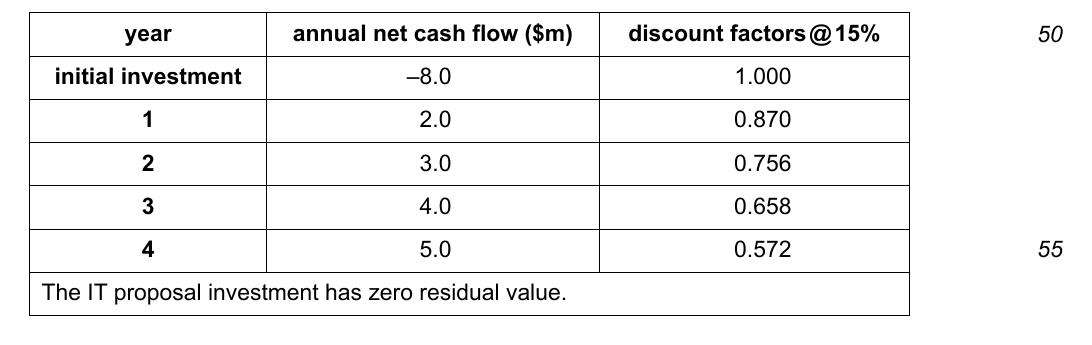
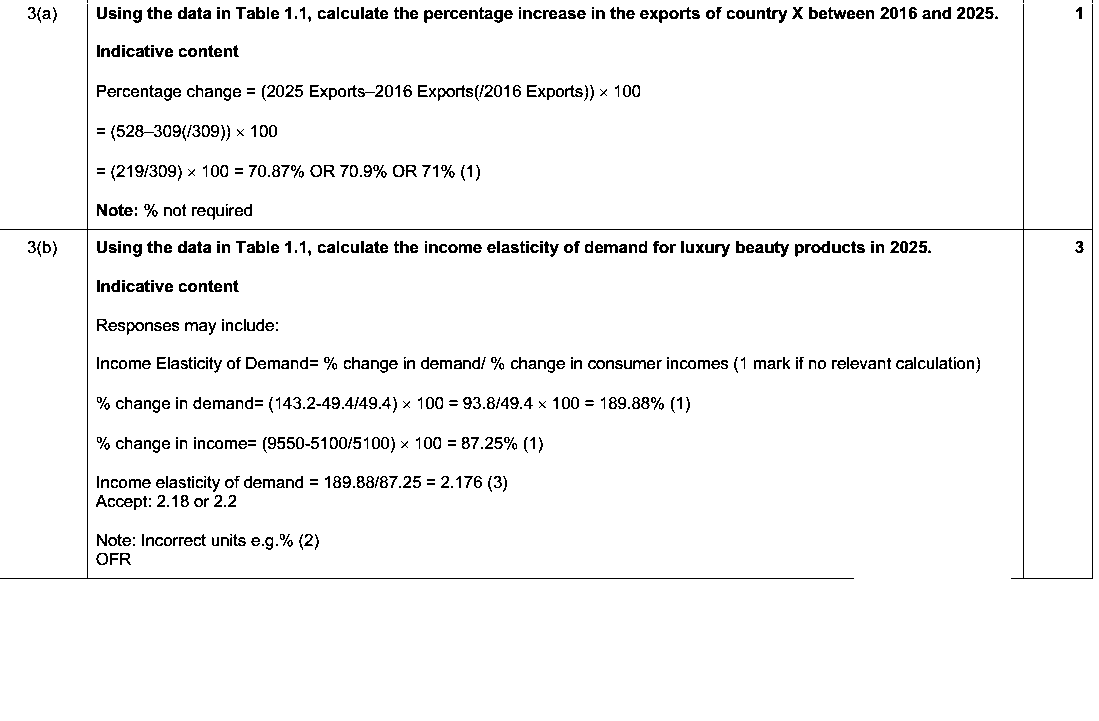
(a) Using the data in Table 1.1, calculate the percentage increase in the exports of country X between 2016 and 2025. [1 marks]
(b) Using the data in Table 1.1, calculate the income elasticity of demand for luxury beauty products in 2025. [3 marks]
(c) Evaluate the likely impact on RR of the rapid economic growth in country X between 2016 and 2025. [12 marks]


Pedro left school without any formal qualifications. Pedro was given the opportunity to work in a pie factory. This was owned by an entrepreneur who wanted to help unqualified young people.
Pedro spent six years working at the factory. He was quickly promoted because he was conscientious and showed initiative. When the business owner retired, she offered Pedro the chance to buy the business. Pedro raised capital from his savings, friends and family and bought the business. PPP became a private limited company, with Pedro as Managing Director. PPP is based in country A.
PPP manufactures a wide range of pies in its factory. The pies are sold to retailers in country A and other countries in the region.
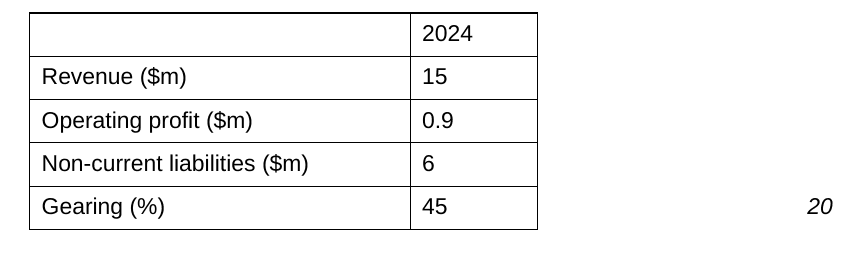
PPP has grown steadily over the last few years. Its revenue and profits have increased by an average of 8% per year. Production capacity has been increased to keep up with demand. Growth has been financed by retained earnings and bank loans. Recent accounting data is shown in Table 1.1.
Real incomes in country A and other countries in the region have been falling due to high inflation and low economic growth. Trade between country A and other countries in the region has become more difficult, due to country A leaving an international trade agreement. Consumers are changing their eating habits, and many people are eating less meat.
When Pedro bought the business, he identified an opportunity to develop a premium product. Pedro asked the marketing team to carry out market research. The results of this established that there was a market for high quality, higher priced pies. Pedro discussed this new product development with all of his marketing team because he valued their opinions.
Once the premium pies were launched, PPP branded its products as either classic or premium pies. Most pies PPP produces still contain meat. However, a newly developed premium no‑meat vegan pie has started to sell very well. PPP is also planning to launch a new classic pie with a cheese filling especially for the export market.
Due to higher production costs PPP has increased its prices. Pedro has analysed some elasticity data for one type of classic pie and one type of premium pie, see Table 1.2.
Pedro has always been a self‑confident innovator, both in terms of new product ideas and the way that PPP is organised and led. He is known for his social skills and is respected and trusted by his employees.
Pedro is also keen to help young unemployed people, in the same way as he was helped. PPP offers training apprenticeships in all areas of the factory. Trainees attend local colleges one day each week and are supervised by the department managers.
Pedro thinks employees are PPP’s greatest asset. As well as training apprentices, he offers competitive wages and all employees have opportunities for career development and promotion within PPP. Pedro is also socially aware as he rewards employees for good ideas from weekly kaizen group discussions. Many employees have been with the company for more than five years.
PPP’s current production process is labour intensive and pies are produced using batch production. All employees accept responsibility for product quality and are trained in quality assurance methods.
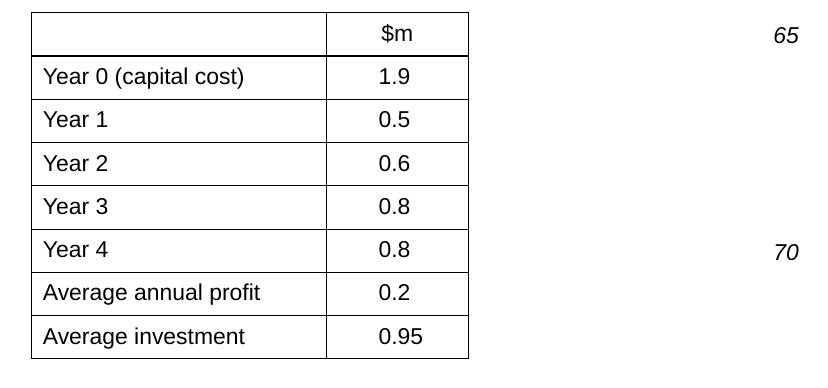
Pedro is considering investing in a new computer‑controlled pie‑making machine, see Table 1.3. This would increase production capacity in the factory. Factory employees would still need to complete the production process by adding the PPP pastry logo to the pies.
Pedro is undecided about increasing the use of machinery, especially as PPP will have to borrow the finance to purchase it.

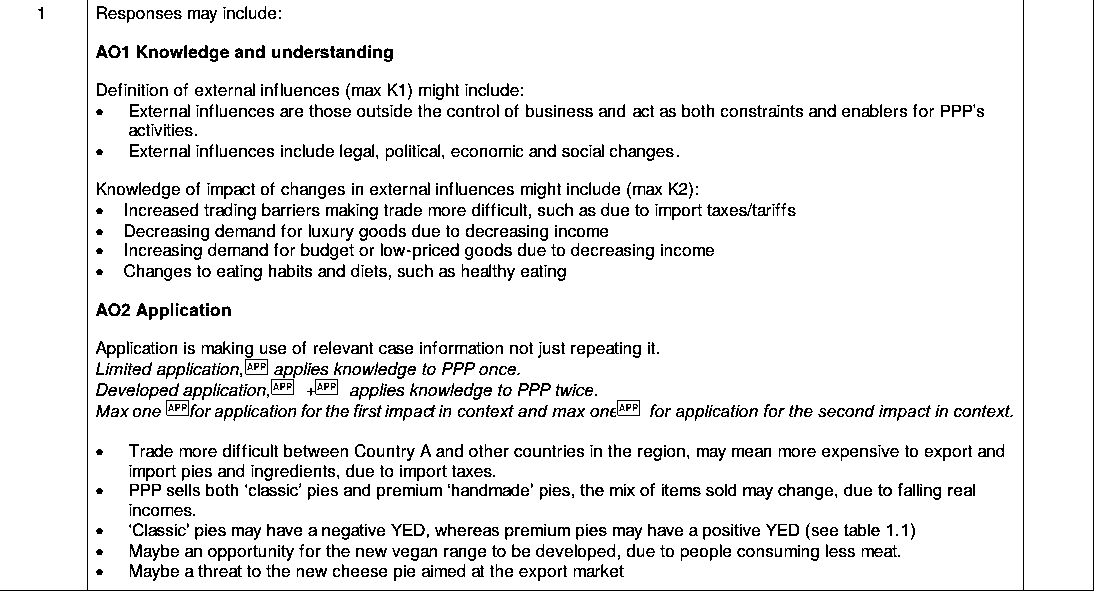
Analyse two likely impacts on PPP of the changing external influences. [8 marks]


KTJ is a private limited company based in country B in Africa. It was set up in 2014 by Ada Hadebe who is the majority shareholder and Managing Director. KTJ specialises in producing tropical fruit juices. KTJ’s mission statement is ‘to bring the tropical taste of Africa to the world through ethical relationships with farmers by focusing on sustainability throughout the supply chain’.
KTJ’s range of tropical fruit juices includes baobab, papaya and pineapple. Juices are produced from seasonal fruits without added sugar or colourings. Most fruits are sourced from local farm cooperatives in country B. The farms are chosen for their sustainable farming methods which KTJ has to regularly audit. Some fruits, not grown in country B, are imported from other countries in Africa.
KTJ has a flat organisational structure. Ada encourages a ‘soft’ approach to human resource management (HRM) and believes in the benefits of delegation. Ada is proud that KTJ has won awards in country B for its substantial investment in employee training and development.
Recently, one of KTJ’s operations managers commissioned research into KTJ’s use of plastic bottles for its fruit juices. After six months of research the final report recommended that KTJ should in future only use plastic bottles made entirely from recycled materials. Ada is considering whether to implement this change.
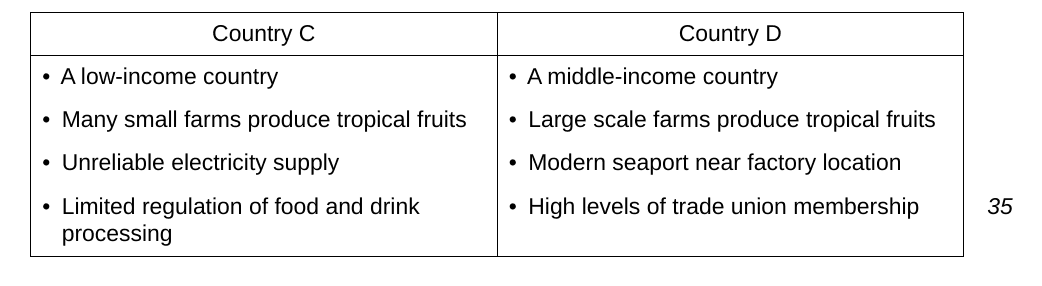
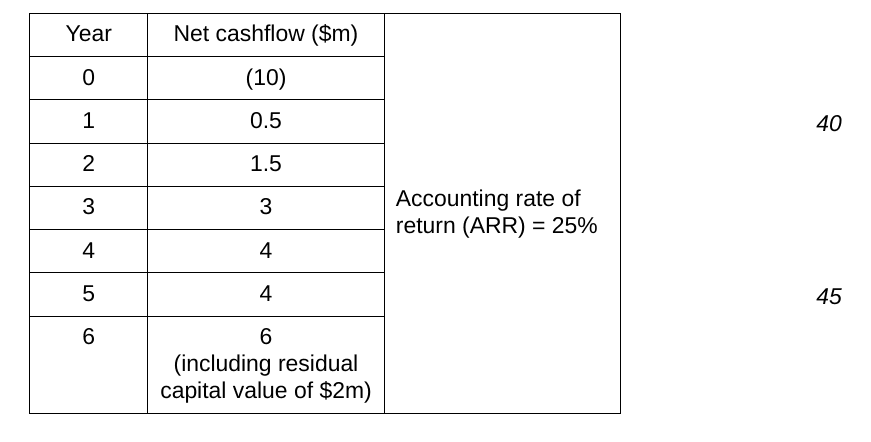
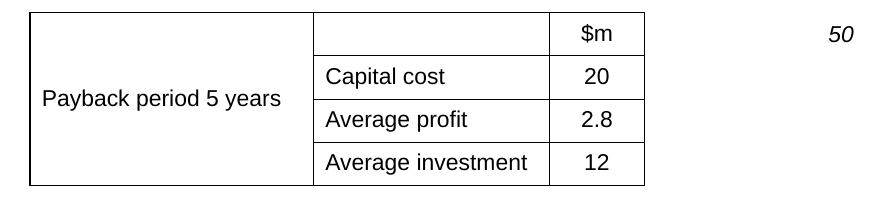
KTJ has an excellent reputation for the quality of its tropical fruit juices which are marketed as premium products. Export demand has increased significantly during the past two years, especially from other African countries. KTJ’s factory in country B is nearing full capacity. Ada thinks that KTJ should expand by processing tropical fruit in a location outside of country B. Ada authorised Gudaf, a junior market analyst, to prepare a report identifying the two best locations for the additional new factory. Gudaf visited multiple locations and prepared an investment appraisal. Gudaf will present the report to the Board of Directors next week recommending a location in either country C or country D.
Extracts from Gudaf’s report are in Table 1.1, Table 1.2 and Table 1.3.
Since 2018, KTJ has exported tropical fruit juices to the US. The US is one of the world’s most competitive markets for food and drink products. Sales are increasing and have met targets. Ada believes that KTJ can increase its market share significantly. Ada instructed the US marketing manager to carry out a market analysis and then develop a new marketing plan. The marketing manager is using time series analysis to help make business decisions. Table 1.4 is an extract of KTJ sales data in the US.
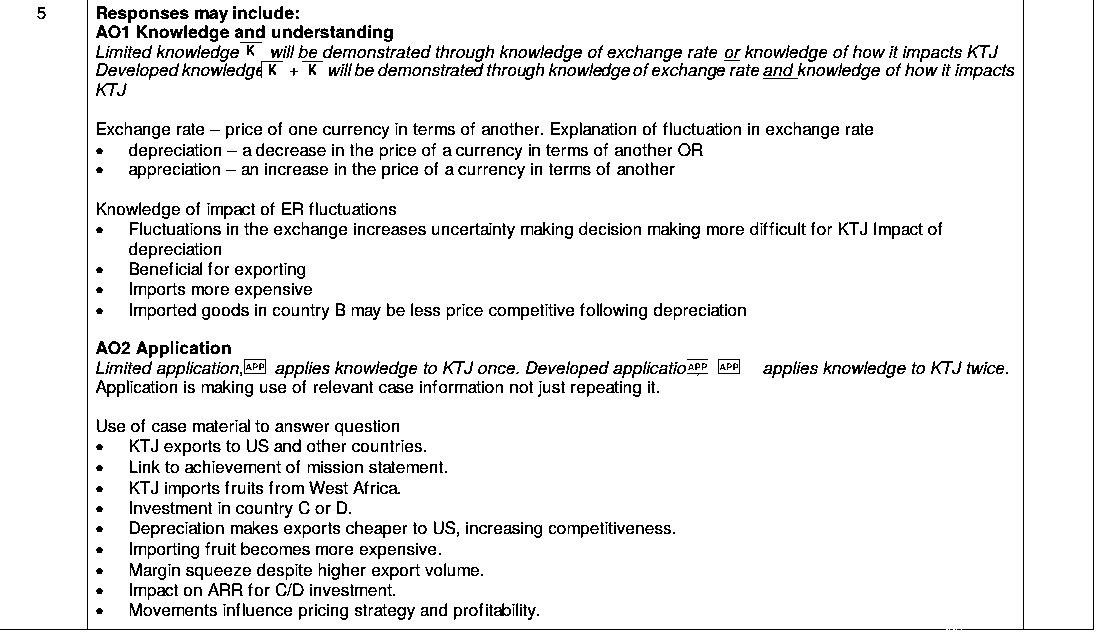
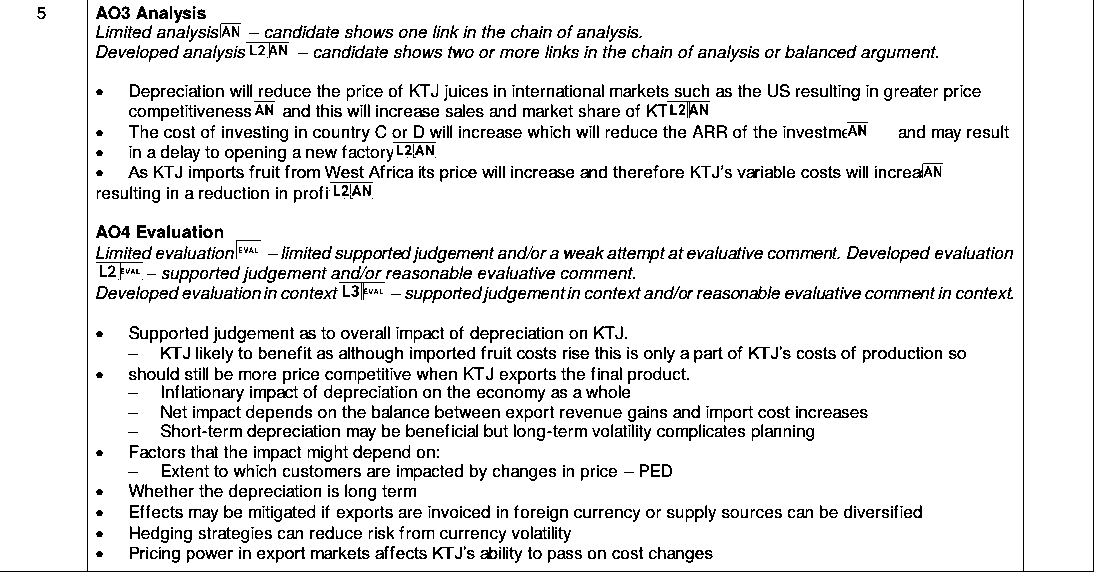
Ada monitors the external environment carefully to identify changes that will impact KTJ. There have been fluctuations in the exchange rate of country B’s currency in recent years. At the last 75 Board Meeting Ada commented ‘financial markets have been unsettled by the recent change of government in country B. This has led to an average 20% depreciation in the value of country B’s currency. This presents both an opportunity for, and a threat to, KTJ.’
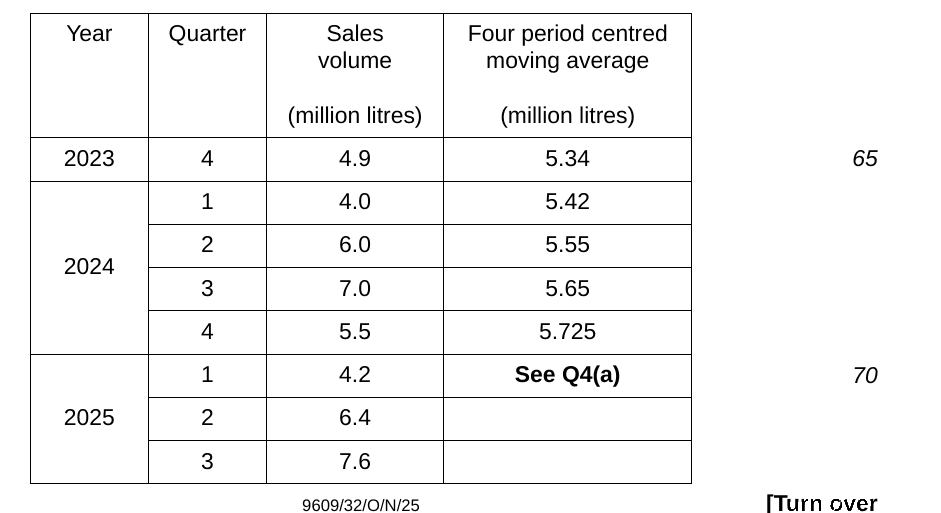
Evaluate the likely impact on KTJ of fluctuations in the exchange rate of country B’s currency. [12 marks]

IPA is a private limited company in country N, a low-income country in Africa. Adesola Kalu set up IPA in 2019. It has a mission to provide technology access to millions of people through recommerce – the selling of previously owned or used products. IPA buys used smartphones, refurbishes them in its factory and then resells them. This provides consumers and businesses cheaper access to technologically advanced smartphones.
The market for refurbished smartphones in country N is growing rapidly. Most refurbished smartphones are sold during major festival periods. It is a competitive market in which no business has more than a 1% market share. In 2024 12 million refurbished smartphones were sold in country N and this is expected to rise to 14.2 million in 2025. IPA sold 104 000 refurbished smartphones in 2024, an increase of 24 000 from 2023. The average consumer of new smartphones upgrades to the latest model every 15 months. This short upgrade cycle has contributed to the growth of the refurbished market.
The refurbished smartphone market is characterised by inconsistent pricing, stolen devices and untrusted offline retailers. IPA sells refurbished smartphones online through its website and offline through local retailers.
IPA aims to provide convenience, cost-effectiveness and quality assurance to its customers. IPA targets both start-up businesses and households. Promotion has focused on advertising on digital platforms. Prices are competitive. Generous credit terms are given when selling to business start-ups.
Adesola has set an objective to increase sales volume by 60% by the end of 2026. Research by the Marketing Director found that:
The Marketing Director has proposed changes to the current marketing mix including:
IPA has 55 employees of whom 40 are production employees who check and refurbish smartphones. The remaining employees include production supervisors, administrators, sales staff and technicians. Adesola is the Managing Director and there are also directors of finance, marketing, human resources and operations. Production employees are skilled and employed on full-time contracts. IPA invests in training of production employees and pay is competitive. However, at the last board meeting the Finance Director proposed that contracts for most production employees should be changed to zero hours contracts. The Human Resources (HR) Director is now considering the implications of this.
Each smartphone is refurbished and quality-tested, with a 25-point quality check, by IPA’s skilled employees. IPA sells the refurbished smartphones with a 6-month guarantee.
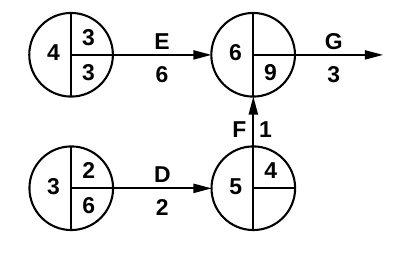
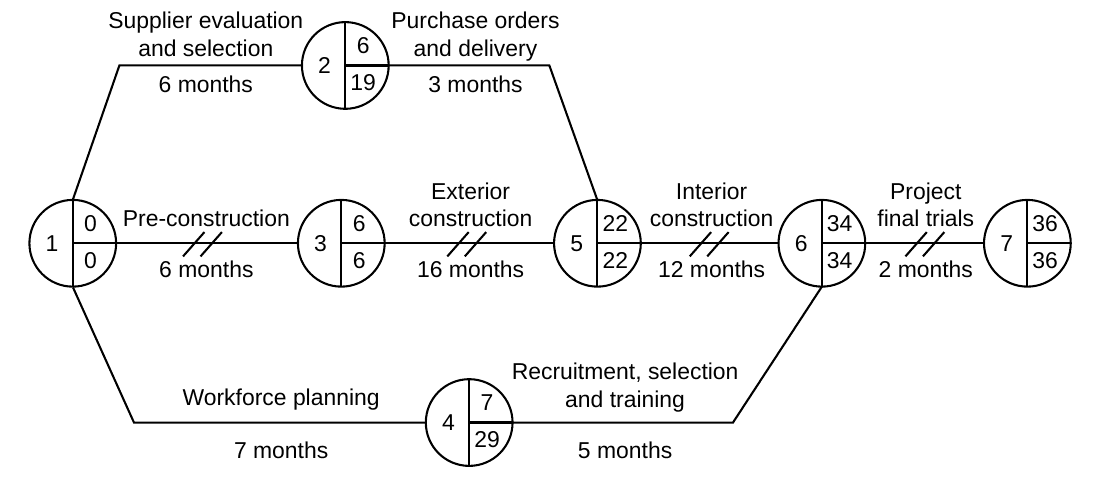
As sales increase, IPA has to recruit and train new production employees. With low unemployment in country N, this is not easy. IPA’s factory is close to full capacity. Consequently, Adesola plans to upgrade machinery and extend the factory to meet expected future demand. Using network analysis, the Operations Director estimates the factory expansion and machinery upgrade will take a minimum of 24 weeks. Activities include:
A partial network diagram is shown in Fig. 1.1 (all activities linked to nodes 5 & 6 are shown).
IPA is profitable but margins are low on each refurbished smartphone. IPA pays sellers of smartphones immediately when the smartphone is received at its factory. The Finance Director is worried about IPA’s liquidity and gearing, particularly as Adesola has committed IPA to rapid expansion plans. Selected financial data and ratios are shown in Table 1.1.
In 2024, economic growth in country N slowed and unemployment began to rise. In response 70 the government is implementing a policy to upgrade infrastructure in country N. This includes providing tax incentives for internet service providers to improve mobile phone connectivity in rural areas.
Further policy measures include a cut in the standard rate of income tax by two percentage points from April 2025. The central bank has also cut interest rates. 75

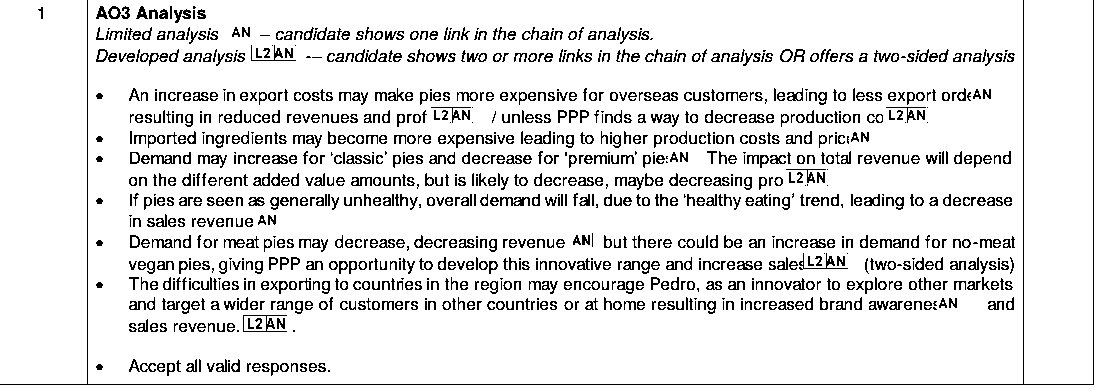
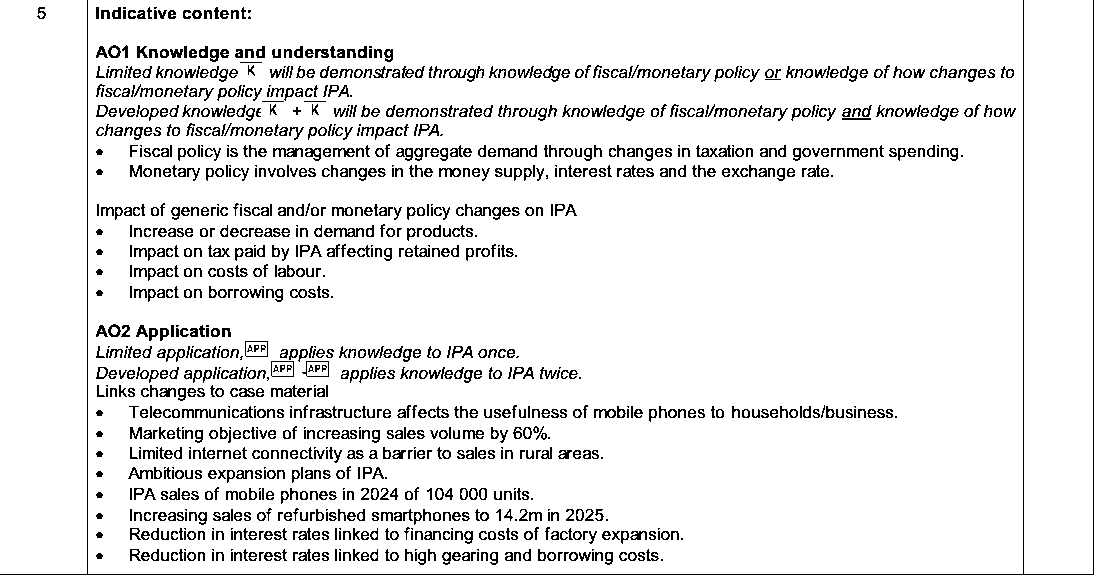
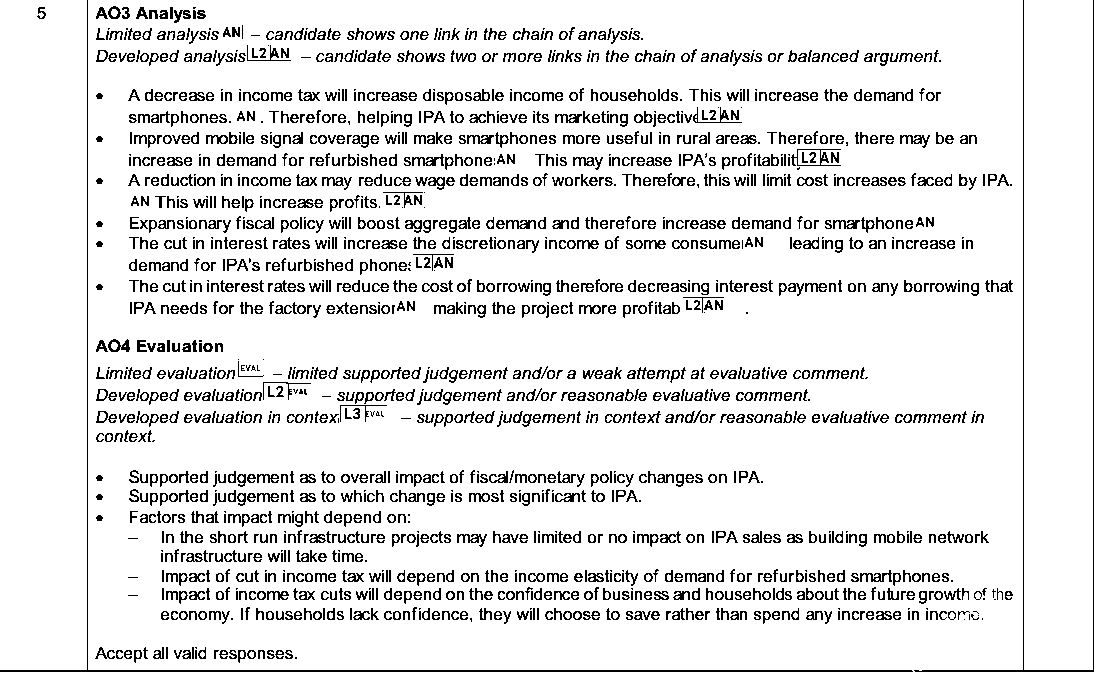
Refer to lines 70–75. Evaluate the most likely impact on IPA of the fiscal and monetary policy changes. [12 marks]

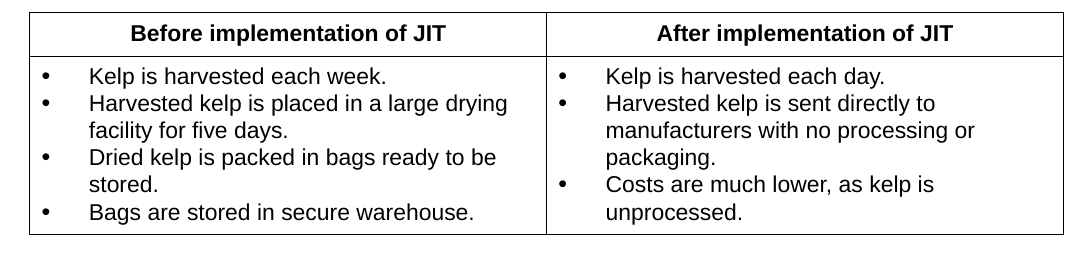
Kelp (or seaweed) farming is the practice of cultivating and harvesting seaweed. Farmers gather the kelp from natural beds in the sea. This farming has a low environmental impact.
KK has a licence to harvest and exploit an area of the seabed in country W. The harvested kelp is dried and packaged at KK’s premises before being sold to food manufacturers. KK is a labour intensive social enterprise with a mission to ‘benefit the planet by the most efficient use of natural resources’.
In 2020 KK decided to build a kelp refinery (see Appendix 1). The cost was estimated to be $5 million, and KK would need to borrow most of this. The refinery would use kelp as a raw material to create a pulp that can be used to produce biodegradable plastics.
In 2025 a new government was elected in country W with policies aimed at improving the economy (see Appendix 4). The directors of KK are considering the likely impact of the government’s policies on KK’s business strategies.
Appendix 3: Interview with Managing Director about the new kelp refinery in 2022
Kelp farming is a new and exciting industry in country W. KK is one of its champions and is developing a new kelp refinery. The innovative business has sustainability at its core and is trying to be as efficient as possible. Elis Nik, the Managing Director of KK, said ‘we believe that the key to success is to keep getting better. Our new refinery will be state-of-the-art, but we will not be complacent. Our employees will always have new ideas to increase efficiency, which we collect through an employee suggestion scheme.’
The refinery aims to have zero waste, with recycling of key components and renewable energy powering the entire facility.
Advise KK on the likely impact of the new government’s policies on its future business strategies. [20 marks]
Knowledge (max 1 mark) can be awarded for any relevant business knowledge about government policy or how it works OR knowledge of business strategy, including:
Award for any explanation of a policy that affects a business’ strategy, up to a max of 2 marks.
Fiscal policy. Some basic knowledge about Fiscal policy, is collecting and using taxes in the economy.. 1 K for identification and 1 DEV Fiscal policy, is collecting and using taxes in the economy, this may 1 K for identification and 2 DEVs
Note: Candidates can gain full marks for AO1 from one term that is explained ( + + ) or from two terms partially explained ( + and + ).
Monetary policy cannot be awarded for knowledge as it is stated in the case study but knowledge of how monetary policy works can be awarded.
No other AO2, AO3 OR AO4 marks can be awarded without AO1.
Application (max 2 marks) can be awarded for applying knowledge, analysis or evaluation of a government policy and its impact on KK between 2020 and 2024.
Candidates MUST apply this to KK’s business model – a lot of this will come from the appendices
Analysis is likely to be based on the impact of the policies on KK’s strategy ( and and ), including:
Candidates may choose to contrast two or more of these policies, but they must analyse the policy in the context of its impact on KK’s strategy, and not just be an analysis of the policy on its own.
Candidates need to identify a policy and provide developed analysis to get to L2, this then needs to be counterbalanced to get to L3. If a candidate does this twice, they will gain 8 marks.
Evaluation ( and and ) including:
Evaluation will largely depend on the points raised in the analysis.
Candidates MUST answer the question – what is the likely impact on the KK’s strategy? The development and support of this judgement will help them to move through L2 and L3.
To award L3 the answer must be in context and draw upon the previous analysis.
No credit (limited supporting evidence) with context) supporting evidence) Supply side Supply side Supply side policies will help KK’s Supply side policies will help KK’s business policies will policies will help business as they may receive as they may receive grants from the help KK. KK’s business as grants from the government. This government. This is more likely with the new they may receive will reduce the costs and help processing factory and its new technology. grants from the increase production level unlike Therefore, costs will reduce and this helps government. increases in interest rates. increase production levels unlike increases in interest rates.
Accept all valid responses.
🔒 Unlock every External economic influences on business activity question from 2020–2024
All 19 come with their mark schemes, answers and case studies, and appear in the practice tool above once you’re signed in. It’s free.
Questions and mark schemes are from past Cambridge papers and are reproduced for revision. Topical Vault is an independent revision resource, not affiliated with or endorsed by Cambridge Assessment International Education.
Each topic opens this practice tool with only that topic’s questions, plus how often it comes up and every question on it in one list.