Question 2May/Jun 20269609/338 marks
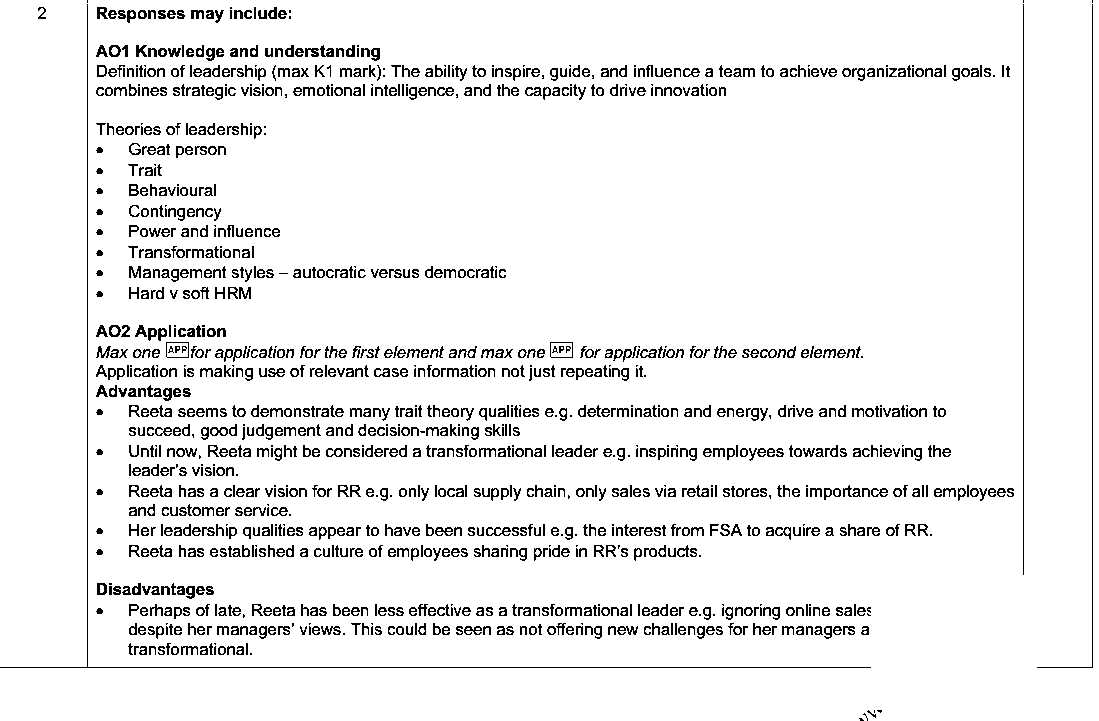
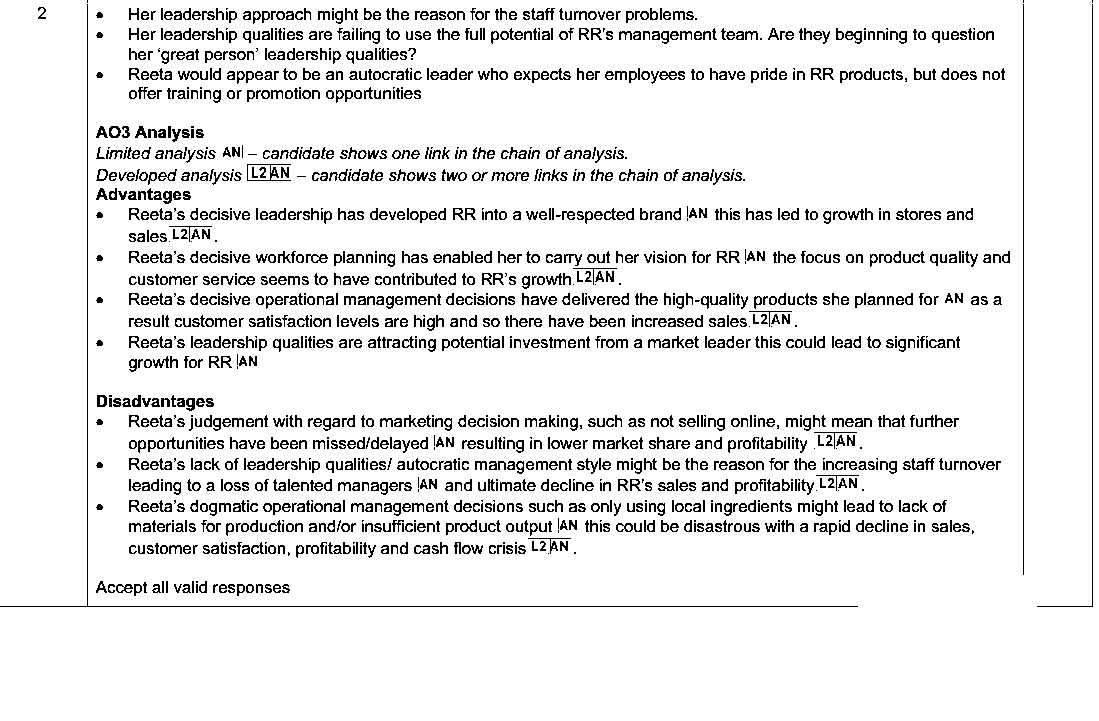
Analyse one advantage and one disadvantage for RR of Reeta’s leadership. [8 marks]
Show mark scheme

Cambridge 9609, Paper 3 & 4. 330 questions, 2020 to 2026.
Case studies and questions retyped from the original Cambridge material; Paper 3 mark schemes are cropped from the official mark scheme PDFs, Paper 4 mark schemes are retyped as text. A few 2020–2022 Paper 3 case studies were recovered by OCR from a damaged source file — those are marked where it applies.
Questions on leadership: the qualities of effective leaders, leadership styles and theories, and the four competencies of emotional intelligence.
6 past paper questions on this topic since 2023, across 6 exam sessions.
| Year | Paper 3 | Paper 4 | Total | Chart |
|---|---|---|---|---|
| 2026 | 1 | 0 | 1 | |
| 2025 | 1 | 1 | 2 | |
| 2024 | 1 | 0 | 1 | |
| 2023 | 1 | 1 | 2 |
The whole topic on one page, with answers and mark schemes. Printing this page prints just this list.
RR is a manufacturer and retailer of luxury beauty products. Reeta Roy started RR in 2016 after managing several small enterprises with limited success.
Using her creativity, Reeta produced the first batch of soap in her kitchen. Reeta used fresh ingredients from her home region of country X. Customer feedback was positive and Reeta decided to form a private limited company. RR rented a local factory to start production. The location of the factory was important as Reeta’s business plan was to work with local farmers who could supply fresh ingredients. RR decided not to use machines and instead recruited skilled workers to hand-make its products.
Reeta believes the culture of RR is essential in creating a luxury product. Reeta expects employees to share her pride in RR’s products whether they work in manufacturing or have face-to-face contact with the final consumer.
RR’s first retail store opened in 2017 selling only RR products. By 2026, RR had opened 22 retail stores in country X, with more planned.
Though employees admire Reeta’s determination, energy and charisma, RR has a high labour turnover of graduate level managers due to limited promotion opportunities and training. Reeta believes that leaders are born with the traits and abilities to lead.
The success of RR’s brand is built on using local ingredients. Sourcing quality ingredients to meet demand is a constant problem. RR occasionally has to accept a variation in the standard of ingredients. Some of RR’s products made using these ingredients have to be rejected after quality control. The operations manager has suggested that RR should introduce lean production.
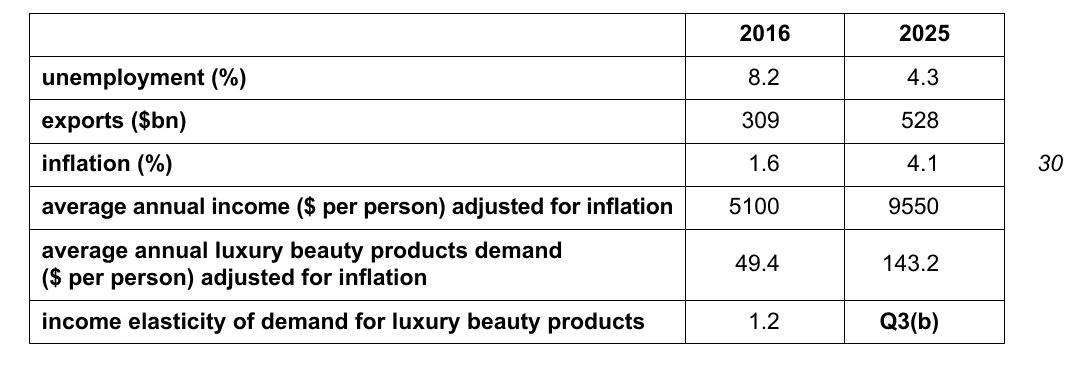
Since 2016, there has been rapid economic growth in country X, see Table 1.1.
RR plans to expand internationally. Reeta wants RR to expand by opening retail units in other countries. However, the marketing team believes that RR should start selling its products using information technology (IT), for example, by using RR’s website and social media. Reeta believes that selling online will have a negative impact on RR’s luxury brand. Reeta thinks that the consumer’s positive interaction with the retail staff is important.
Table 1.2 shows some information about the sales of luxury beauty products in country X.
A survey of RR’s consumers found that 60% said visiting an RR store was a key factor in their purchase decisions and that 45% would consider buying RR products online.
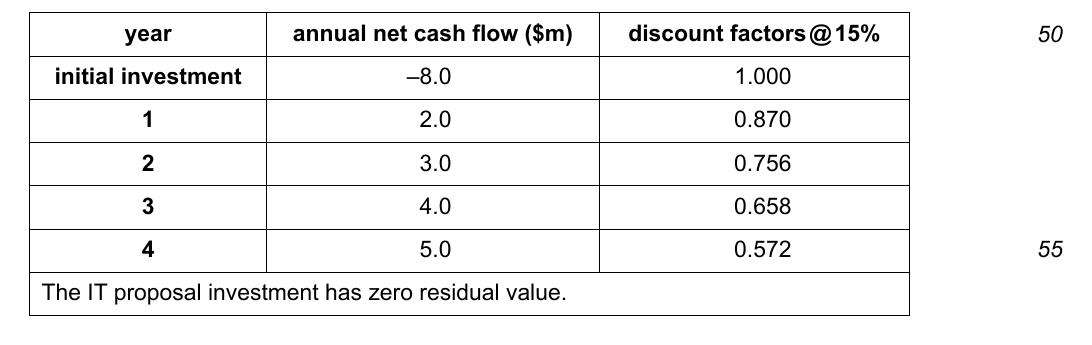
The marketing team has produced an investment appraisal for its IT proposal, see Table 1.3.
FSA is a multinational company and the market leader in beauty products. FSA is aiming to add to its portfolio of luxury brands. RR’s growing reputation has come to the attention of FSA’s Chief Executive, Gabriel Laurent. Gabriel met with Reeta to discuss purchasing 20% of RR’s share capital. Gabriel was impressed by Reeta’s vision for RR and her leadership values. Reeta has placed a high financial value on RR’s shares which is far greater than shown by RR’s latest published accounts. FSA’s Chief Financial Officer (CFO) is concerned by RR’s lack of detailed accounting data including financial ratios. However, Gabriel is convinced that buying 20% of RR’s shares at the value proposed by Reeta is a unique investment opportunity for FSA.

Analyse one advantage and one disadvantage for RR of Reeta’s leadership. [8 marks]
Pedro left school without any formal qualifications. Pedro was given the opportunity to work in a pie factory. This was owned by an entrepreneur who wanted to help unqualified young people.
Pedro spent six years working at the factory. He was quickly promoted because he was conscientious and showed initiative. When the business owner retired, she offered Pedro the chance to buy the business. Pedro raised capital from his savings, friends and family and bought the business. PPP became a private limited company, with Pedro as Managing Director. PPP is based in country A.
PPP manufactures a wide range of pies in its factory. The pies are sold to retailers in country A and other countries in the region.
PPP has grown steadily over the last few years. Its revenue and profits have increased by an average of 8% per year. Production capacity has been increased to keep up with demand. Growth has been financed by retained earnings and bank loans. Recent accounting data is shown in Table 1.1.
Real incomes in country A and other countries in the region have been falling due to high inflation and low economic growth. Trade between country A and other countries in the region has become more difficult, due to country A leaving an international trade agreement. Consumers are changing their eating habits, and many people are eating less meat.
When Pedro bought the business, he identified an opportunity to develop a premium product. Pedro asked the marketing team to carry out market research. The results of this established that there was a market for high quality, higher priced pies. Pedro discussed this new product development with all of his marketing team because he valued their opinions.
Once the premium pies were launched, PPP branded its products as either classic or premium pies. Most pies PPP produces still contain meat. However, a newly developed premium no‑meat vegan pie has started to sell very well. PPP is also planning to launch a new classic pie with a cheese filling especially for the export market.
Due to higher production costs PPP has increased its prices. Pedro has analysed some elasticity data for one type of classic pie and one type of premium pie, see Table 1.2.
Pedro has always been a self‑confident innovator, both in terms of new product ideas and the way that PPP is organised and led. He is known for his social skills and is respected and trusted by his employees.
Pedro is also keen to help young unemployed people, in the same way as he was helped. PPP offers training apprenticeships in all areas of the factory. Trainees attend local colleges one day each week and are supervised by the department managers.
Pedro thinks employees are PPP’s greatest asset. As well as training apprentices, he offers competitive wages and all employees have opportunities for career development and promotion within PPP. Pedro is also socially aware as he rewards employees for good ideas from weekly kaizen group discussions. Many employees have been with the company for more than five years.
PPP’s current production process is labour intensive and pies are produced using batch production. All employees accept responsibility for product quality and are trained in quality assurance methods.
Pedro is considering investing in a new computer‑controlled pie‑making machine, see Table 1.3. This would increase production capacity in the factory. Factory employees would still need to complete the production process by adding the PPP pastry logo to the pies.
Pedro is undecided about increasing the use of machinery, especially as PPP will have to borrow the finance to purchase it.
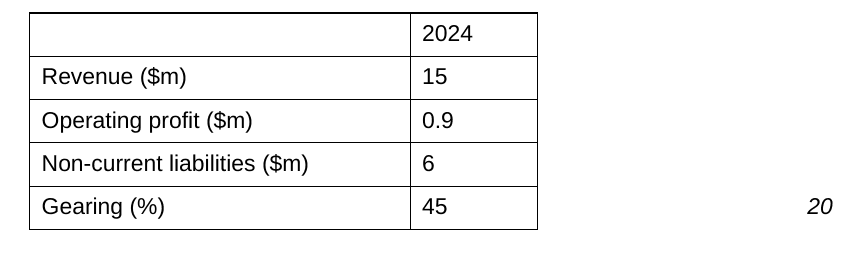

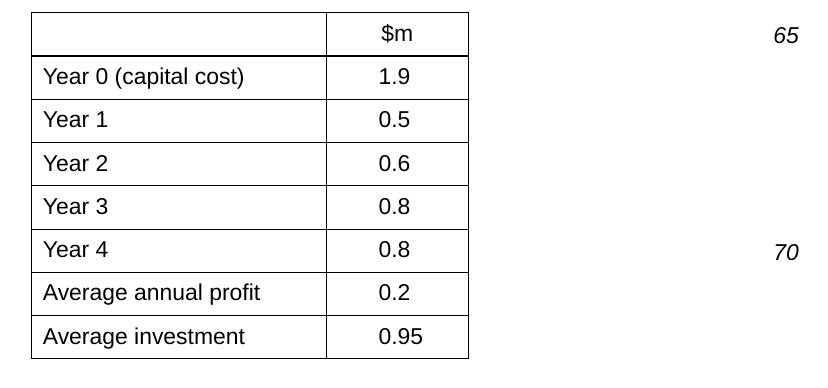
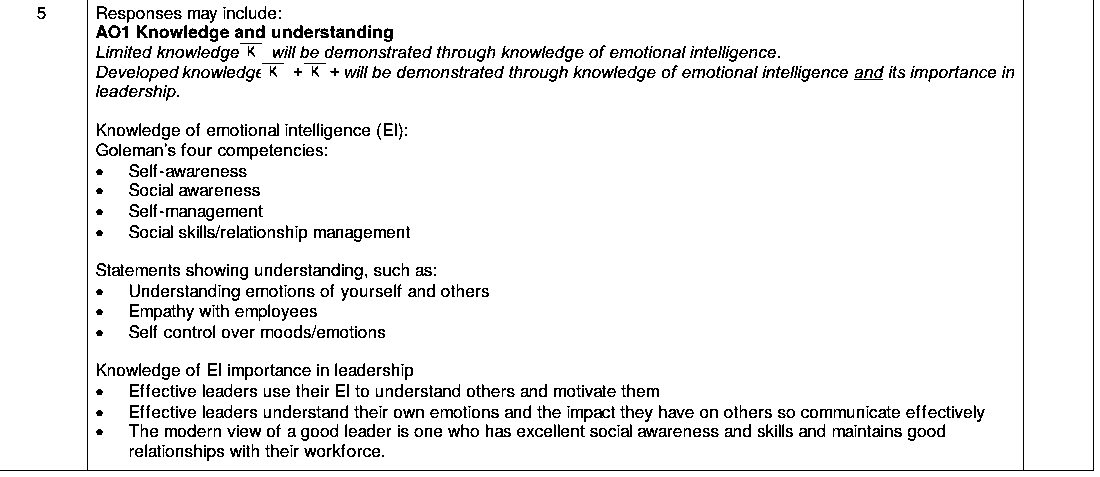
Evaluate the importance of emotional intelligence to Pedro’s leadership of PPP. [12 marks]



Daniel and Carl started a company for online teaching, Daniel & Carl for Education (DCE). DCE provides online tutors who work with students to help them pass their examinations.
What is next for DCE?
Competition is increasing but Daniel and Carl do not want to compromise on the quality of the service the business provides. However, they are both aware that DCE needs to change if it is to survive. Carl thinks that transformational leadership is the key to survival, but Daniel remains uncertain.
As a service-based business, DCE believes its employees are central to its success. All tutors are qualified teachers with at least three years teaching experience.
Students are encouraged to provide feedback which is used to adapt the service offered. In 2020, 86% of students stated that they would recommend DCE to a friend.
1. Develop new services to increase revenue by 10% by the end of 2024 2. Maintain a strong brand identity

Advise Daniel on the importance of transformational leadership to ensure the survival of DCE. [20 marks]
Transformational leadership: the leader works with teams to identify the need for change, creates a vision to inspire people to accept change and implements change with the cooperation of the team.
Knowledge can be awarded for any relevant business knowledge about leadership and/or transformational leadership.
Do not reward repetition of the contents of the case. Any explanation of the contents is rewardable.
Application (max 2 marks) can be awarded for applying knowledge, analysis or evaluation of (transformational) leadership to DCE between 2019 and 2024.
Analysis is likely to be based on the how transformational leadership can help the extension strategy succeed.
Evaluation will depend upon which element/s that have been discussed previously.
Accept all valid responses.
🔒 Unlock every Leadership question from 2023–2024
All 3 come with their mark schemes, answers and case studies, and appear in the practice tool above once you’re signed in. It’s free.
Questions and mark schemes are from past Cambridge papers and are reproduced for revision. Topical Vault is an independent revision resource, not affiliated with or endorsed by Cambridge Assessment International Education.
Each topic opens this practice tool with only that topic’s questions, plus how often it comes up and every question on it in one list.