← Topical Vault

Fiscal policy · AS Level Economics

Cambridge 9708, Paper 1 & 2. 2,092 questions, 2020 to 2026.

Topic
Year

Paper 1 multiple-choice questions and Paper 2 data-response/essay questions, from the original Cambridge material. Paper 2 mark schemes and case studies are reproduced as images of the official pages rather than retyped, so nothing is lost or paraphrased; a question tagged under more than one topic appears under each. Tick “Add to my paper” on any question to build a custom practice PDF from the tray in the corner.

About Fiscal policy

Questions on fiscal policy: government spending and taxation, budget deficits and surpluses, automatic stabilisers, and how fiscal changes affect aggregate demand.

164 past paper questions on this topic since 2020, across 20 exam sessions.

How often it comes up

YearPaper 1Paper 2TotalChart
202617421
202526531
202417825
202315520
202219423
202114519
202020525

Every 2025–2026 question on Fiscal policy

The whole topic on one page, with answers and mark schemes. Printing this page prints just this list.

Paper 1 · Multiple choice (43)

Question 21June 20269708/111 mark
9708/11 June 2026 question 21
Show answer

DCorrect answer

Question 25June 20269708/111 mark

What is most likely to improve the effectiveness of an expansionary fiscal policy in an economy?

  • Aa fall in consumer confidence
  • Ba fall in the size of the labour force
  • Can increase in interest rates
  • Dan increase in the money supply
Show answer

DCorrect answer

Question 12June 20269708/121 mark

What is a transfer payment?

  • Aadvertising expenses incurred by a charity organisation
  • Bfood vouchers to help low-income households pay for food
  • Cinterest-free study loans given to deserving students by the government
  • Dsalary paid to a nurse working in a hospital that provides free treatment
Show answer

BCorrect answer

Question 22June 20269708/121 mark

A government reduced direct taxes on consumers and businesses.

What are likely to be the effects of these changes on consumption, investment and national output?

consumption investment national output

  • Adecrease decrease decrease
  • Bdecrease increase increase
  • Cincrease decrease decrease
  • Dincrease increase increase
Show answer

DCorrect answer

Question 23June 20269708/121 mark

An economy has a GDP of $500 billion.The budget surplus is 2% of GDP.

What is the government spending when the tax revenue is $80 billion?

  • A$60 billion
  • B$70 billion
  • C$80 billion
  • D$90 billion
Show answer

BCorrect answer

Question 24June 20269708/121 mark

Which action might be part of an expansionary economic policy?

  • Areducing the budget deficit
  • Breducing the level of government spending
  • Creducing the money supply
  • Dreducing the rate of interest
Show answer

DCorrect answer

Question 25June 20269708/121 mark

What is not included in government spending (G) while calculating aggregate demand (AD)?

  • Aeducation
  • Bhealthcare
  • Croads
  • Dtransfer payments
Show answer

DCorrect answer

Question 14June 20269708/131 mark

The income tax structure of a country has two elements.

1 The first $20000 of earned income is not taxed.

2 Any income earned above $20000 is taxed at 20%.

What would be a correct description of this tax structure?

  • AIt is a progressive tax structure.
  • BIt is a proportional tax structure.
  • CIt is a regressive tax structure.
  • DThe average rate of taxation decreases as incomes increase.
Show answer

ACorrect answer

Question 24June 20269708/131 mark

In which situation is expansionary fiscal policy through increased government expenditure likely to be most effective in increasing employment in an economy?

  • AWhen the AD curve cuts the horizontal part of the AS curve.
  • BWhen the AD curve cuts the vertical part of the AS curve.
  • CWhen the government also raises tax to fund its increased expenditure.
  • DWhen the government injects a large amount of spending into the economy.
Show answer

ACorrect answer

Question 14June 20269708/141 mark

Increases to which measures are most likely to stabilise the price level and reduce income inequalities at the same time?

  • Aimport tariffs on non-essential items and transfer payments
  • Binterest rates and restrictions on bank lending
  • Cminimum wages and tax allowances
  • Dtax rates on high income earners and subsidies for essential food items
Show answer

DCorrect answer

Question 22June 20269708/141 mark
9708/14 June 2026 question 22
Show answer

DCorrect answer

Question 24June 20269708/141 mark
9708/14 June 2026 question 24
Show answer

BCorrect answer

Question 25June 20269708/141 mark

A newly-built public sector engineering training college received poor inspection reports. The government ceased to pay the college the money that it had usually received as its annual grant.

Which types of government policy does this statement imply?

  • Afiscal and monetary policies only
  • Bfiscal and supply-side policies only
  • Cfiscal, monetary and supply-side policies
  • Dmonetary and supply-side policies only
Show answer

BCorrect answer

Question 15March 20269708/121 mark

Governments are trying to reduce the burden of transfer payments in economies with an ageing population.

Which policy would help to achieve this aim?

  • Aintroducing financial support for university students
  • Blinking pension increases to the consumer price index during inflation
  • Craising the retirement age
  • Dreducing state pensions to finance an equal rise in unemployment benefit
Show answer

CCorrect answer

Question 21March 20269708/121 mark

Which policy mainly deals with managing public finances?

  • Aenvironmental policy
  • Bfiscal policy
  • Cmonetary policy
  • Dsupply-side policy
Show answer

BCorrect answer

Question 24March 20269708/121 mark

There is an increase in the income of individuals.

Which of the following shows a regressive tax system?

  • AThe amount of income tax paid remains unchanged.
  • BThe marginal income tax rate exceeds the average tax rate.
  • CThe income tax rate remains unchanged.
  • DThe income tax rate rises.
Show answer

ACorrect answer

Question 25March 20269708/121 mark

Which combination correctly classifies an expansionary fiscal policy measure and its impact on a budget deficit?

fiscal policy measure budget deficit

  • Aincreased money supply unchanged
  • Bincreased welfare spending increased
  • Chigher income tax reduced
  • Dlower interest rates unchanged
Show answer

BCorrect answer

Question 18November 20259708/111 mark

A government spends money to provide an education for students.

Which type of spending is capital expenditure?

  • Acomputers for classrooms
  • Bgrants for university students
  • Crent for school buildings
  • Dwages for teachers
Show answer

ACorrect answer

Question 19November 20259708/111 mark

What is an example of fiscal policy aimed at increasing aggregate demand in an economy?

  • Aincreasing expenditure by firms on skills training programmes for unskilled workers
  • Bincreasing the commercial banks’ lending ability
  • Creducing the rate of income tax for all income earners
  • Dreducing the rate of interest on loans to manufacturing companies
Show answer

CCorrect answer

Question 24November 20259708/111 mark

A government reduces its expenditure on workplace training, increases the level of indirect taxes and reduces the rate of interest it pays on government debt.

How would these government macroeconomic policies be categorised?

supply-side fiscal monetary

  • Acon con exp key
  • Bexp con con con = contractionary
  • Ccon exp exp exp = expansionary
  • Dexp exp con
Show answer

ACorrect answer

Question 25November 20259708/111 mark

The government of a country reduces its budget deficit by cutting government spending. At the same time, the central bank raises the interest rates.

When might this combination of policies be used?

inflation rate unemployment rate

  • Ahigh high
  • Bhigh low
  • Clow high
  • Dlow low
Show answer

BCorrect answer

Question 30November 20259708/111 mark

A country has a current account deficit on its balance of payments. The government also has a budget deficit.

Which measure to reduce the current account deficit will increase the budget deficit?

  • Adepreciating the exchange rate
  • Bintroducing quotas on imports
  • Craising tariffs on imports
  • Dsubsidising exports
Show answer

DCorrect answer

Question 18November 20259708/121 mark

A government reduces the benefits that it pays to unemployed workers to increase the incentive to work.

Which types of macroeconomic policies are being used?

fiscal monetary supply-side policy policy policy

  • A✓ ✗ ✗
  • B✓ ✓ ✗
  • C✓ ✗ ✓
  • D✗ ✗ ✓
Show answer

CCorrect answer

Question 24November 20259708/121 mark

What is the most likely reason for a government to introduce a progressive tax?

  • Ato discourage the consumption of a particular good
  • Bto distribute disposable income more evenly
  • Cto increase the disposable income of households
  • Dto reduce demand for healthcare services
Show answer

BCorrect answer

Question 29November 20259708/121 mark

What is the effect of a cut in a country‘s income tax rates on its exports and imports?

exports imports

  • Afall fall
  • Bfall unchanged
  • Cunchanged fall
  • Dunchanged rise
Show answer

DCorrect answer

Question 14November 20259708/131 mark

Which area of government spending is a transfer payment?

  • Aspending on new road building
  • Bspending on pensions to the elderly
  • Cspending on buying new police cars
  • Dspending on wages of teachers
Show answer

BCorrect answer

Question 23November 20259708/131 mark

A government increases the basic rate of income tax to finance additional spending on apprenticeships and training.

Which types of macroeconomic policy are being used?

monetary supply side fiscal policy policy policy

  • A✓ ✓ ✓ key
  • B✓ ✓ ✗ ✓= used
  • C✓ ✗ ✓ ✗= not used
  • D✗ ✓ ✓
Show answer

CCorrect answer

Question 25November 20259708/131 mark

A government reduced the tax on company profits from 28% to 20%.

Which statement best describes this policy?

  • AIt is both a contractionary fiscal policy and a supply-side policy.
  • BIt is both an expansionary fiscal policy and a supply-side policy.
  • CIt is both an expansionary fiscal policy and an expansionary monetary policy.
  • DIt is both an expansionary monetary policy and a supply-side policy.
Show answer

BCorrect answer

Question 26November 20259708/131 mark

Which policy is most likely to have a contractionary effect on national income?

  • Aa reduction in income tax rates
  • Ba reduction in interest rates
  • Can appreciation in the exchange rate
  • Dan increase in government spending on transport infrastructure
Show answer

CCorrect answer

Question 21November 20259708/141 mark

What is an example of expansionary fiscal policy?

  • Aan increase in income tax
  • Ban increase in private sector investment
  • Can increase in spending on public goods
  • Dan increase in the money supply
Show answer

CCorrect answer

Question 24November 20259708/141 mark

A worker earns $10000 and pays $1000 in income tax.

Another worker earns $30000 and pays $4500 in income tax.

A third worker earns $150000 and pays $50000 in income tax.

Which type of tax is this?

  • Aindirect
  • Bprogressive
  • Cproportional
  • Dregressive
Show answer

BCorrect answer

Question 22June 20259708/111 mark

A government decides to raise most of its revenues from indirect taxes.

What would increase the effectiveness of this policy?

  • Aan increasing trend towards bartering of goods
  • Bincreasing interest rates on household savings
  • Cincreasing occurrence of informal markets in the economy
  • Dplacing taxes on goods and services which have a price-inelastic demand
Show answer

DCorrect answer

Question 23June 20259708/111 mark
9708/11 June 2025 question 23
Show answer

CCorrect answer

Question 25June 20259708/111 mark
9708/11 June 2025 question 25
Show answer

CCorrect answer

Question 22June 20259708/121 mark
9708/12 June 2025 question 22
Show answer

CCorrect answer

Question 23June 20259708/121 mark

An income tax has a tax-free allowance of $10 000 and a single rate of 25%.

What type of tax is this?

  • Aindirect
  • Bprogressive
  • Cproportional
  • Dregressive
Show answer

BCorrect answer

Question 15June 20259708/131 mark
9708/13 June 2025 question 15
Show answer

CCorrect answer

Question 22June 20259708/131 mark

Which action is classified as a fiscal policy measure?

  • Afixing a currency to another country’s currency
  • Btightening credit regulations on banks
  • Cproviding guidance to industry and the public
  • Dmanaging changes in the level of government debt
Show answer

DCorrect answer

Question 23June 20259708/131 mark
9708/13 June 2025 question 23
Show answer

ACorrect answer

Question 14June 20259708/141 mark

A government decides to increase indirect taxes, abolish the agricultural subsidy and lower the income level at which tax becomes payable.

What would be the most likely consequence of these changes?

  • Aa decrease in cost-push inflation
  • Ban increase in income inequality
  • Can increase in the balance of payments deficit
  • Dan increase in the budget deficit
Show answer

BCorrect answer

Question 21June 20259708/141 mark

What would be a positive effect on the growth of an economy in the short run, if the government reduced a direct tax on individual earnings?

  • AFood prices would increase because of shortages.
  • BImports of luxury cars would increase to satisfy a change in demand.
  • CSavings would increase because of additional disposable income.
  • DThe consumption of domestically produced goods would increase.
Show answer

DCorrect answer

Question 22March 20259708/121 mark
9708/12 March 2025 question 22
Show answer

CCorrect answer

Question 25March 20259708/121 mark

What defines a progressive tax?

  • AAll taxpayers pay the same proportion of income in taxes.
  • BLow-income earners pay a lower proportion of income in taxes than high-income earners.
  • CLow-income earners pay less in taxes than high-income earners.
  • DLow-income earners pay more in taxes than high-income earners.
Show answer

BCorrect answer

Paper 2 · Data response and essays (9)

Question 4(b)June 20269708/2112 marks

Assess whether fiscal policy or supply‑side policy is likely to be more effective in reducing unemployment in an economy. [12]

Show mark scheme
Mark scheme, 9708/21 June 2026 question 4(b)
Case study: Should Australia support the production of nickel?
Case study: Should Australia support the production of nickel? (page 1 of 2)
Case study: Should Australia support the production of nickel? (page 2 of 2)
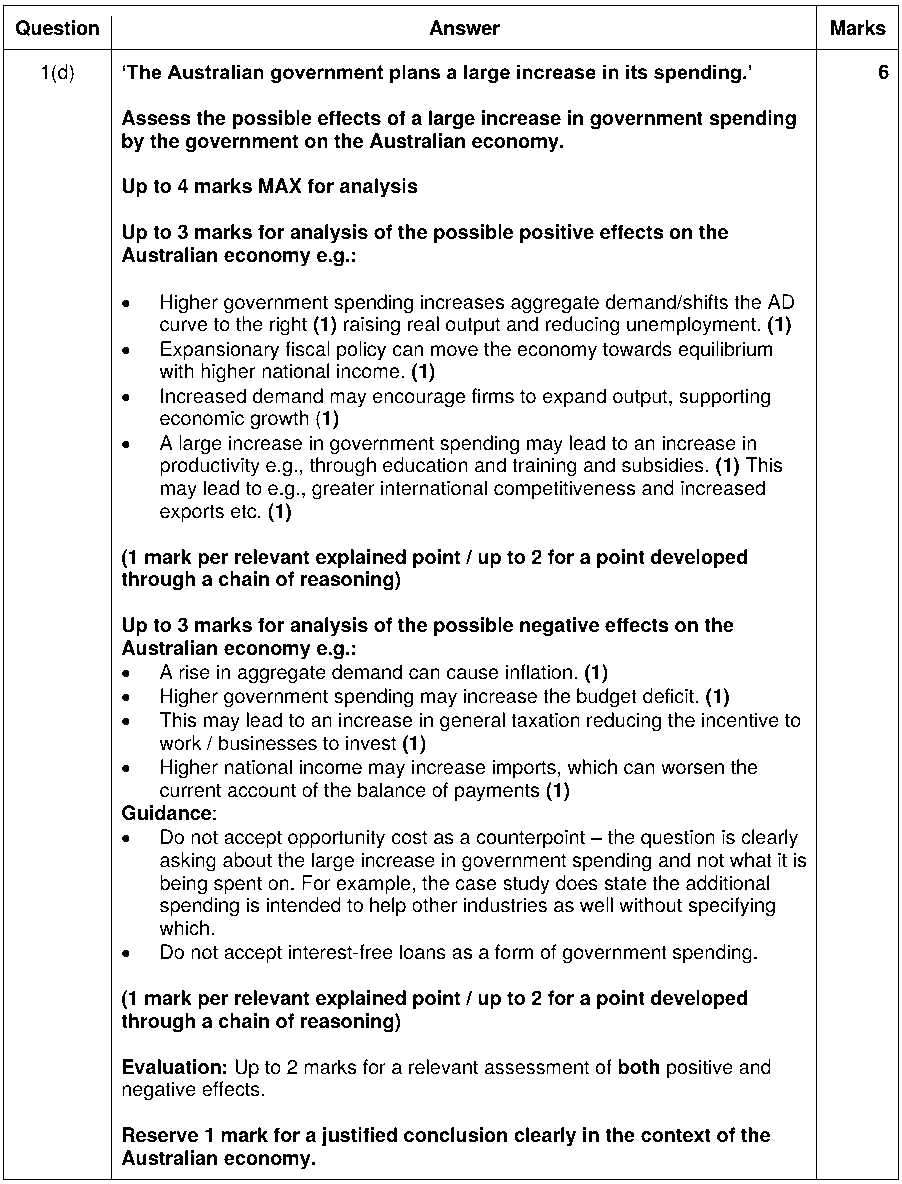
Question 1(d)June 20269708/226 marks

‘The Australian government plans a large increase in its spending.’

Assess the possible effects of a large increase in government spending by the government on the Australian economy. [6]
Show mark scheme
Mark scheme, 9708/22 June 2026 question 1(d)
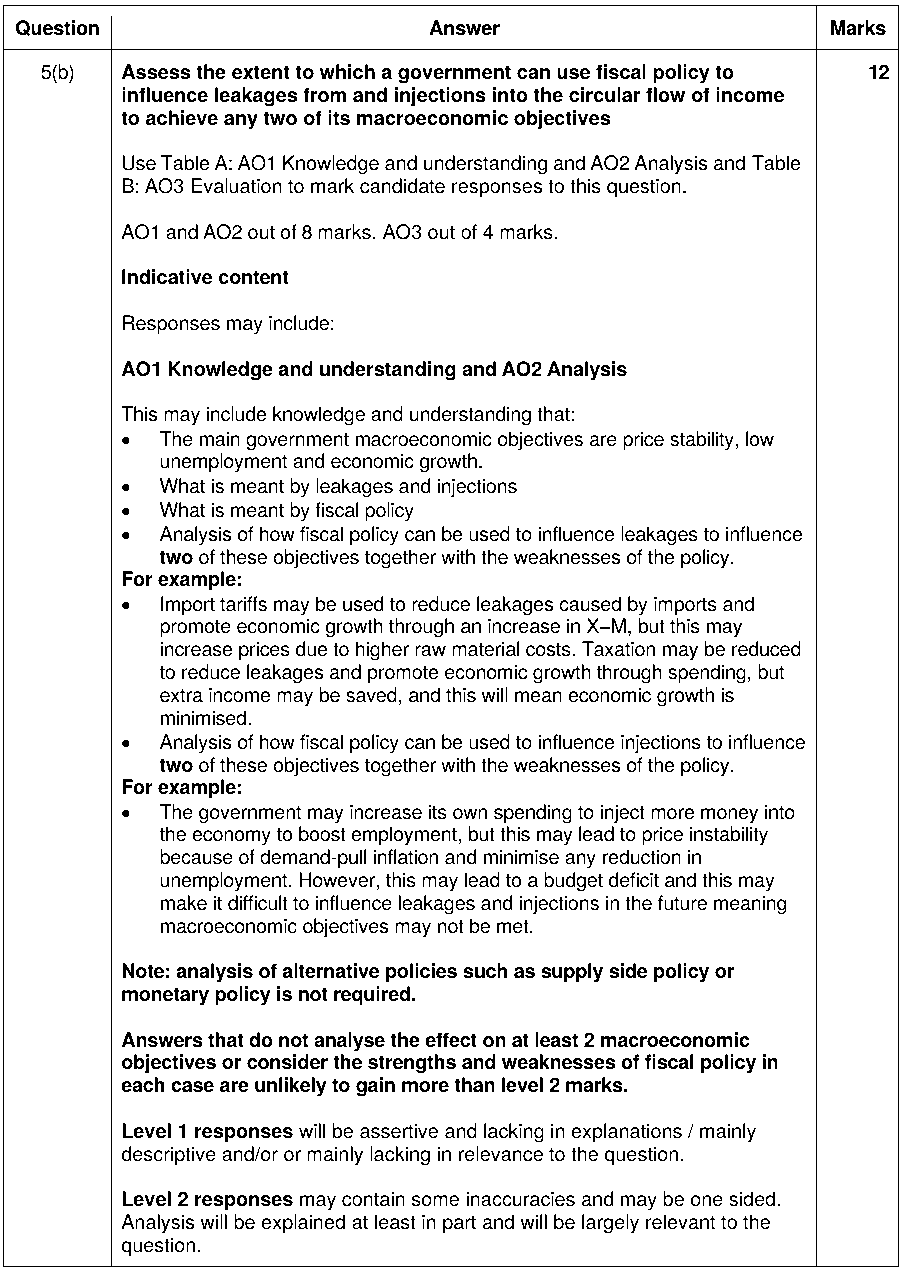
Question 5(b)June 20269708/2212 marks

Assess the extent to which a government can use fiscal policy to influence leakages from and injections into the circular flow of income to achieve any two of its macroeconomic objectives. [12]
Show mark scheme
Mark scheme, 9708/22 June 2026 question 5(b) (page 1 of 2)
Mark scheme, 9708/22 June 2026 question 5(b) (page 2 of 2)
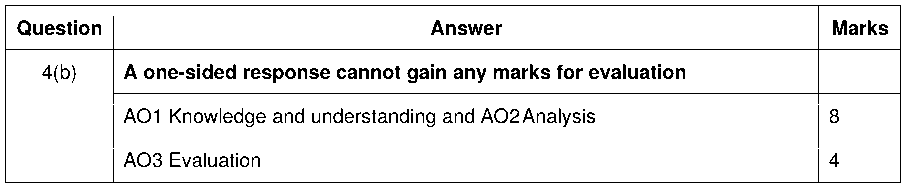
Question 4(b)June 20269708/2412 marks

Assess the extent to which the shape of the long-run aggregate supply (LRAS) curve affects the ability of a government to use fiscal policy to achieve price stability. [12]

Show mark scheme
Mark scheme, 9708/24 June 2026 question 4(b) (page 1 of 2)
Mark scheme, 9708/24 June 2026 question 4(b) (page 2 of 2)
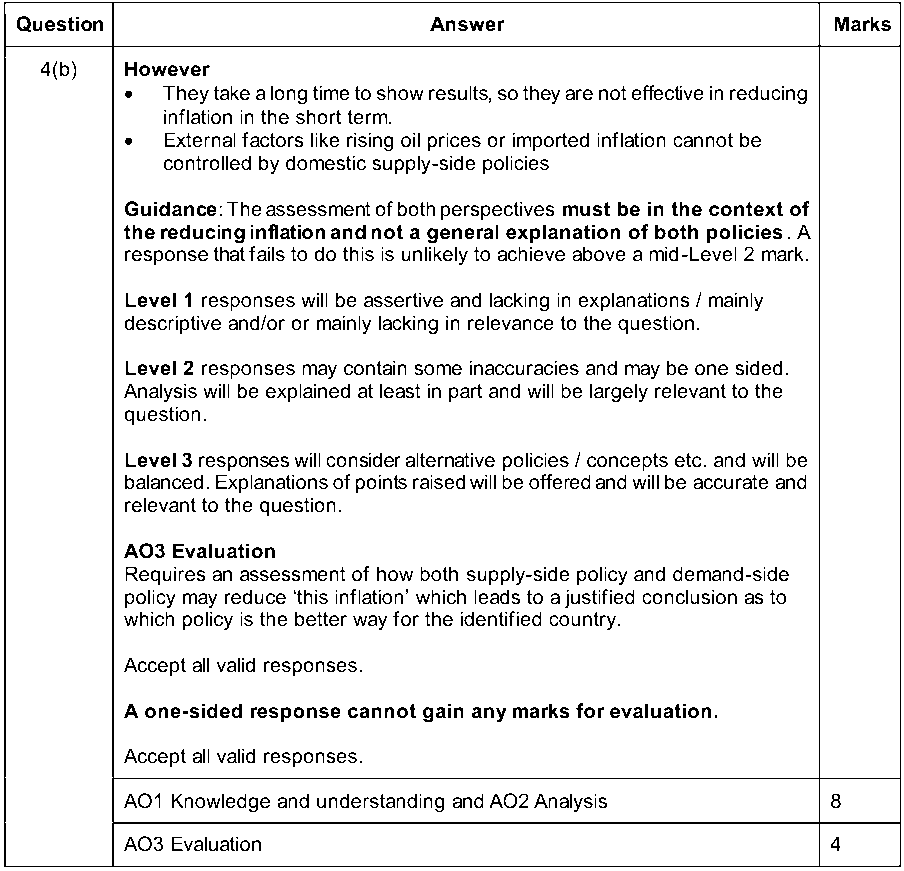
Question 4(b)November 20259708/2312 marks

Assess whether supply-side policy or demand-side policy is the better way of reducing this inflation. [12]

Show mark scheme
Mark scheme, 9708/23 November 2025 question 4(b) (page 1 of 2)
Mark scheme, 9708/23 November 2025 question 4(b) (page 2 of 2)
Question 5(a)June 20259708/218 marks

Explain the difference between a budget surplus and a budget deficit and consider the extent to which a budget surplus is better than a budget deficit. [8]

Show mark scheme
Mark scheme, 9708/21 June 2025 question 5(a)
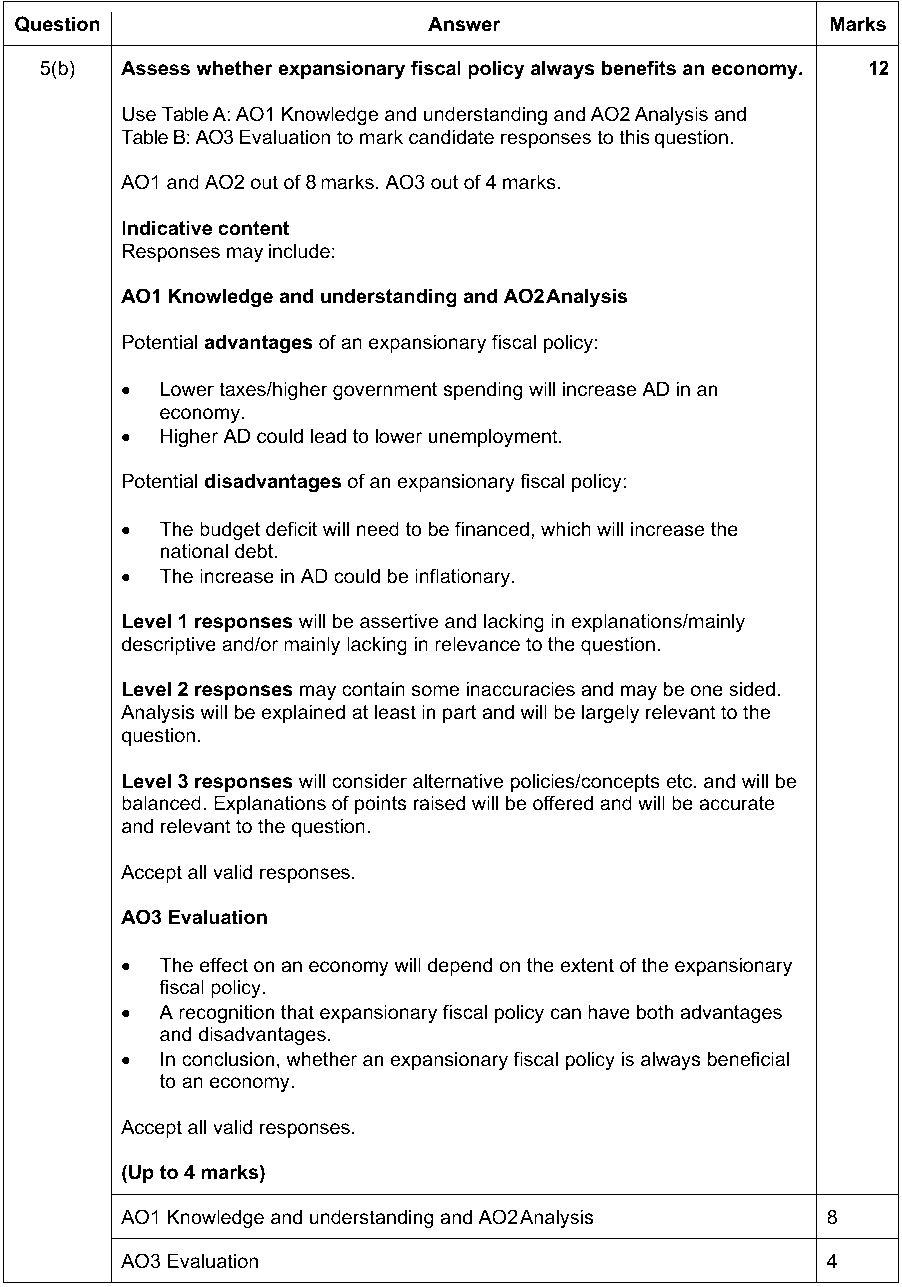
Question 5(b)June 20259708/2112 marks

Assess whether expansionary fiscal policy always benefits an economy. [12]
Show mark scheme
Mark scheme, 9708/21 June 2025 question 5(b)
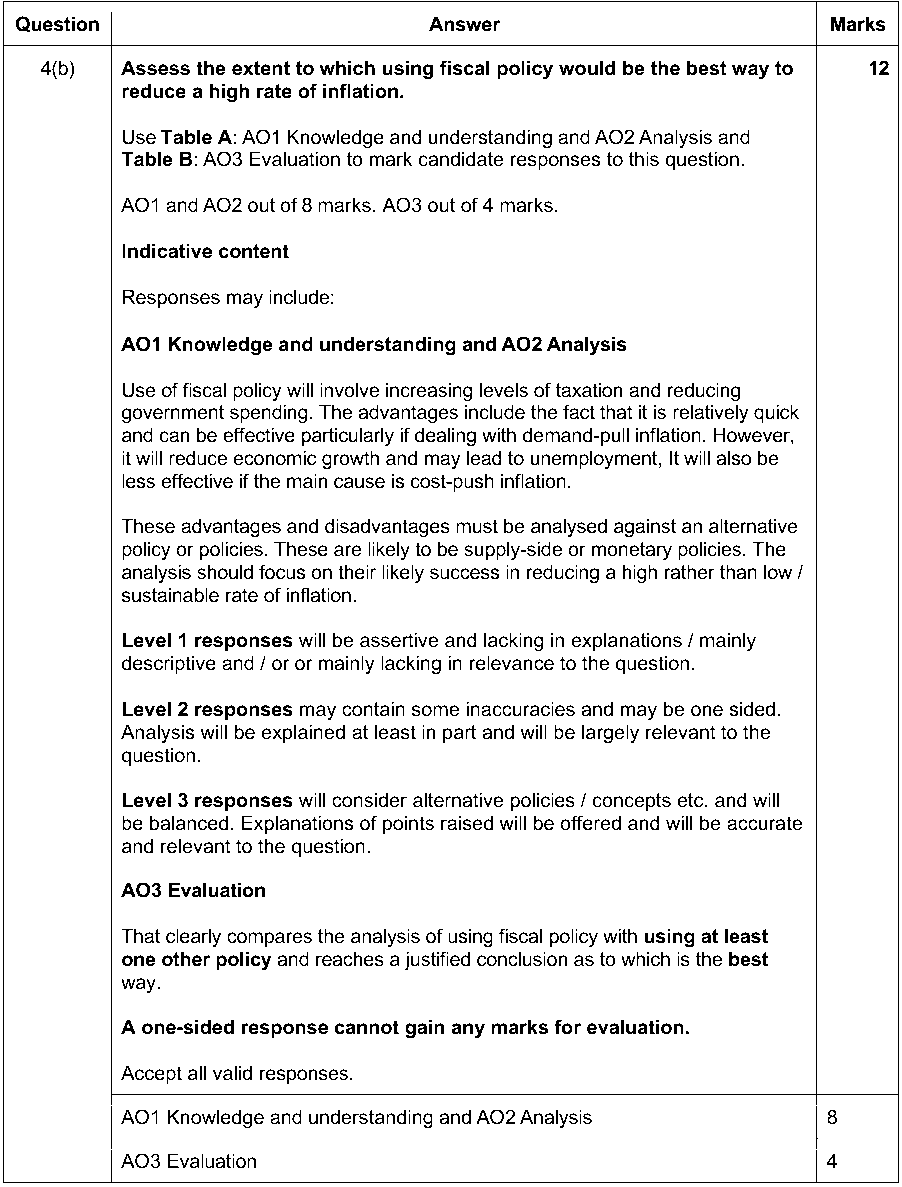
Question 4(b)June 20259708/2212 marks

Assess the extent to which using fiscal policy would be the best way to reduce a high rate of inflation. [12]
Show mark scheme
Mark scheme, 9708/22 June 2025 question 4(b)
Question 5(a)March 20259708/228 marks

With the help of an AD/AS diagram, explain what is meant by an expansionary fiscal policy and consider the extent to which an expansionary fiscal policy will always increase the level of aggregate demand. [8]

Show mark scheme
Mark scheme, 9708/22 March 2025 question 5(a)

112 more questions from 2020–2024

🔒 Unlock every Fiscal policy question from 2020–2024

All 112 come with their mark schemes, answers and case studies, and appear in the practice tool above once you’re signed in. It’s free.

Create a free accountSign in

A few of them

  • 9708/11 · November 2024 · Question 20A government makes two changes to income… 🔒
  • 9708/11 · November 2024 · Question 21Which supply-side policy is most likely to… 🔒
  • 9708/11 · November 2024 · Question 22Which combination of fiscal and monetary policies… 🔒
  • 9708/13 · November 2024 · Question 21Supply-side policy often has… 🔒
  • 9708/13 · November 2024 · Question 22Changes in fiscal policy can affect the… 🔒
  • + 107 more, by year in the table above

Questions and mark schemes are from past Cambridge papers and are reproduced for revision. Topical Vault is an independent revision resource, not affiliated with or endorsed by Cambridge Assessment International Education.

AS Level Economics questions by topic

Each topic opens this practice tool with only that topic’s questions, plus how often it comes up and every question on it in one list.

  1. Unit 1Basic economic ideas and resource allocation
  2. Ch 1Scarcity, choice and opportunity cost
  3. Ch 2Economic methodology
  4. Ch 3Factors of production
  5. Ch 4Resource allocation in different economic systems
  6. Ch 5Production possibility curves
  7. Ch 6Classification of goods and services
  8. Unit 2The price system and the microeconomy
  9. Ch 7Demand and supply curves
  10. Ch 8Price elasticity, income elasticity and cross elasticity of demand
  11. Ch 9Price elasticity of supply
  12. Ch 10The interaction of demand and supply
  13. Ch 11Consumer and producer surplus
  14. Unit 3Government microeconomic intervention
  15. Ch 12Reasons for government intervention in markets
  16. Ch 13Methods and effects of government intervention in markets
  17. Ch 14Addressing income and wealth inequality
  18. Unit 4The macroeconomy
  19. Ch 15National income statistics
  20. Ch 16Introduction to the circular flow of income
  21. Ch 17Aggregate demand and aggregate supply analysis
  22. Ch 18Economic growth
  23. Ch 19Unemployment
  24. Ch 20Price stability
  25. Unit 5Government macroeconomic intervention
  26. Ch 21Government macroeconomic policy objectives
  27. Ch 22Fiscal policy
  28. Ch 23Monetary policy
  29. Ch 24Supply-side policy
  30. Unit 6International economic issues
  31. Ch 25The reasons for international trade
  32. Ch 26Protectionism
  33. Ch 27Current account of the balance of payments
  34. Ch 28Exchange rates
  35. Ch 29Policies to correct imbalances in the current account of the balance of payments