Question 22June 20269708/111 mark
Some countries experienced a recent decline in investment spending.
What might be done to stop such a decline?
Show answer
BCorrect answer
Cambridge 9708, Paper 1 & 2. 2,092 questions, 2020 to 2026.
Paper 1 multiple-choice questions and Paper 2 data-response/essay questions, from the original Cambridge material. Paper 2 mark schemes and case studies are reproduced as images of the official pages rather than retyped, so nothing is lost or paraphrased; a question tagged under more than one topic appears under each. Tick “Add to my paper” on any question to build a custom practice PDF from the tray in the corner.
Questions on monetary policy: interest rates, the money supply and exchange rates as tools, the role of the central bank, and how monetary changes pass through the economy.
121 past paper questions on this topic since 2020, across 20 exam sessions.
| Year | Paper 1 | Paper 2 | Total | Chart |
|---|---|---|---|---|
| 2026 | 6 | 4 | 10 | |
| 2025 | 18 | 6 | 24 | |
| 2024 | 9 | 6 | 15 | |
| 2023 | 6 | 5 | 11 | |
| 2022 | 17 | 7 | 24 | |
| 2021 | 15 | 7 | 22 | |
| 2020 | 11 | 4 | 15 |
The whole topic on one page, with answers and mark schemes. Printing this page prints just this list.
Some countries experienced a recent decline in investment spending.
What might be done to stop such a decline?
BCorrect answer
Which action might be part of an expansionary economic policy?
DCorrect answer
What is not a tool of monetary policy?
ACorrect answer
An economy is at a point within its production possibility curve (PPC).
Which monetary policy will help the government to achieve a macroeconomic objective of lower unemployment?
DCorrect answer
The central bank of a country has increased interest rates to a high level.
What will increase as a result of this?
ACorrect answer
Monetary policy can be used to increase the level of business activity.
Which action illustrates this?
BCorrect answer
A central bank increases interest rates to reduce inflation.
When will this policy be most likely to succeed?
BCorrect answer
The government of a country reduces its budget deficit by cutting government spending. At the same time, the central bank raises the interest rates.
When might this combination of policies be used?
inflation rate unemployment rate
BCorrect answer
A central bank is asked by the government to help achieve price stability.
If inflation rises steeply, which policy will not be directly within the control of the central bank?
DCorrect answer
What is an example of expansionary monetary policy?
ACorrect answer
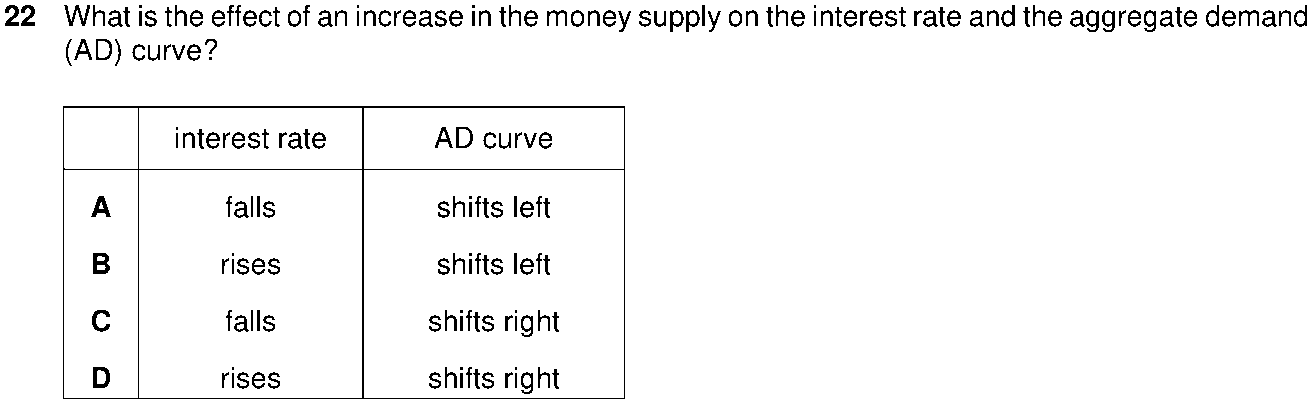
CCorrect answer
A country has a target rate of inflation of 2.5% and has recently experienced the actual rate rising to 6%, with unemployment falling to very low levels.
Which policy option is most likely to be implemented?
DCorrect answer
Which policy is most likely to have a contractionary effect on national income?
CCorrect answer
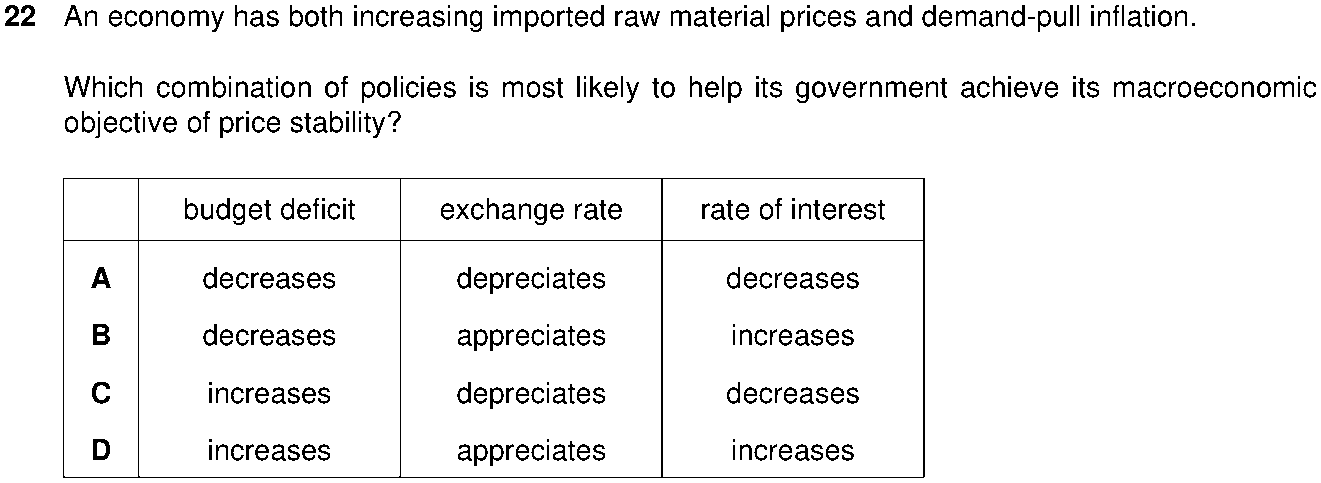
BCorrect answer
An increase in interest rates is an example of which type of policy?
BCorrect answer
What is not an example of monetary policy?
ACorrect answer
What is likely to be an expansionary monetary policy?
BCorrect answer
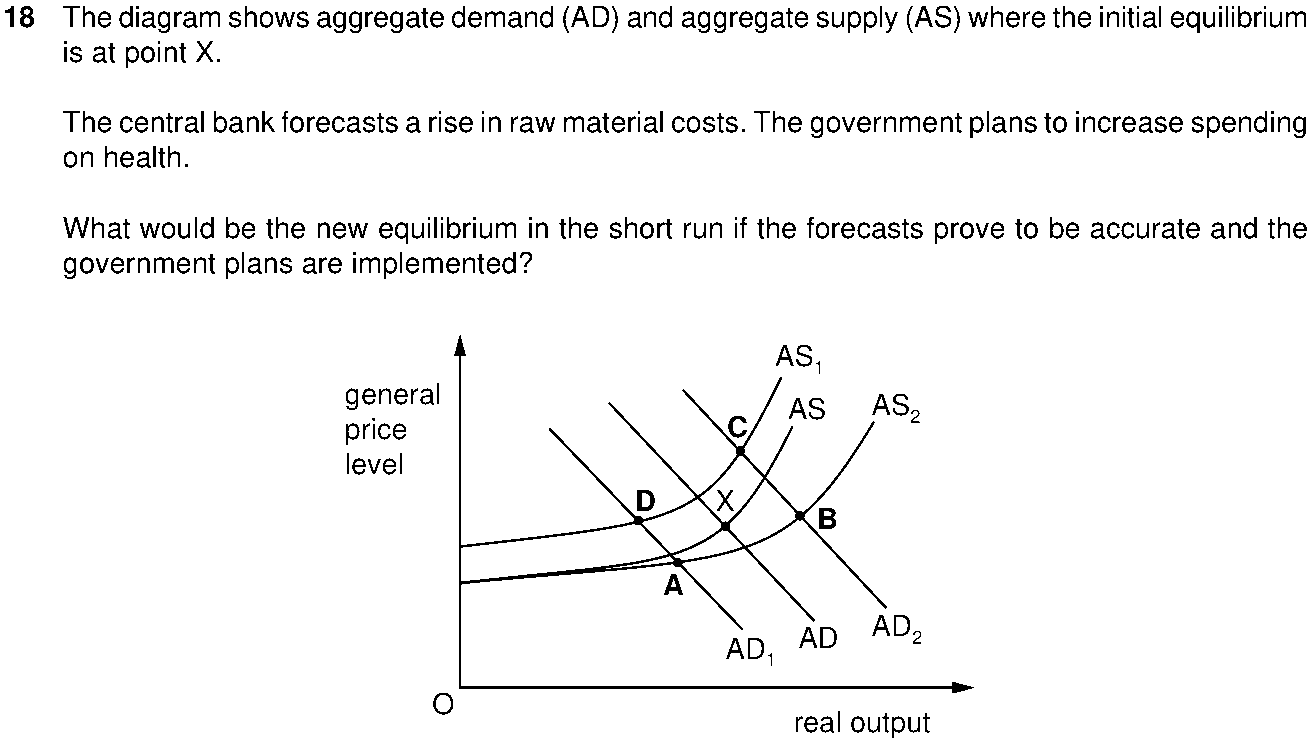
CCorrect answer
A government wants to operate a tighter monetary policy.
What would it increase?
BCorrect answer
A government has a target to reduce the rate of inflation.
Why might it not want to raise interest rates to achieve this target?
BCorrect answer
If a country is suffering from deflation, what would be the best policy to reflate the economy?
CCorrect answer
, , 22 What is not a monetary policy measure?
CCorrect answer
The government has a macroeconomic objective of low unemployment. It has recently decreased interest rates.
What may limit the effectiveness of this tool in achieving the objective of low unemployment?
ACorrect answer
A country’s central bank decides to reduce the level of credit regulation.
What is this an example of?
DCorrect answer
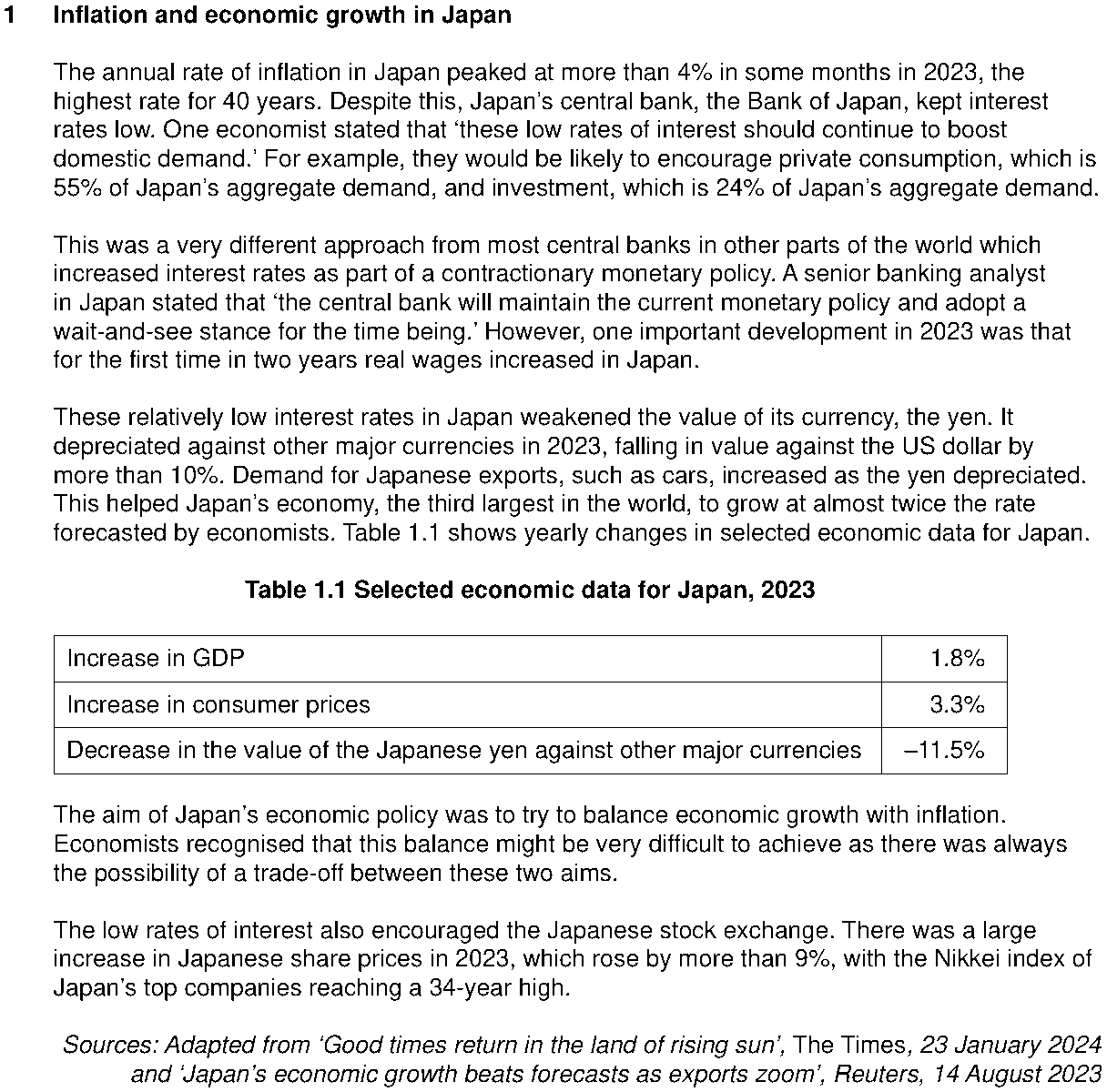
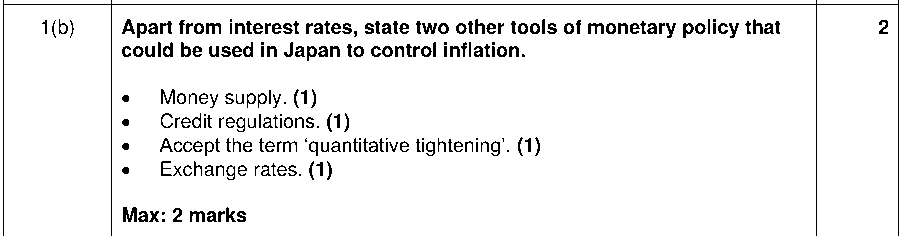
Apart from interest rates, state two other tools of monetary policy that could be used in Japan to control inflation. [2]
With the help of a diagram, explain how a decrease in the interest rate in Japan could lead to the depreciation in the value of the yen and consider whether only Japan’s interest rate determines the value of the yen. [4]

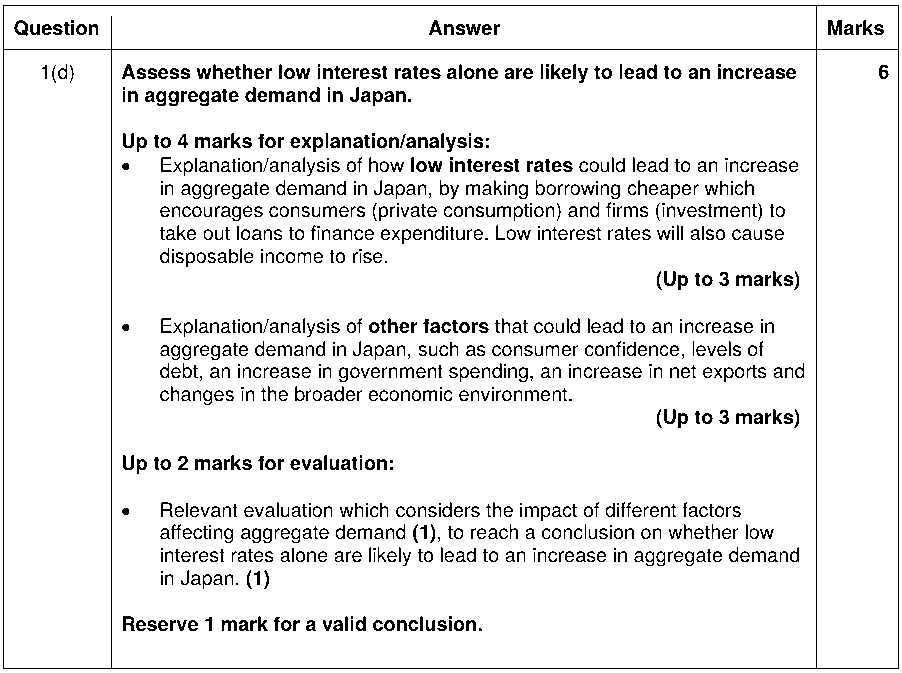
Assess whether low interest rates alone are likely to lead to an increase in aggregate demand in Japan. [6]
Assess whether expansionary monetary policy is the best method to correct deflation and restore price stability. [12]

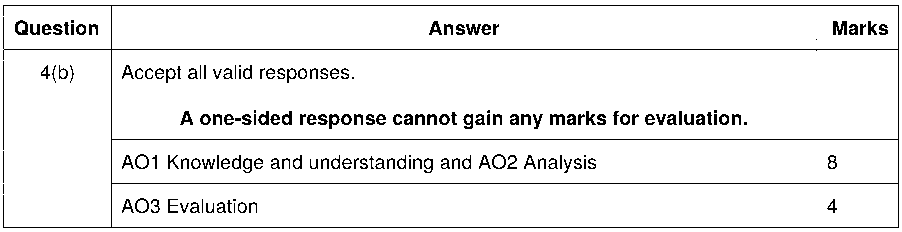
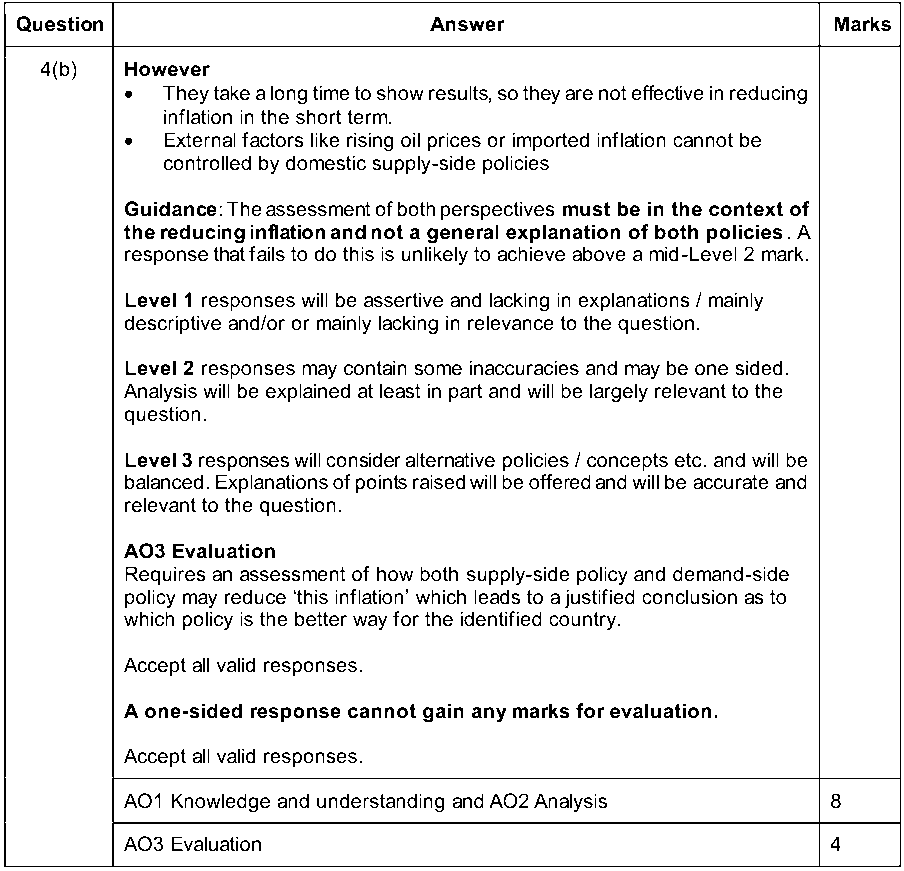
Assess whether supply-side policy or demand-side policy is the better way of reducing this inflation. [12]

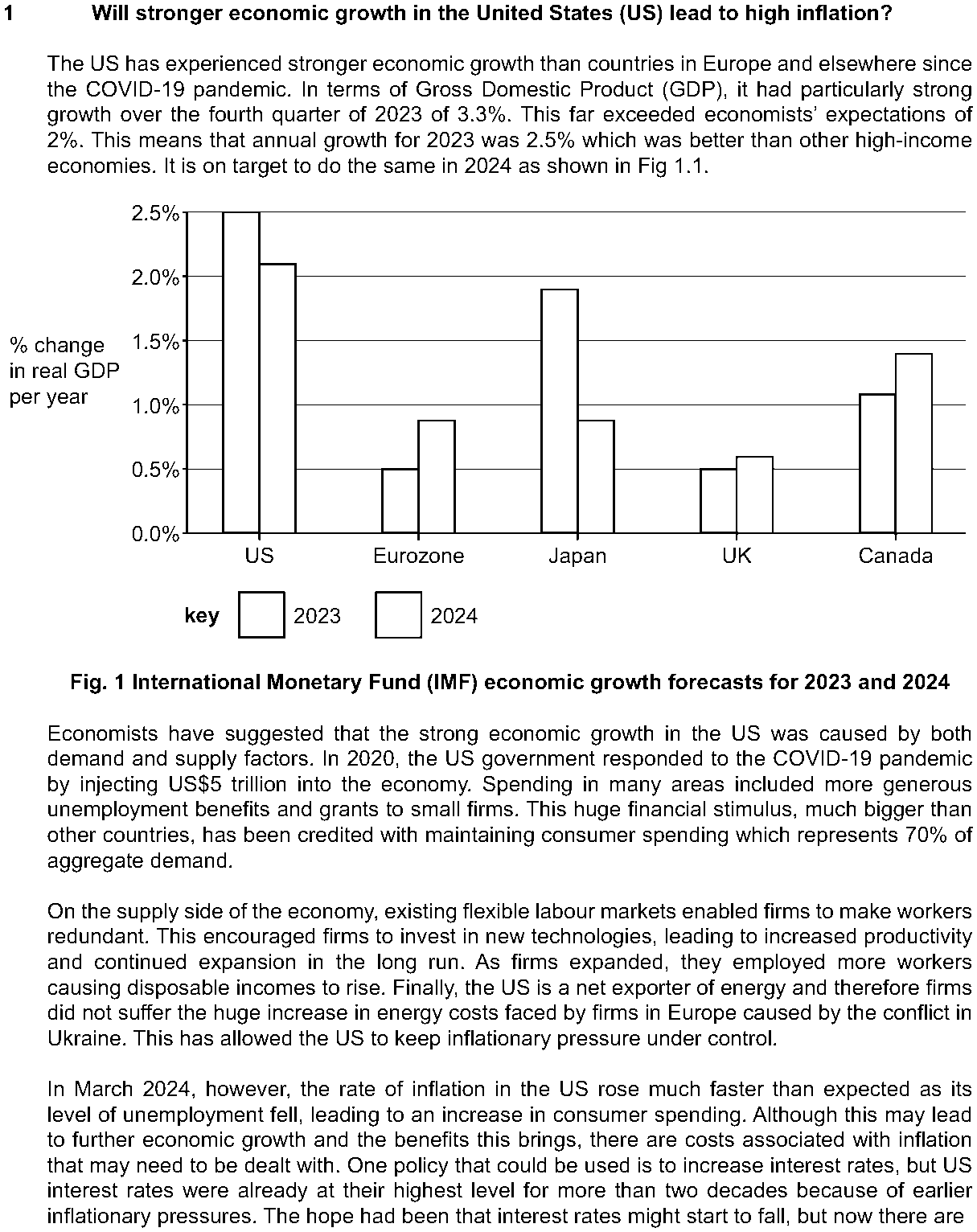

Assess the extent to which maintaining interest rates at a high level will be the best policy for the US to control inflation. [6]

Using the data in Table 1.1, compare changes in the inflation rate and changes in the interest rate in the US. [2]

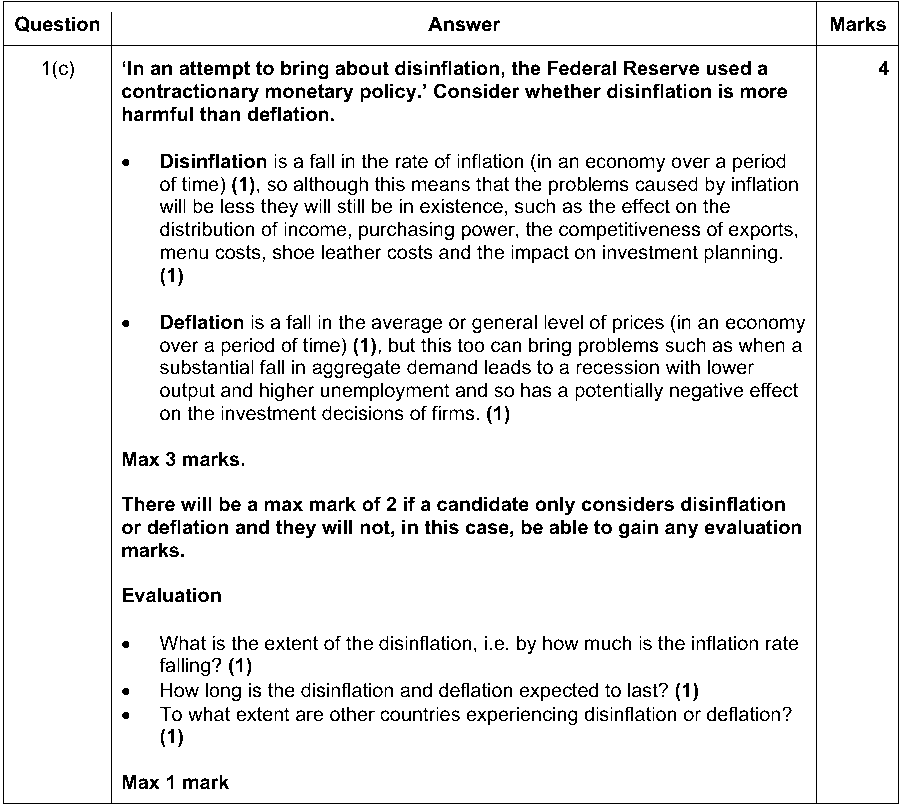
‘In an attempt to bring about disinflation, the Federal Reserve used a contractionary monetary policy.’ Consider whether disinflation is more harmful than deflation. [4]
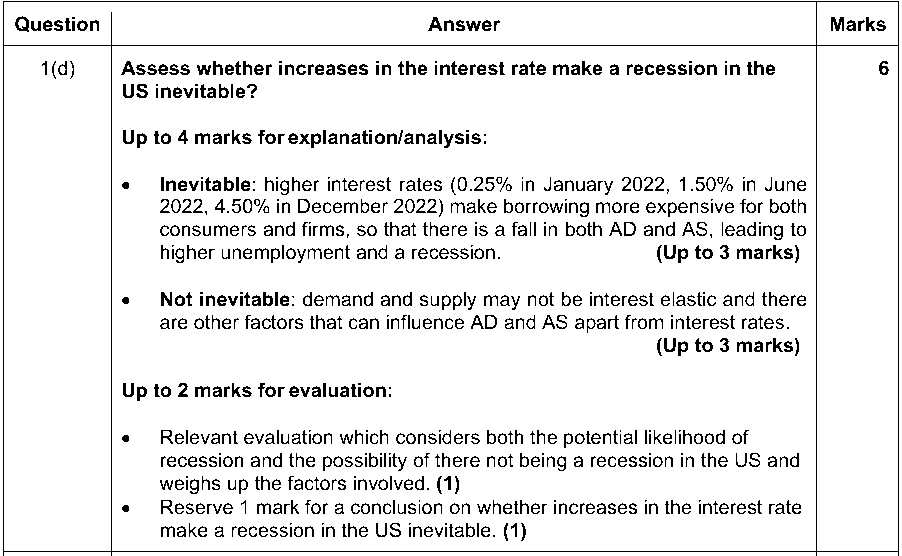
Assess whether increases in the interest rate make a recession in the US inevitable. [6]
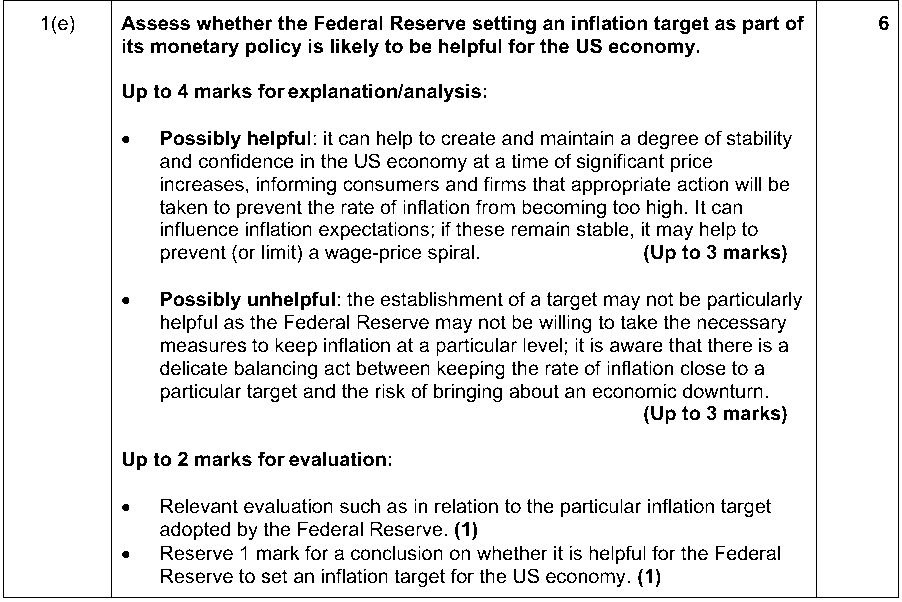
Assess whether the Federal Reserve setting an inflation target as part of its monetary policy is likely to be helpful for the US economy. [6]
🔒 Unlock every Monetary policy question from 2020–2024
All 87 come with their mark schemes, answers and case studies, and appear in the practice tool above once you’re signed in. It’s free.
Questions and mark schemes are from past Cambridge papers and are reproduced for revision. Topical Vault is an independent revision resource, not affiliated with or endorsed by Cambridge Assessment International Education.
Each topic opens this practice tool with only that topic’s questions, plus how often it comes up and every question on it in one list.