← Topical Vault

Supply-side policy · AS Level Economics

Cambridge 9708, Paper 1 & 2. 2,092 questions, 2020 to 2026.

Topic
Year

Paper 1 multiple-choice questions and Paper 2 data-response/essay questions, from the original Cambridge material. Paper 2 mark schemes and case studies are reproduced as images of the official pages rather than retyped, so nothing is lost or paraphrased; a question tagged under more than one topic appears under each. Tick “Add to my paper” on any question to build a custom practice PDF from the tray in the corner.

About Supply-side policy

Questions on supply-side policy: education and training, deregulation, privatisation, tax and benefit reforms and other measures that raise an economy's productive capacity.

65 past paper questions on this topic since 2020, across 18 exam sessions.

How often it comes up

YearPaper 1Paper 2TotalChart
2026325
202511617
20246410
20239615
2022224
2021437
2020347

Every 2025–2026 question on Supply-side policy

The whole topic on one page, with answers and mark schemes. Printing this page prints just this list.

Paper 1 · Multiple choice (14)

Question 24June 20269708/111 mark

What is an objective of supply-side policy?

  • Ato shift the short-run aggregate supply (SRAS) curve to the left
  • Bto shift the short-run aggregate supply (SRAS) curve to the right
  • Cto shift the long-run aggregate supply (LRAS) curve to the left
  • Dto shift the long-run aggregate supply (LRAS) curve to the right
Show answer

DCorrect answer

Question 21June 20269708/121 mark

What is the main objective of supply-side policies?

  • Ato bring a country’s potential output up to the level of its actual output
  • Bto ensure a budget surplus
  • Cto ensure that the composition of output matches the pattern of demand
  • Dto increase potential output
Show answer

DCorrect answer

Question 22March 20269708/121 mark

What is not a supply-side policy measure?

  • Aderegulating industry to encourage more competitive markets
  • Blinking unemployment benefits to the obligation to look for work
  • Ctackling cyclical slump by lowering interest rates
  • Dtackling structural unemployment by giving grants for labour mobility
Show answer

CCorrect answer

Question 24November 20259708/111 mark

A government reduces its expenditure on workplace training, increases the level of indirect taxes and reduces the rate of interest it pays on government debt.

How would these government macroeconomic policies be categorised?

supply-side fiscal monetary

  • Acon con exp key
  • Bexp con con con = contractionary
  • Ccon exp exp exp = expansionary
  • Dexp exp con
Show answer

ACorrect answer

Question 18November 20259708/121 mark

A government reduces the benefits that it pays to unemployed workers to increase the incentive to work.

Which types of macroeconomic policies are being used?

fiscal monetary supply-side policy policy policy

  • A✓ ✗ ✗
  • B✓ ✓ ✗
  • C✓ ✗ ✓
  • D✗ ✗ ✓
Show answer

CCorrect answer

Question 23November 20259708/131 mark

A government increases the basic rate of income tax to finance additional spending on apprenticeships and training.

Which types of macroeconomic policy are being used?

monetary supply side fiscal policy policy policy

  • A✓ ✓ ✓ key
  • B✓ ✓ ✗ ✓= used
  • C✓ ✗ ✓ ✗= not used
  • D✗ ✓ ✓
Show answer

CCorrect answer

Question 25November 20259708/131 mark

A government reduced the tax on company profits from 28% to 20%.

Which statement best describes this policy?

  • AIt is both a contractionary fiscal policy and a supply-side policy.
  • BIt is both an expansionary fiscal policy and a supply-side policy.
  • CIt is both an expansionary fiscal policy and an expansionary monetary policy.
  • DIt is both an expansionary monetary policy and a supply-side policy.
Show answer

BCorrect answer

Question 23November 20259708/141 mark

What is an example of a supply-side policy?

  • Aan import quota to restrict the supply of goods
  • Ba rise in interest rates to encourage the supply of savings
  • Ca specific tax on the supply of goods to raise revenue
  • Da subsidy to businesses to promote the supply of training courses
Show answer

DCorrect answer

Question 24June 20259708/111 mark

What is not an example of an expansionary supply-side policy?

  • Aa reduction in government spending on training
  • Ban increase in support for technological improvement
  • Ca reduction in payments to the unemployed
  • Dan increase in privatisation of industry
Show answer

ACorrect answer

Question 4June 20259708/121 mark

A country increases its spending on education and training. It pays for this by reducing unemployment benefit payments and increasing taxes on imports of machinery.

What is the likely effect of these changes?

human capital physical capital

  • Adecreases decreases
  • Bdecreases increases
  • Cincreases decreases
  • Dincreases increases
Show answer

CCorrect answer

Question 24June 20259708/121 mark

Which supply-side policy will encourage new entrepreneurs?

  • Aan increase in government subsidy to small firms
  • Ban increase in the national minimum wage
  • Can increase in the power of trade unions
  • Dan increase in the tax on business profits
Show answer

ACorrect answer

Question 24June 20259708/131 mark

Which statement about supply-side policies is correct?

  • AThey solve the problem of demand deficient unemployment.
  • BThey do not involve an opportunity cost.
  • CThey reduce unemployment but do not affect the price level.
  • DThey may reduce regional unemployment.
Show answer

DCorrect answer

Question 21March 20259708/121 mark

A government cuts income tax.

Why might this be seen as an example of a supply-side policy?

  • AReal incomes are increased.
  • BThe costs of businesses are reduced.
  • CThe opportunity cost of unemployment has increased.
  • DThe standard of living has improved.
Show answer

CCorrect answer

Question 24March 20259708/121 mark

A government decides to use supply-side policy to increase long-run aggregate supply (LRAS).

What is the most likely reason why this policy tool will not lead to a fall in the price level?

  • AAggregate demand will also increase.
  • BLabour productivity levels will increase.
  • CWorkers will save any extra wages they earn.
  • DWorkers will spend any extra wages on imports.
Show answer

ACorrect answer

Paper 2 · Data response and essays (8)

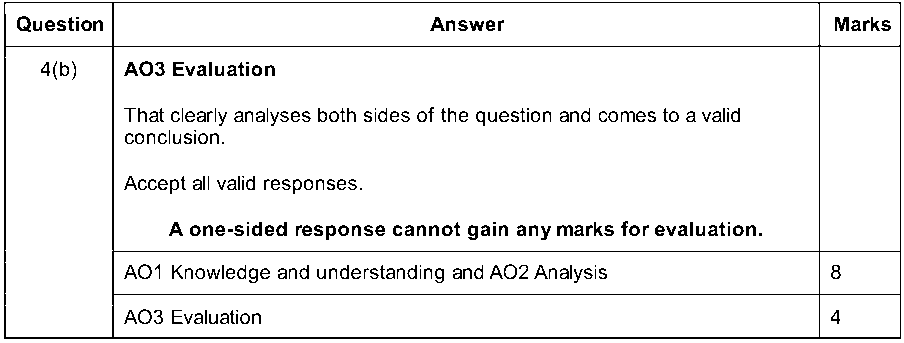
Question 4(b)June 20269708/2112 marks

Assess whether fiscal policy or supply‑side policy is likely to be more effective in reducing unemployment in an economy. [12]

Show mark scheme
Mark scheme, 9708/21 June 2026 question 4(b)
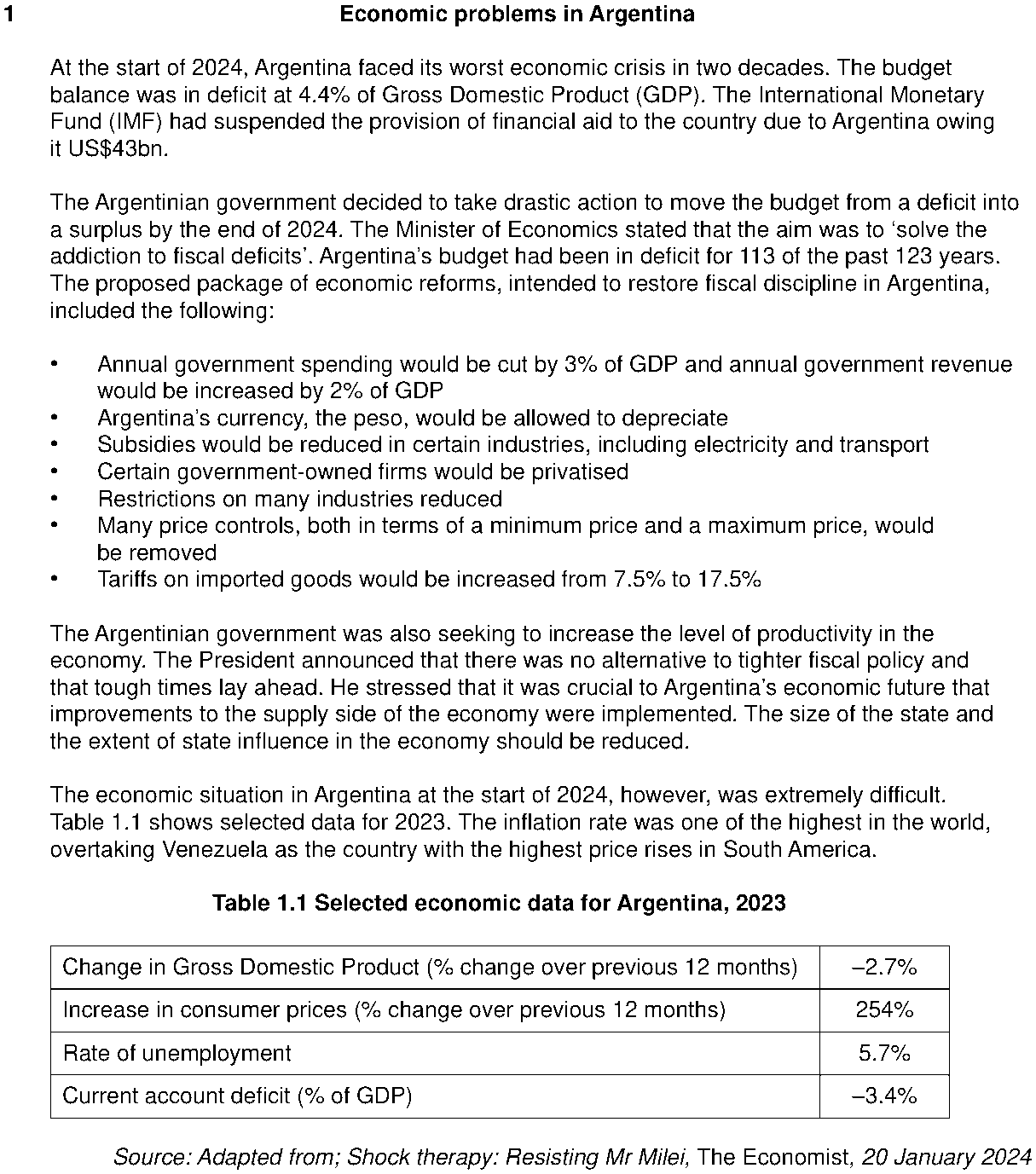
Case study: Economic problems in Argentina
Question 1(e)June 20269708/246 marks

Assess whether ‘improvements to the supply side of the economy’ of Argentina would benefit everybody in Argentina. [6]
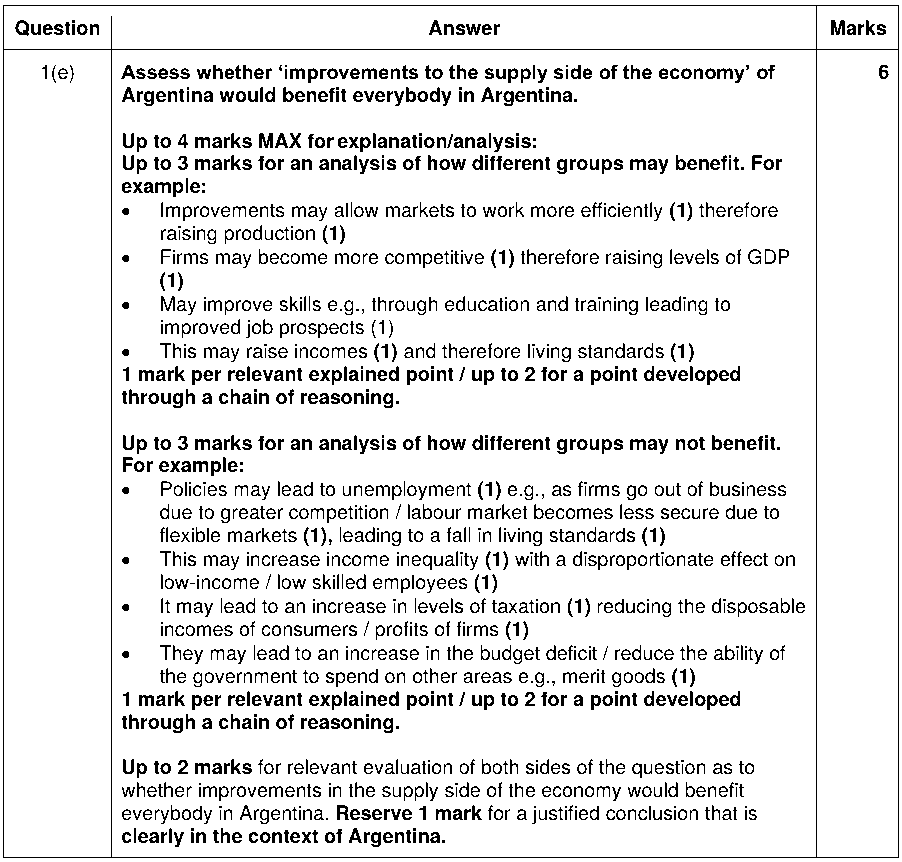
Show mark scheme
Mark scheme, 9708/24 June 2026 question 1(e)
Question 4(b)November 20259708/2212 marks

Assess the extent to which the use of supply-side policy would be the best way to reduce a deficit on the current account of the balance of payments. [12]

Show mark scheme
Mark scheme, 9708/22 November 2025 question 4(b) (page 1 of 2)
Mark scheme, 9708/22 November 2025 question 4(b) (page 2 of 2)
Question 4(b)November 20259708/2312 marks

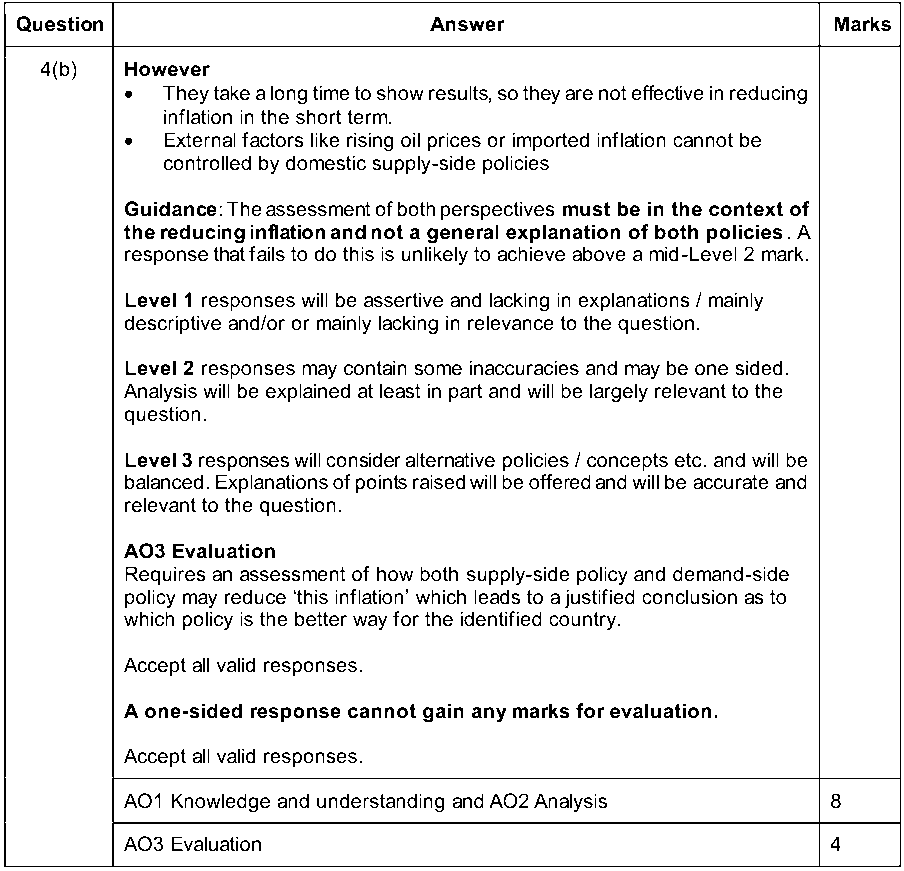
Assess whether supply-side policy or demand-side policy is the better way of reducing this inflation. [12]

Show mark scheme
Mark scheme, 9708/23 November 2025 question 4(b) (page 1 of 2)
Mark scheme, 9708/23 November 2025 question 4(b) (page 2 of 2)
Question 5(b)November 20259708/2412 marks

Low unemployment is a macroeconomic policy objective for a government.

Assess the extent to which this is most likely to be achieved by supply-side policy. [12]

Show mark scheme
Mark scheme, 9708/24 November 2025 question 5(b)
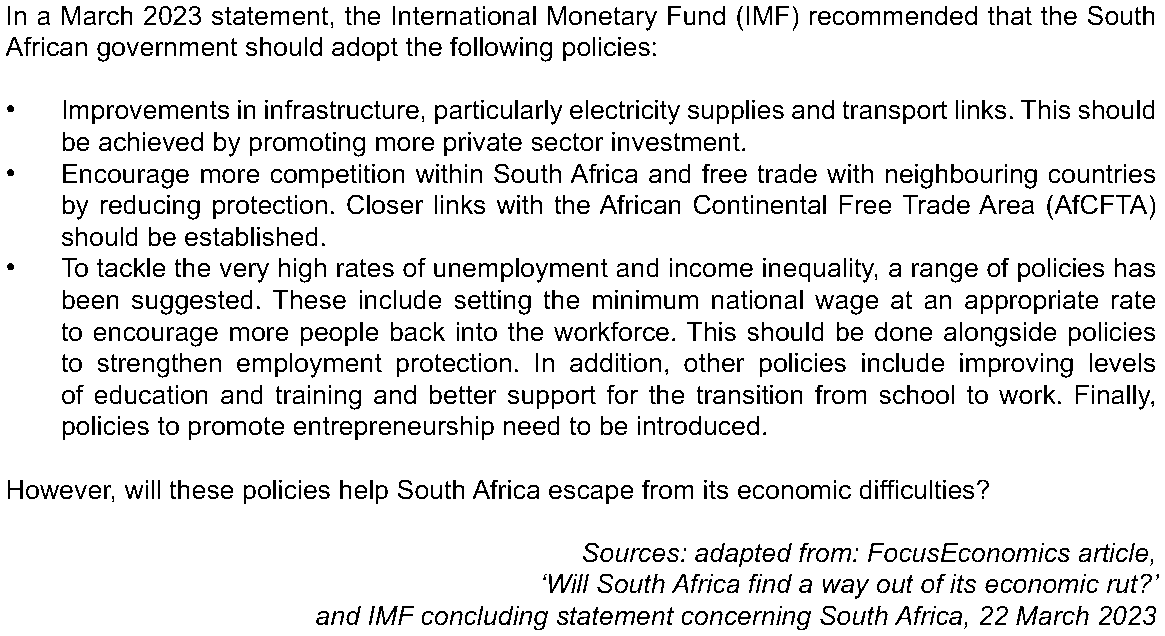
Case study: Can South Africa escape from its economic difficulties?
Case study: Can South Africa escape from its economic difficulties? (page 1 of 2)
Case study: Can South Africa escape from its economic difficulties? (page 2 of 2)
Question 1(e)June 20259708/226 marks

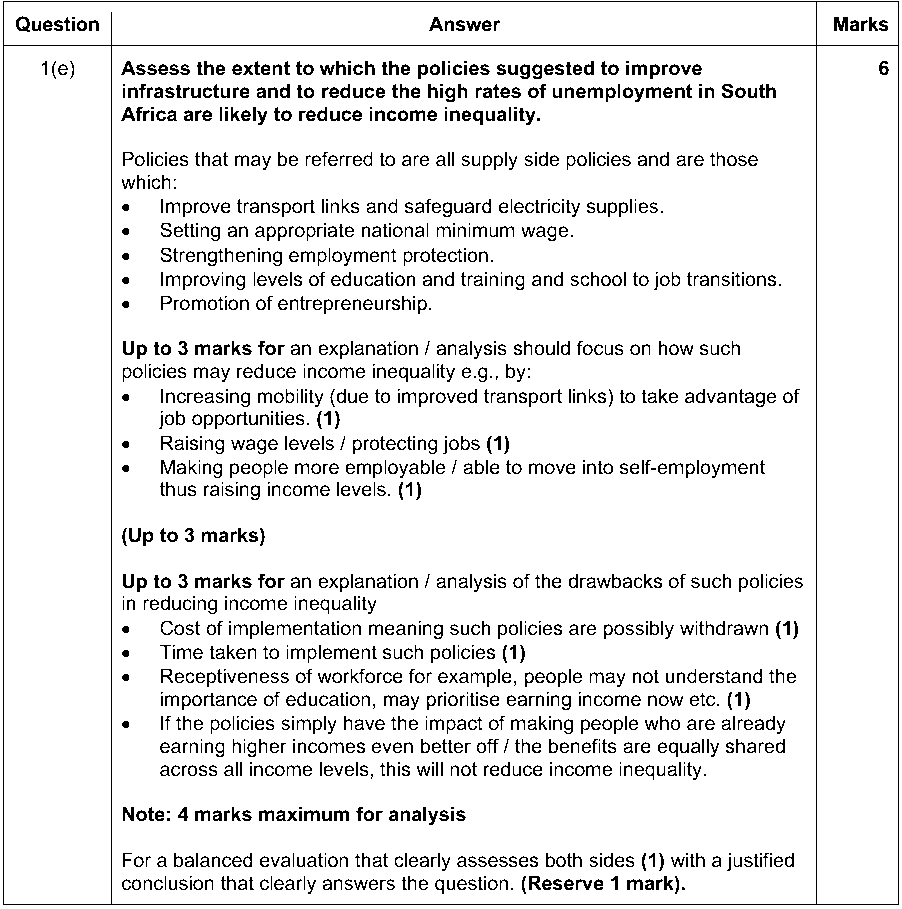
Assess the extent to which the policies suggested to improve infrastructure and to reduce the high rates of unemployment in South Africa are likely to reduce income inequality. [6]
Show mark scheme
Mark scheme, 9708/22 June 2025 question 1(e)
Question 4(a)June 20259708/248 marks

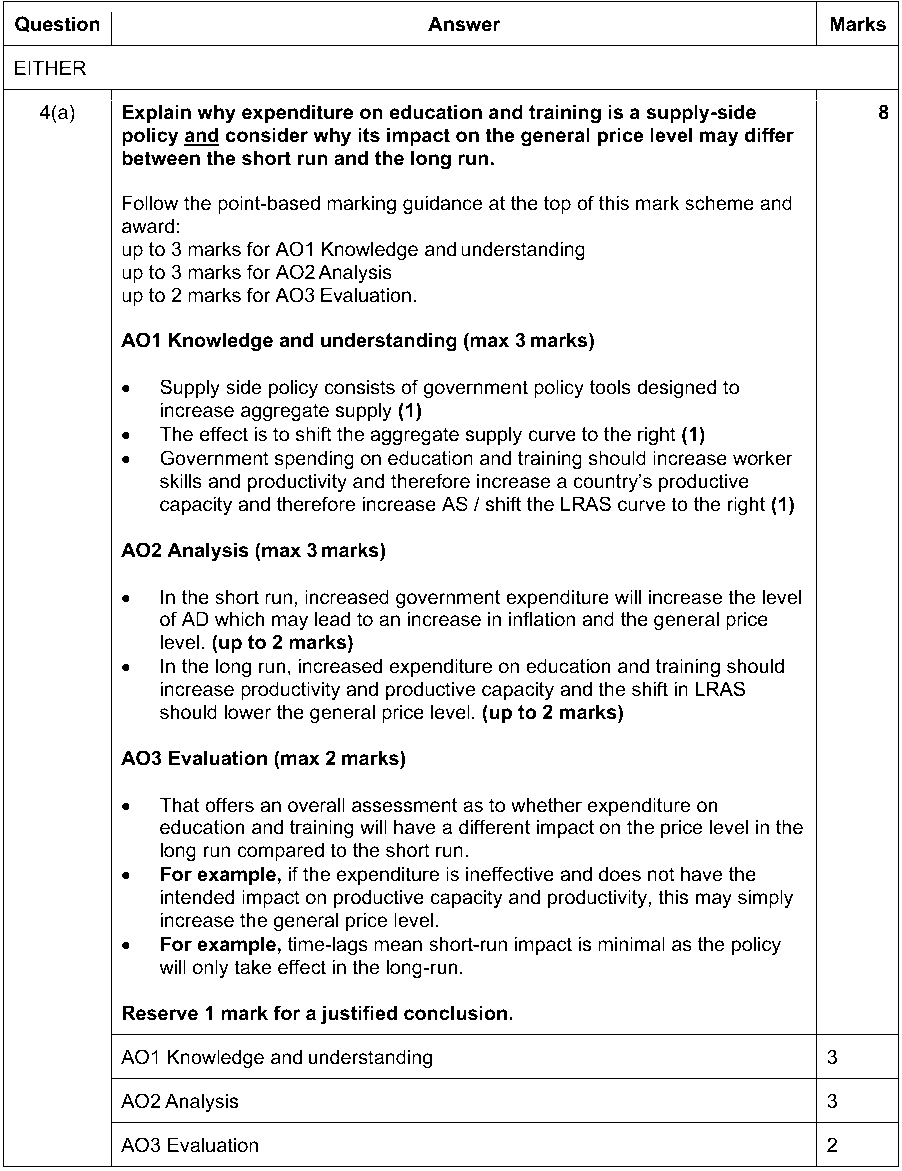
Explain why expenditure on education and training is a supply-side policy and consider why its impact on the general price level may differ between the short run and the long run. [8]
Show mark scheme
Mark scheme, 9708/24 June 2025 question 4(a)
Question 5(b)March 20259708/2212 marks

Assess the extent to which supply-side policy is the best method to reduce the rate of inflation. [12]

Show mark scheme
Mark scheme, 9708/22 March 2025 question 5(b) (page 1 of 2)
Mark scheme, 9708/22 March 2025 question 5(b) (page 2 of 2)

43 more questions from 2020–2024

🔒 Unlock every Supply-side policy question from 2020–2024

All 43 come with their mark schemes, answers and case studies, and appear in the practice tool above once you’re signed in. It’s free.

Create a free accountSign in

A few of them

  • 9708/11 · November 2024 · Question 21Which supply-side policy is most likely to… 🔒
  • 9708/11 · November 2024 · Question 25A government subsidises training to improve the… 🔒
  • 9708/12 · November 2024 · Question 21Which supply-side policy is likely to lower… 🔒
  • 9708/13 · November 2024 · Question 21Supply-side policy often has… 🔒
  • 9708/22 · November 2024 · Question 4(b)Assess whether supply-side policy is likely to… 🔒
  • + 38 more, by year in the table above

Questions and mark schemes are from past Cambridge papers and are reproduced for revision. Topical Vault is an independent revision resource, not affiliated with or endorsed by Cambridge Assessment International Education.

AS Level Economics questions by topic

Each topic opens this practice tool with only that topic’s questions, plus how often it comes up and every question on it in one list.

  1. Unit 1Basic economic ideas and resource allocation
  2. Ch 1Scarcity, choice and opportunity cost
  3. Ch 2Economic methodology
  4. Ch 3Factors of production
  5. Ch 4Resource allocation in different economic systems
  6. Ch 5Production possibility curves
  7. Ch 6Classification of goods and services
  8. Unit 2The price system and the microeconomy
  9. Ch 7Demand and supply curves
  10. Ch 8Price elasticity, income elasticity and cross elasticity of demand
  11. Ch 9Price elasticity of supply
  12. Ch 10The interaction of demand and supply
  13. Ch 11Consumer and producer surplus
  14. Unit 3Government microeconomic intervention
  15. Ch 12Reasons for government intervention in markets
  16. Ch 13Methods and effects of government intervention in markets
  17. Ch 14Addressing income and wealth inequality
  18. Unit 4The macroeconomy
  19. Ch 15National income statistics
  20. Ch 16Introduction to the circular flow of income
  21. Ch 17Aggregate demand and aggregate supply analysis
  22. Ch 18Economic growth
  23. Ch 19Unemployment
  24. Ch 20Price stability
  25. Unit 5Government macroeconomic intervention
  26. Ch 21Government macroeconomic policy objectives
  27. Ch 22Fiscal policy
  28. Ch 23Monetary policy
  29. Ch 24Supply-side policy
  30. Unit 6International economic issues
  31. Ch 25The reasons for international trade
  32. Ch 26Protectionism
  33. Ch 27Current account of the balance of payments
  34. Ch 28Exchange rates
  35. Ch 29Policies to correct imbalances in the current account of the balance of payments